

A West African Fintech On What It Takes To Go From Cross-Border Payments Solution To Multi-Service Platform
Words and Curation: Oluwatomisin AmokeojaAdditional Reporting: Chanel Retief and Nicole PillayArt Director: Manelisi DabataPhotography: Kelechi Amadi-ObiPhotography Assistants: Chukwudi Ademu, Vincent Okoro, Kingsley Ugwukozor, Musa Alabi, Jesutofunmi Amokeoja, Anthony Ibuzo Stylist: Isaac Isiadinso (Kookavelli) Stylist’s Assistant: Timilehin Oshinbanjo Outfits: VREEMD, RAEY, Soft aiv couture and Berluti Makeup & Hair: Oluwatoyin Eko Studio: 12 Temple, Lagos, Nigeria “From the very […]

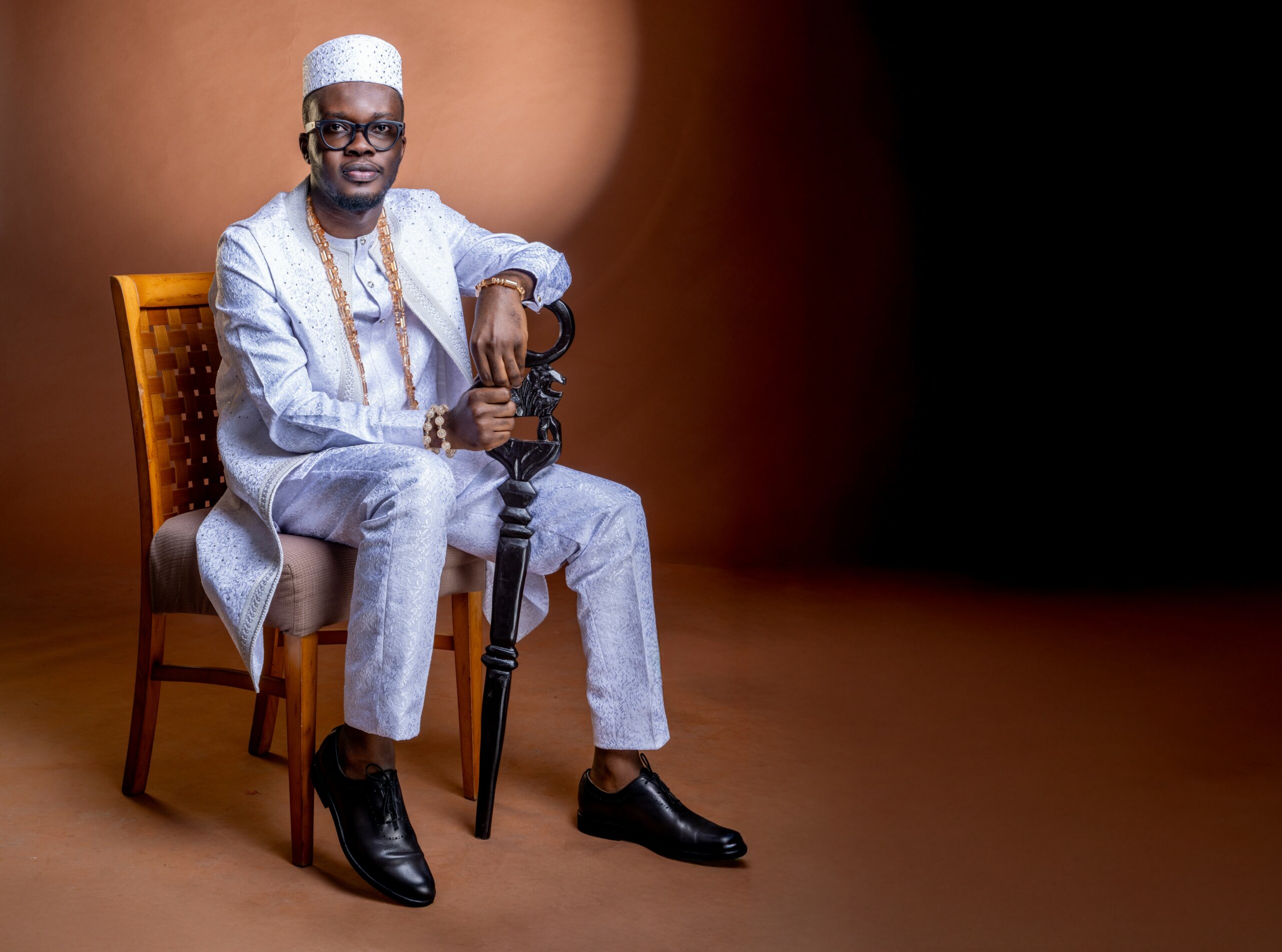
Words and Curation: Oluwatomisin Amokeoja
Additional Reporting: Chanel Retief and Nicole Pillay
Art Director: Manelisi Dabata
Photography: Kelechi Amadi-Obi
Photography Assistants: Chukwudi Ademu, Vincent Okoro, Kingsley Ugwukozor, Musa Alabi, Jesutofunmi Amokeoja, Anthony Ibuzo
Stylist: Isaac Isiadinso (Kookavelli) Stylist’s Assistant: Timilehin Oshinbanjo
Outfits: VREEMD, RAEY, Soft aiv couture and Berluti
Makeup & Hair: Oluwatoyin Eko
Studio: 12 Temple, Lagos, Nigeria
“From the very beginning, we adopted very sound corporate governance in our structure and how we scale.”
Ifelade Ayodele, the Founder and CEO of Blaaiz, moves with a calm that contrasts the energy at the photoshoot he is at for this magazine.
His voice, however—measured, firm, and deeply intentional—has been guiding Blaaiz through the noisy terrain of West Africa’s fintech landscape since its founding in 2023. The company has carved a reputation for methodical growth, hinting at a longer game.
“From the very beginning, we adopted very sound corporate governance in our structure and how we scale,” Ayodele says. “We’re one of the few fintechs in the region that has one of the Big Four auditing us. That’s deliberate. Transparency and accountability matter.”
Founded as a “dependable financial partner” for Africans at home and in the diaspora, Blaaiz started as a cross-border payments solution and has since grown into a multi-service platform—supporting trade, remittances, welfare transfers, and mobility financing.
“We want to be there for people wherever their next opportunity takes them,” Ayodele adds. “Whether you’re moving for work or sending money back home, we want to simplify that journey.”
Blaaiz’s ambitions are tightly intertwined with the continent’s demographic and economic future.
Emerging markets like Nigeria, Ayodele notes, are expected to drive a significant portion of global growth by 2035.
“By 2050, one out of every three people on Earth will be from an emerging market, especially Africa,” he says.
“With that growth comes the need for mobility, for trade, for cross-border solutions. We’re positioning ourselves to support those transitions.”
That positioning includes Blaaiz’s participation in PAPSS, an initiative of Afreximbank aimed at simplifying payments across the continent. It has also partnered with global multinationals to expand access and interoperability.
“These springboards help us stay ahead,” Ayodele says, “but they also allow us to build services that are fit for our ecosystem. They help us compete fairly, and more importantly, sustainably.”
The company is also embracing AI, with use cases focused on fraud detection, risk exposure, and customer interaction.
“We’re probably one of the most pro-AI companies in the space,” Ayodele says, humbly. “Our customer experience team uses AI to respond more quickly, and we use real-time data for rate setting and operational efficiency. But it’s not just about speed—it’s about being better.”
Blaaiz’s commitment to slow, deliberate innovation makes it something of an outlier in Nigeria’s fast-moving fintech ecosystem. In a sector known for unicorn valuations, aggressive funding rounds, and relentless scaling, Ayodele’s brand of leadership offers a different narrative—one that prioritizes structure over hype, and long-term stability over overnight success.
The company has expanded to serve markets beyond Nigeria—supporting money transfers across the United States, United Kingdom, Europe, Canada, Tanzania, Kenya, and Uganda—and is eyeing new corridors where remittances and trade services are underserved.
His words may not have boomed across the studio, but they echoed with clarity. In a region where volume often equals visibility, Blaaiz is betting on substance to make its mark. And if Ayodele’s vision holds, the future of West African fintech may just belong to those who speak softly—and build wisely.
Comments (0)
Sign in to join the conversation.
Related Stories

Equatorial Guinea: Charting A New Era Of Sustainable Prosperity
With a renewed focus on diversification and digitalization, Equatorial Guinea is leveraging its resources to create inclusive, long-term growth. “Agro-processing is a key priority, as our goal is to ultimately achieve national self-sufficiency and independence.” President Teodoro Obiang Nguema Mbasogo Equatorial Guinea is entering a new phase in its economic story–one defined by diversification, competitiveness, and connection. […]

Foundations Strengthening A National Future
Policy reforms, national capabilities, and coordinated institutions reinforce long-term growth across Equatorial Guinea. Q. How is your ministry advancing the national development agenda across key sectors such as agriculture, energy, and tourism, and what priorities guide your efforts to drive long-term economic growth and self-sufficiency? Hon. José Juan Ndong Tom Mekina, Minister of Agriculture, Livestock, Forestry, […]

Equatorial Guinea’s Energy Reset And The Revival Of Its Hydrocarbons Sector
As Equatorial Guinea reshapes its position in the regional energy market, GEPetrol is steering the shift to secure production, attract reliable partners, and align upstream growth with long-term economic goals. “Our strategic vision is to develop projects that are sustainable in the long term, and that also revive the economy.” Bienvenido Nguema Envo, General Manager of GEPetrol In 2024, […]
Recommended




The Daily Brief