

Forward-Focused Foundation: Tanzanian Housing Study Showcases Potential Public Health Impact
Reported as ‘the first household randomized controlled trial of a purpose-built healthy house’, it could inform a rethink of housing solutions in several areas across sub-Saharan Africa. A three-year randomized, controlled trial, conducted in the Mtwara region of Tanzania, highlights the potential and significance of purpose-built architecture, with results showing a drop in malaria and respiratory infections in occupants of specially-designed, two-story homes. According to the report, during t

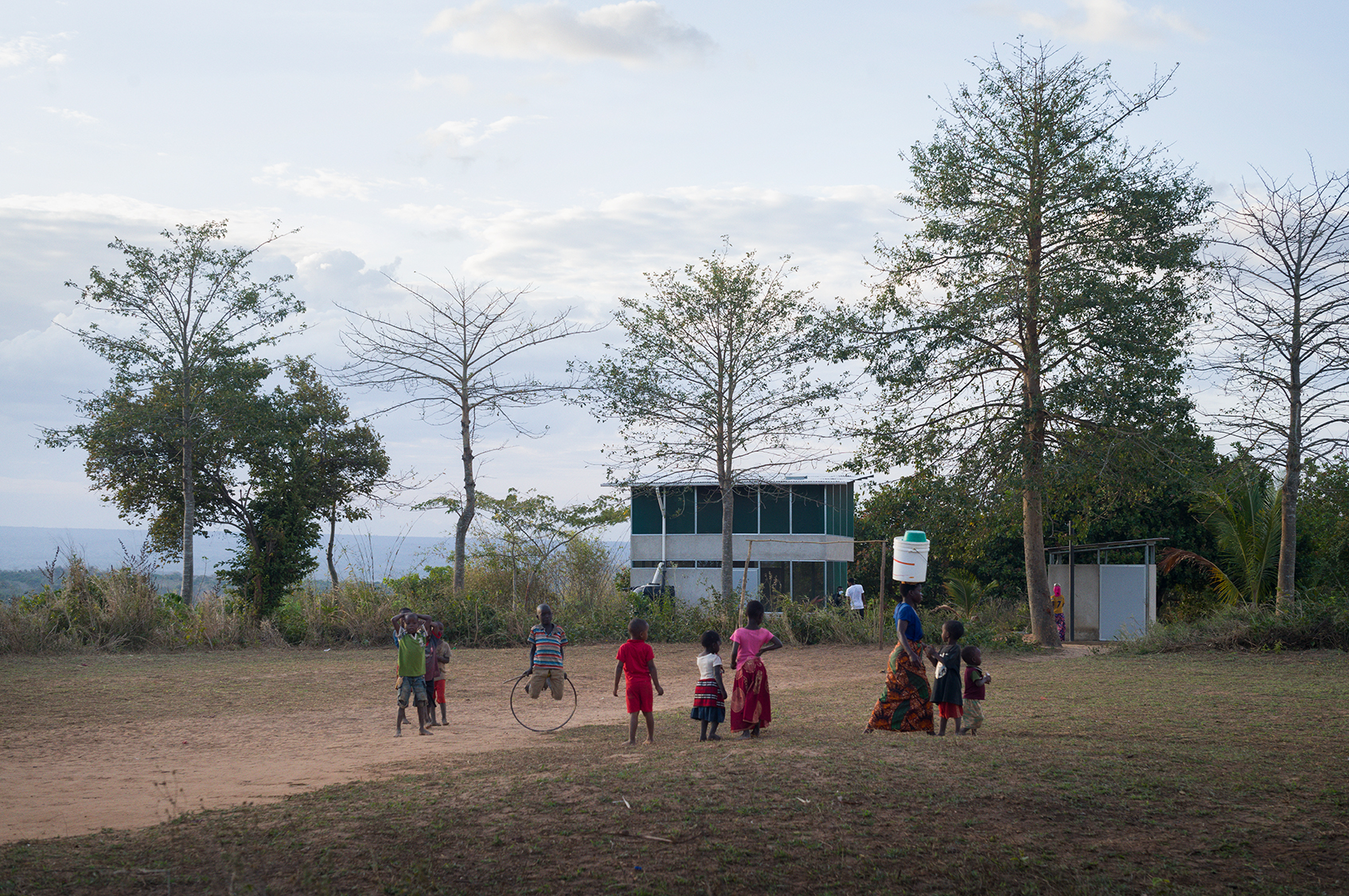
Reported as ‘the first household randomized controlled trial of a purpose-built healthy house’, it could inform a rethink of housing solutions in several areas across sub-Saharan Africa.
A three-year randomized, controlled trial, conducted in the Mtwara region of Tanzania, highlights the potential and significance of purpose-built architecture, with results showing a drop in malaria and respiratory infections in occupants of specially-designed, two-story homes.
According to the report, during the active observation of children under 13 years old, living in 110 Star Homes across 70 villages in the area, they experienced 44% less malaria, 30% less diarrhea and 18% fewer acute respiratory infections.
It also showed greater height-for-age growth trajectories, indicating a reversal of stunting. According to the article in Nature Medicine, children under five years of age living in Star Homes were also taller for their age than those living in the 513 traditional homes.
Clinical surveillance was conducted over 36 months–January 4, 2022 to December 31, 2024–through weekly home visits by trained field workers.
The article also notes that ‘major improvements in rural house design have the potential to make a substantial public health impact across hot, humid regions of Africa’.
“This is very remote areas, and the Star Home was probably the only double story building in the whole village. For those individuals who own the houses, it’s a huge improvement–you can visibly see, and they talk about it,” says CSK Research Solutions’ Salum Mshamu–the lead field investigator–to FORBES AFRICA.
“We had to go back and give them a bit of feedback, and a lot of people want us to go back and do more in these villages. Obviously, that means they have seen the value of this.”
The trial wasn’t without its challenges, including the hesitancy of homeowners to fully utilize the space in the beginning and reported envy from neighbors who didn’t win the opportunity to stay in a Star Home.
Extensive community engagement activities, per the article, were necessary and it indicated that, by the end of December 2021, most barriers had been overcome.
In a statement, Professor Lorenz von Seidlein, Mahidol-Oxford Tropical Medicine Research Unit (MORU) and corresponding author, said: “Our results show that thoughtful house design—insect-proof, smoke-free, cooler, and with clean water—can protect children from all three [malaria, diarrhea, and respiratory infections] at once”.
“The Star Home may not be the final word, but it proves the concept and we hope it will inspire architects, builders, and governments to think differently about rural housing.”
“There is more to be investigated with this kind of intervention,” Mshamu explains.
“We are seeing all this improvement in growth and reduction in diseases transmission, but what does it mean in terms of cognitive development of the children? There is more to add–a house can improve a lot.”
Further to the health aspects of the trial, the home reportedly costs 24% less in materials than a conventional single-story cement-block house, requires 73% less concrete, and generates 57% less embodied carbon.
Key features include bedrooms that are positioned on the upper floor, away from mosquitoes, which are most abundant at ground level, air-permeable shade-net walls and optimized cross-ventilation to cool sleeping areas, screened windows and self-closing doors, a rainwater harvesting system and solar-powered lighting, to name a few.
FORBES AFRICA highlighted the project in 2024, then in its third year of the trial, with Principal Architect at Ingvartsen, Jakob Brandtberg Knudsen, indicating that, based on the materials used, it cost around $9,000 to build at the time of construction.
“In terms of architecture, the houses perform really well–they didn’t disintegrate; they were not breaking down,” says Knudsen, following the release of the results.
“We are also careful to say: don’t look at this house as it’s the only way it could be. It could be made in many different materials; it could be adapted to local needs or cultures. It doesn’t have to be in a steel system, like we did here. The first attempt we did was to build it in wood–that would also still work.”
With reports that, by 2070, the UN expects Africa’s current population of 1.5 billion people to more than double to between 2.7 billion to 3.7 billion, inclusive housing solutions could become a key conversation.
Emphasizing the intended versatility of the concept, Knudsen adds: “What we hope is that people will use these principles and try them in different ways in other buildings. At the moment, we have also tried to look at possibilities to adapt the design to a more urban version–we are looking at a suburban area in Dar es Salaam for a new project”.
Comments (0)
Sign in to join the conversation.
Related Stories

Equatorial Guinea: Charting A New Era Of Sustainable Prosperity
With a renewed focus on diversification and digitalization, Equatorial Guinea is leveraging its resources to create inclusive, long-term growth. “Agro-processing is a key priority, as our goal is to ultimately achieve national self-sufficiency and independence.” President Teodoro Obiang Nguema Mbasogo Equatorial Guinea is entering a new phase in its economic story–one defined by diversification, competitiveness, and connection. […]

Foundations Strengthening A National Future
Policy reforms, national capabilities, and coordinated institutions reinforce long-term growth across Equatorial Guinea. Q. How is your ministry advancing the national development agenda across key sectors such as agriculture, energy, and tourism, and what priorities guide your efforts to drive long-term economic growth and self-sufficiency? Hon. José Juan Ndong Tom Mekina, Minister of Agriculture, Livestock, Forestry, […]

Equatorial Guinea’s Energy Reset And The Revival Of Its Hydrocarbons Sector
As Equatorial Guinea reshapes its position in the regional energy market, GEPetrol is steering the shift to secure production, attract reliable partners, and align upstream growth with long-term economic goals. “Our strategic vision is to develop projects that are sustainable in the long term, and that also revive the economy.” Bienvenido Nguema Envo, General Manager of GEPetrol In 2024, […]
Recommended




The Daily Brief