

Africa’s Richest Man Targets East Africa With $17 Billion Kenya Refinery After Nigeria Success
The project, expected to take between three and five years to complete, would become East Africa’s largest refinery and Dangote Group’s biggest refining investment outside Nigeria. Dangote Group, led by billionaire industrialist Aliko Dangote, has settled on Kenya as the location to replicate the success of its flagship Lagos oil refinery in East Africa. A […]

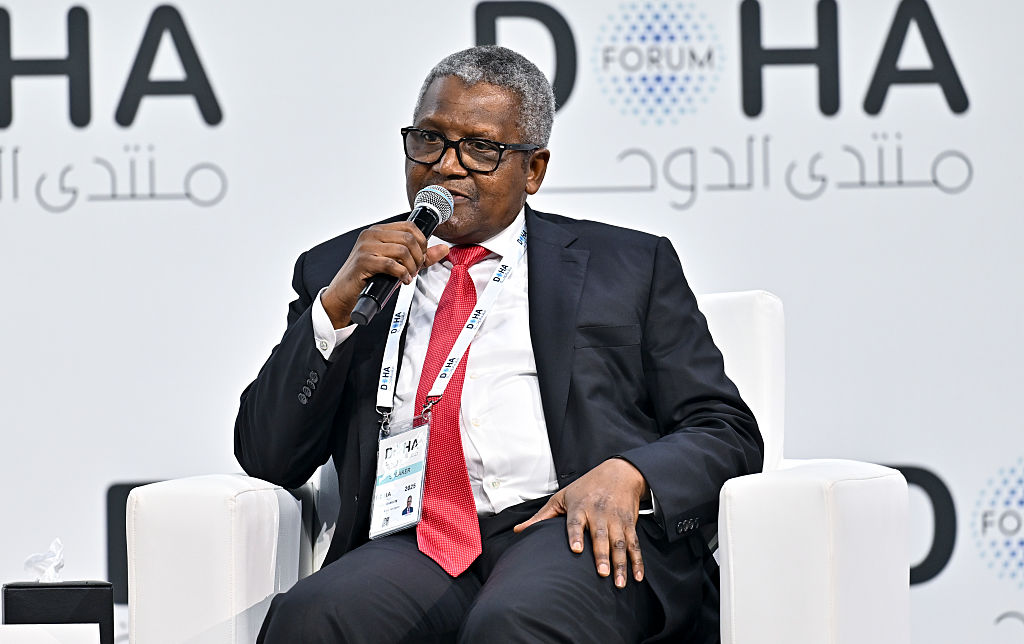
The project, expected to take between three and five years to complete, would become East Africa’s largest refinery and Dangote Group’s biggest refining investment outside Nigeria.
Dangote Group, led by billionaire industrialist Aliko Dangote, has settled on Kenya as the location to replicate the success of its flagship Lagos oil refinery in East Africa.
A source from the company confirmed the development to FORBES AFRICA as well as estimates which put the project at about $17 billion.
The refinery would extend Dangote’s strategy of building refining capacity across Africa after the commissioning of his 650,000 barrel-a-day refinery on the outskirts of Lagos in 2024, which ultimately cost more than $20 billion after construction delays, currency depreciation, the Covid-19 pandemic and inflation pushed spending far above the original estimate of $9 billion. The Nigerian facility, the world’s largest single-train refinery, is also being expanded, with capacity expected to reach 1.4 million barrels a day by 2028.
The industrial conglomerate reportedly plans to finance the proposed refinery through a combination of internally generated cash, bond issuance and proceeds from a planned initial public offering (IPO).
Edwin Devakumar, Vice-President for oil and gas at Dangote Group, told Reuters the proposed 700,000 barrel-a-day refinery would be built on Kenya’s Indian Ocean island of Lamu, with site selection completed, soil tests under way and engineering work already started.
The project is intended to supply refined petroleum products across Kenya and neighboring markets, reducing the region’s dependence on imported fuels.
Dangote had previously explored Tanzania’s port city of Tanga as a potential location before opting for Kenya, citing commercial, logistics and infrastructure advantages. Kenyan President William Ruto announced in May that construction is expected to begin this year.
The proposal revives a sector where some large refinery projects have previously failed to reach financial close because of funding constraints, shifting government priorities and execution risks in the region.
Analysts argue Dangote’s track record fundamentally changes the investment case.
George Okoroma, Senior Business Design and Analysis Lead at British banking and insurance holding company NatWest Group, says the project’s strongest advantage is not demand, which has always existed, but sponsor credibility.
“The single biggest bankability signal is proof of delivery. Dangote has already built and now operates a refinery of comparable scale on African soil using a private-sector balance sheet,” he shares with FORBES AFRICA.
He adds that financing is also more credible than in previous attempts, with the Kenya project forming part of a broader $40 billion African investment strategy and backed by an established operating business rather than a greenfield concept. The remaining uncertainty, he argues, lay in whether governments would provide the policy protections needed to shield domestic refining from low-cost fuel imports.
Pelumi Esho, CEO of Central Bank of Nigeria (CBN)-licensed International Money Transfer Operator (IMTO) 91 Payments, argues that the financing structure itself distinguishes the proposal from earlier refinery ambitions in East Africa.
“The refinery would build on the same approach that got the Lagos refinery built: financing raised largely through offshore capital and his own balance sheet, rather than relying solely on state or multilateral funding, which can be more exposed to delays and shifting political timelines,” Esho says to FORBES AFRICA.
Andrew Abuke, Founder of Lagos-based real estate development firm Covestack, says previous refinery proposals in East Africa struggled less because of demand than because they lacked the combination of sponsor credibility, financing capacity and execution capability now associated with Dangote.
“The real question is whether East Africa’s macro fundamentals have improved enough to make this commercially inevitable, or whether investors are underwriting a founder effect,” Abuke tells FORBES AFRICA.
He adds that investors may ultimately be backing the credibility of the sponsor as much as the economics of the project itself.
Adewale Ojomo, Business and Marketing Manager at TotalEnergies Staff Housing Cooperative Multipurpose Society (TEHC), says the project would benefit from a stronger combination of execution experience, diversified financing and regional demand than earlier refinery proposals.
“East Africa is no longer being presented with only a refinery concept. It is being presented with the possibility of replicating an operating industrial model,” he says.
Seye Joseph, Founder and CEO of Lagos-based enterprise and communications platform EnterpriseCEO Media, says the refinery’s significance extends well beyond energy production, with the potential to reshape regional trade and industrial development while strengthening intra-African trade under the African Continental Free Trade Area (AfCFTA).
“It could also stimulate industrialization, create thousands of direct and indirect jobs, attract foreign and domestic investment, and deepen regional value chains,” Joseph notes to FORBES AFRICA.
Yomi Badejo-Okusanya, Founder and Lead Partner of Nigerian public relations and strategic communication firm CMC Connect LLP, says the project also carries significant reputational value for the continent.
“Beyond the economics, I believe this project is bankable because Africa is gradually becoming more confident in itself. For too long, the global narrative about Africa has been one of dependence. Projects of this scale begin to change that story,” Badejo-Okusanya shares with FORBES AFRICA.
Others caution that sponsor credibility alone would not guarantee financial close.
Yousif Awad Ahmed, a Sudanese economist and development strategy expert, says investors would still require predictable regulation, secure crude supply, binding offtake agreements and transparent governance before committing long-term capital.
“Bankability is ultimately a function of institutional credibility, prudent risk allocation and the ability to mobilize long-term private capital alongside development finance,” he tells FORBES AFRICA.
Charles Odii, Director-General and CEO of the Small and Medium Enterprises Development Agency of Nigeria (SMEDAN), echoes this sentiment.
“The market context is different, the sponsor brings a stronger execution track record, and the successful commissioning of the Dangote Refinery has provided proof that an African-owned mega-refinery can be financed, built and operated at scale. Those developments are likely to strengthen investor confidence… Ultimately, the project’s bankability will still depend on its commercial fundamentals and its ability to achieve financial close,” he explains to FORBES AFRICA.
Comments (0)
Sign in to join the conversation.
Related Stories
Africa’s Richest Man Confirms September London Secondary Listing Plans For Cement Behemoth
Dangote Cement, listed in Nigeria’s commercial capital Lagos, has a market capitalization of over $12 billion after its shares more than doubled over the past year. Africa’s richest man Aliko Dangote plans a secondary listing of his cement business in London in September, reviving long-standing plans to bring the continent’s largest cement producer to international […]

New Billionaire David Beckham On His Family, Team And Legacy
How the British super star built a $1 billion empire, mainly in the U.S., after retiring from soccer. This story was first published on Forbes.com It is 10 A.M. in Chiswick, a pleasant west London suburb, in late April, and Sir David Beckham has already been on set for two hours. This should have been expected: The […]

Death And Taxes: Forbes’ Practical Guide For Families
Advice for survivors on everything from state inheritance and estate taxes to inherited IRAs to sorting through a lifetime of possessions and papers. Plus, sparing your own heirs. This article was first published on Forbes.com You expect the death of a spouse, parent or other close relative to be emotionally wrenching. What catches many survivors by […]
Recommended




The Daily Brief