

‘African Cinema Can Dream At Scale’: Nigerian Crime Film Sets Guinness Record
Nigerian crime thriller Black Market has set a Guinness World Records mark for the largest attendance at a film screening, drawing 51,258 people to the commercial capital Lagos’ Tafawa Balewa Square (TBS) on September 26. The record was achieved by filmmakers Damilola Osikoya, Switch Visual Limited, Nora Awolowo and Rixel Studios for the screening of […]

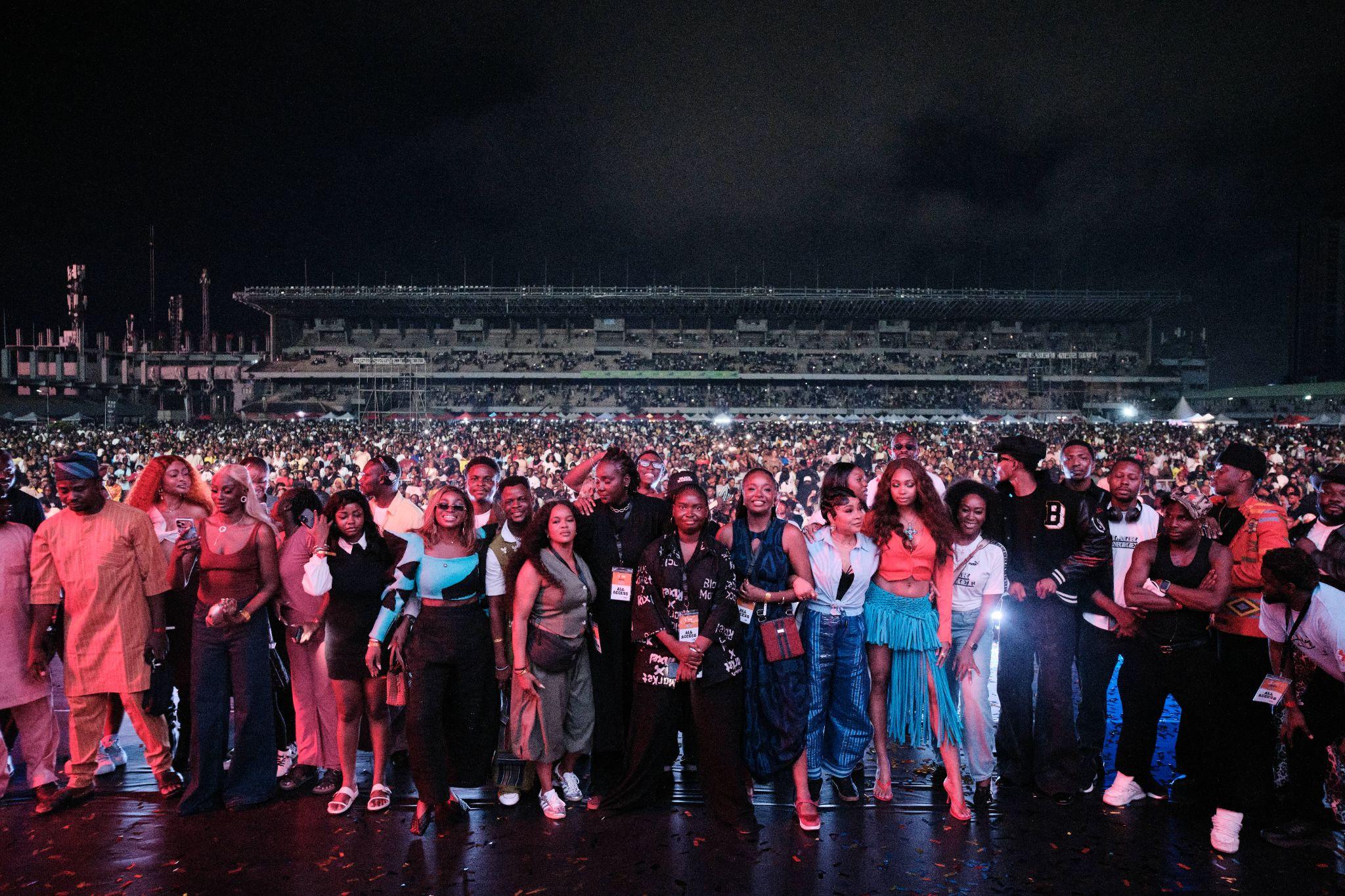
Nigerian crime thriller Black Market has set a Guinness World Records mark for the largest attendance at a film screening, drawing 51,258 people to the commercial capital Lagos’ Tafawa Balewa Square (TBS) on September 26.
The record was achieved by filmmakers Damilola Osikoya, Switch Visual Limited, Nora Awolowo and Rixel Studios for the screening of the 90-minute film, Guinness World Records said. To qualify, attendees had to remain at the screening from start to finish.
The turnout surpassed the previous record of 43,624 people, set in the Philippines in 2015 for Felix Manalo, by 7,634 attendees, or about 17.5%.
The feat comes as Nigeria’s theatrical film market grows in revenue, although audience numbers have risen more slowly.
Box-office revenue across Anglophone West Africa reached about ₦15.6 billion ($10.27 million in then exchange rate) in 2025, up from ₦11.6 billion ($7.56 million then) in 2024, according to the 2025 Nigeria Box Office Yearbook compiled by FilmOne. Admissions rose to about 2.8 million from 2.7 million, while the number of cinema locations increased to 122 from 107.
Average ticket prices, meanwhile, have risen sharply in local currency. Industry data put the average at about ₦5,959 ($3.69 then) in 2025, compared with ₦1,512 ($3.75 then) in 2021, while annual admissions remained below 2021 levels.
Nora Awolowo, Creative Lead at Rixel Studios, says the Guinness record demonstrates that Nigerian filmmakers could organize entertainment events on a scale comparable with major international productions.
“This proves that African cinema can dream at scale, challenge global conventions, and execute at the highest international level,” Awolowo shares with FORBES AFRICA.
She says, however, that a mass screening of the size held in Lagos is not a straightforward alternative to
conventional cinemas or streaming services.
The event required extensive crowd management, infrastructure, electricity, production and partner activations, she says, making such screenings difficult to stage frequently.
At the same time, Awolowo says mega-screenings could offer a collective cultural experience that conventional cinema and streaming could not easily reproduce.
“Screenings at this scale unite the community, generate massive excitement, and establish alternative event-based distribution models for milestone cinematic projects,” she says, comparing them with concerts and fashion shows.
The event’s official registration page advertised general admission at about ₦2,000 ($1.51) and a premium category at ₦50,000 ($37.75).
The screening was developed with Rixel Studios, Switch Visuals and other industry partners, while FilmOne handled distribution, according to industry reports. Corporate partners and the Lagos State Government were also associated with the event.
FilmOne’s 2025 market data showed that Nigeria had 118 of 122 cinema locations and 352 of 369 screens across the wider Anglophone West African market, making the West African nation account for the vast majority of the territory’s box-office business.
Lagos generated about ₦7.94 billion ($5.5 million then) in box-office revenue from 41 cinema locations and 1.28 million admissions in 2025, according to the data.
Nigeria’s film production pipeline has also remained active. The National Film and Video Censors Board (NFVCB) reported that 304 films were classified between January and April 2026, compared with 267 in the same period a year earlier.
Awolowo says Black Market would receive a theatrical release before moving to streaming platforms.
Directed by Fatimah Binta Gimsay and written by Abdul Tijani-Ahmed alongside Gimsay, the film follows five market women running a cross-border smuggling operation amid fuel shortages and economic pressure. Their business is disrupted when a rival kidnaps the daughter of one of the women, forcing the group into a struggle over survival and loyalty.
Comments (0)
Sign in to join the conversation.
Related Stories

Equatorial Guinea: Charting A New Era Of Sustainable Prosperity
With a renewed focus on diversification and digitalization, Equatorial Guinea is leveraging its resources to create inclusive, long-term growth. “Agro-processing is a key priority, as our goal is to ultimately achieve national self-sufficiency and independence.” President Teodoro Obiang Nguema Mbasogo Equatorial Guinea is entering a new phase in its economic story–one defined by diversification, competitiveness, and connection. […]

Foundations Strengthening A National Future
Policy reforms, national capabilities, and coordinated institutions reinforce long-term growth across Equatorial Guinea. Q. How is your ministry advancing the national development agenda across key sectors such as agriculture, energy, and tourism, and what priorities guide your efforts to drive long-term economic growth and self-sufficiency? Hon. José Juan Ndong Tom Mekina, Minister of Agriculture, Livestock, Forestry, […]

Equatorial Guinea’s Energy Reset And The Revival Of Its Hydrocarbons Sector
As Equatorial Guinea reshapes its position in the regional energy market, GEPetrol is steering the shift to secure production, attract reliable partners, and align upstream growth with long-term economic goals. “Our strategic vision is to develop projects that are sustainable in the long term, and that also revive the economy.” Bienvenido Nguema Envo, General Manager of GEPetrol In 2024, […]
Recommended




The Daily Brief