

African Farmers Face Potential Crisis Amid Middle East Conflict
The continent’s deep reliance on global supply chains is exposing its agricultural sector to mounting costs, impacting some far harder than others. While the ongoing Middle East conflict will likely be remembered for ravaging oil and energy markets, it should also be noted for rattling the world’s agriculture sector–and the effects may only truly be […]

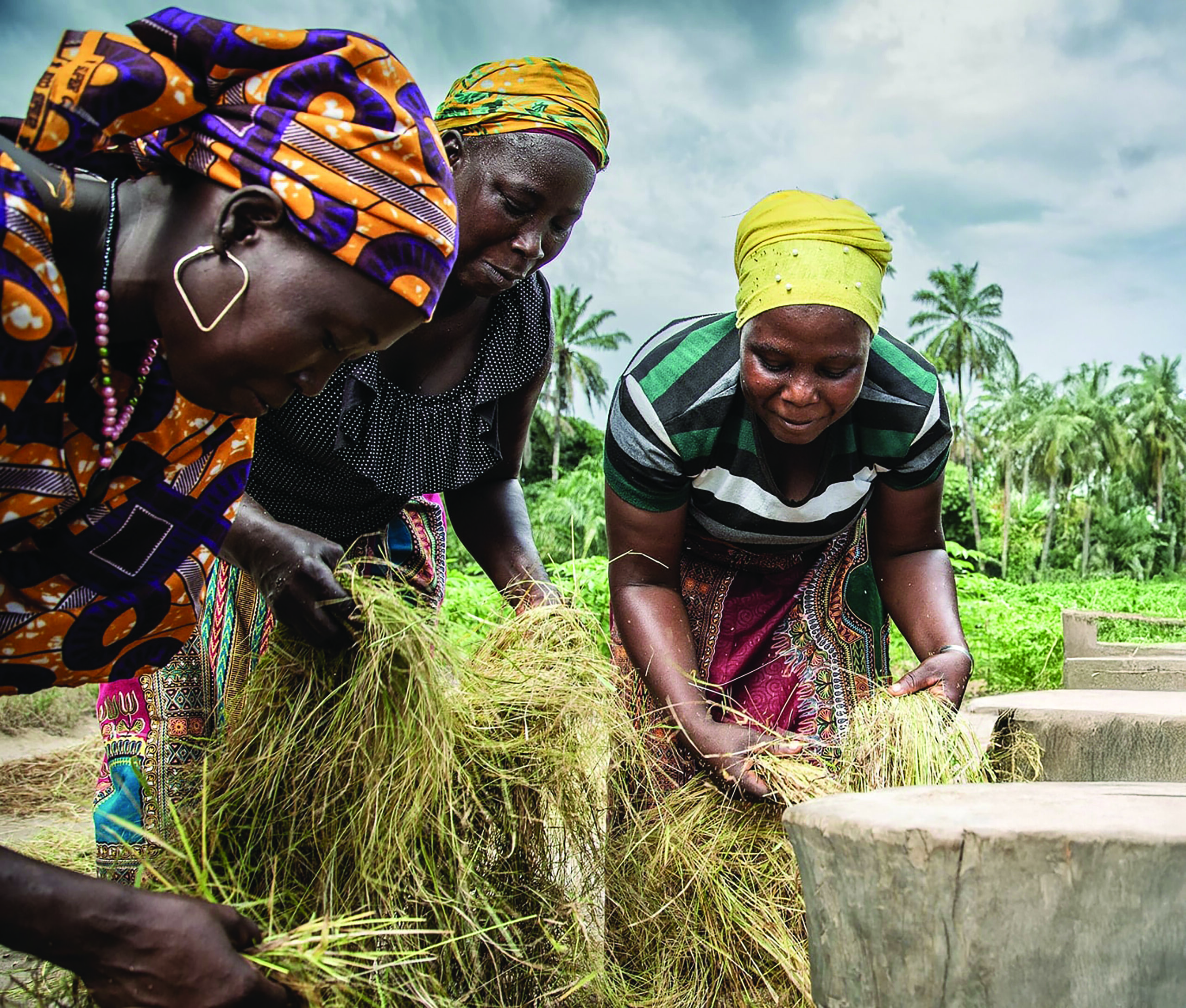
The continent’s deep reliance on global supply chains is exposing its agricultural sector to mounting costs, impacting some far harder than others.
While the ongoing Middle East conflict will likely be remembered for ravaging oil and energy markets, it should also be noted for rattling the world’s agriculture sector–and the effects may only truly be felt months down the line.
Over one-third of global fertilizer flows through the Strait of Hormuz, a critical point now suffocated under Iranian control. What is, ordinarily, one of the world’s shipping meccas, is now trickling at half-mast, causing intense supply shocks felt from Australia to Angola.
Looking at the globe, most, if not all, nations have been affected by the Strait’s closure in one way or another. Africa, a region that imports over 90% of its fertilizer, has been particularly caught out.
“Strategic reserves for fertilizer are virtually non-existent in African economies, leaving both governments and farmers highly exposed to the current shock,” Phumlani Majozi, Executive Director at the African Markets Institute, tells FORBES AFRICA.
When it comes to fertilizers–such as potash and phosphates–urea, with its nitrogen element being a vital nutrient for plants to develop, is essential for farmers, regardless of their geography.
It’s a must-have. The minimal buffer of urea makes the region especially susceptible to the rising costs we have seen since the war began nearly four weeks ago.
At the time of writing, Urea futures sit at $687.50, a near $270 rise since the day before (February 27) the initial United States and Israel launched coordinated strikes on Iran.
While price hikes have undoubtedly raised anxiety levels, southern Africa’s silver lining is timing.
“The next agricultural season does not start until October 2026,” says Wandile Sihlobo, South Africa’s Presidential Envoy on Agriculture and Land, to FORBES AFRICA.
“If the war continues past July 2026, we will start to worry about the fertilizer supplies and prices. At the moment, this is not a pressing concern,” he adds, his optimism influenced by the abundance of “grain and agricultural supplies in 2026”.
The rest of Africa, where seasons are influenced by its positioning nearer and above the equator, isn’t as fortunate.
In West Africa, the main planting season occurs between April and June, while East Africa’s two rainy seasons mean it can occur twice a year, sometimes as early as March (with the second window typically October-November).
Rerouted shipping routes through South Africa’s Cape of Good Hope have been especially detrimental to the Eastern frontier–a region where agricultural sectors depend on on-time deliveries to European supermarkets, supplying avocados, green beans, cut flowers, and more.
“The losses are instantaneous because of the biological clock of the cargo,” Majozi explains, before sharing that Kenya’s cut flower industry is experiencing a $1.4 million weekly loss this month.
“Because these products cannot survive the three-week detour around the Cape of Good Hope, exporters are forced into what I’d call an ‘air-or-perish’ scenario,” he notes.
“This has created an immediate crisis in some African countries.”
While the impact of supply chain constraints is felt differently across Africa, Sihlobo reminds us that no nation is protected from fuel prices and their impact on food prices.
“A majority of food products in Africa are transported by road, and the increase in fuel prices affects the final price consumers pay,” he indicates, revealing that around 80% of South Africa’s–or “the continent’s most industrialized economy”, as he puts it–grain and various agricultural products are transported by road.
While Africa’s agriculture industry feels the brunt of frail supply chains and price hikes, the deeper cost is likely to unfold over time, as constrained access to fertilizers erodes yield productivity and weighs on long-term agricultural output.
Comments (0)
Sign in to join the conversation.
Related Stories

Equatorial Guinea: Charting A New Era Of Sustainable Prosperity
With a renewed focus on diversification and digitalization, Equatorial Guinea is leveraging its resources to create inclusive, long-term growth. “Agro-processing is a key priority, as our goal is to ultimately achieve national self-sufficiency and independence.” President Teodoro Obiang Nguema Mbasogo Equatorial Guinea is entering a new phase in its economic story–one defined by diversification, competitiveness, and connection. […]

Foundations Strengthening A National Future
Policy reforms, national capabilities, and coordinated institutions reinforce long-term growth across Equatorial Guinea. Q. How is your ministry advancing the national development agenda across key sectors such as agriculture, energy, and tourism, and what priorities guide your efforts to drive long-term economic growth and self-sufficiency? Hon. José Juan Ndong Tom Mekina, Minister of Agriculture, Livestock, Forestry, […]

Equatorial Guinea’s Energy Reset And The Revival Of Its Hydrocarbons Sector
As Equatorial Guinea reshapes its position in the regional energy market, GEPetrol is steering the shift to secure production, attract reliable partners, and align upstream growth with long-term economic goals. “Our strategic vision is to develop projects that are sustainable in the long term, and that also revive the economy.” Bienvenido Nguema Envo, General Manager of GEPetrol In 2024, […]
Recommended




The Daily Brief