

An African Fintech Major On Merging Markets, Supporting Funding And The Skills Pool
Words and Curation: Oluwatomisin AmokeojaAdditional Reporting: Chanel Retief and Nicole PillayArt Director: Manelisi DabataPhotography: Kelechi Amadi-ObiPhotography Assistants: Chukwudi Ademu, Vincent Okoro, Kingsley Ugwukozor, Musa Alabi, Jesutofunmi Amokeoja, Anthony Ibuzo Stylist: Isaac Isiadinso (Kookavelli) Stylist’s Assistant: Timilehin Oshinbanjo Outfits: VREEMD, RAEY, Soft aiv couture and Berluti Makeup & Hair: Oluwatoyin Eko Studio: 12 Temple, Lagos, Nigeria “Every day, every […]

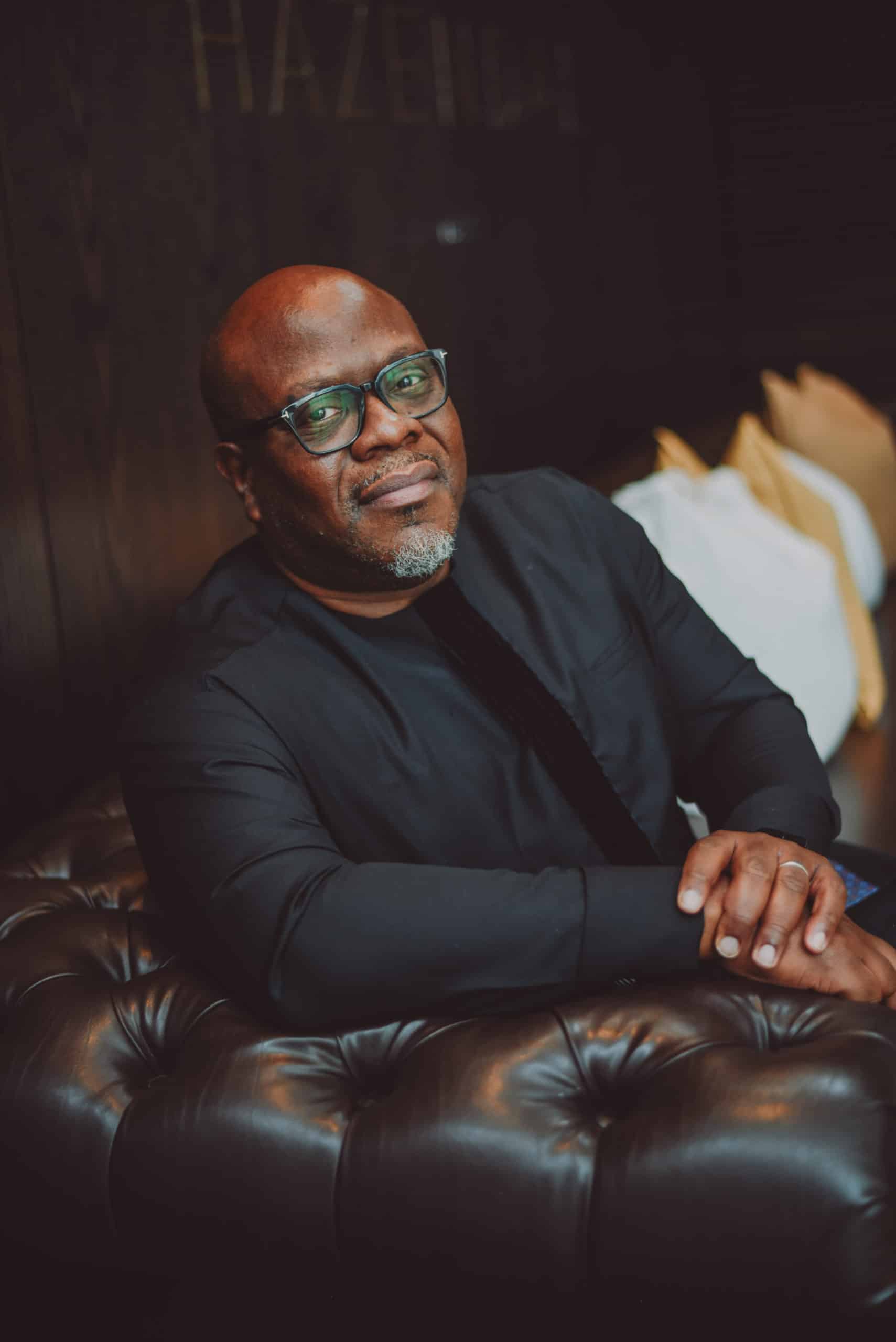
Words and Curation: Oluwatomisin Amokeoja
Additional Reporting: Chanel Retief and Nicole Pillay
Art Director: Manelisi Dabata
Photography: Kelechi Amadi-Obi
Photography Assistants: Chukwudi Ademu, Vincent Okoro, Kingsley Ugwukozor, Musa Alabi, Jesutofunmi Amokeoja, Anthony Ibuzo
Stylist: Isaac Isiadinso (Kookavelli) Stylist’s Assistant: Timilehin Oshinbanjo
Outfits: VREEMD, RAEY, Soft aiv couture and Berluti
Makeup & Hair: Oluwatoyin Eko
Studio: 12 Temple, Lagos, Nigeria
“Every day, every month, every year, we get closer to it, and, for our work–as we connect new countries; new partners–but we are still very much at the beginning.”
With one billion connected mobile wallets and 43 African nations in its network, Onafriq has made significant strides in promoting access and amplifying cross border payments for its customers on the continent.
However, Founder and CEO, Dare Okoudjou emphasizes to FORBES AFRICA that even after 15 years of operation, there’s room for growth in fintech, including a larger opportunity for the merging of markets later on.
“We are still ‘connecting the pipes’, creating the infrastructure. We have not reached the level where you and I can take for granted that we can just pay each other–and that is the opportunity,” he says.
“Every day, every month, every year, we get closer to it, and, for our work–as we connect new countries; new partners–but we are still very much at the beginning; there is a very large opportunity for Onafriq.”
As per BDO South Africa, the continent’s fintech market–led by South Africa, Nigeria, Egypt, and Kenya–is projected to grow 13-fold to $65 billion in 2030.
In its 2024 report, titled Unlocked Potential, Fintech in Africa, the consulting firm also cites financial resources, infrastructure constraints, the regulatory environment, cybersecurity risks and scalability as some of challenges in fintech.
To achieve notable growth in fintech, Okoudjou believes there are several particular barriers that need to be tackled.
“For me, the three things, if we take a 10-year view, that we need to address to be able to realize the potential is around the size of markets, and how do we merge markets better through regulation?
“It’s about funding, and how do we get more local funding to actually see ideas and support entrepreneurs, and it’s about the skills pool. How do we grow that quickly and how do we make it attractive and safe enough for people to try?”
Apart from the startup’s aim to expand its network, Okoudjou says Onafriq is keen to see small and medium-sized enterprises (SMEs) increasingly make use of cross-border payment services.
“We offer a set of APIs that our clients, mobile networks, money transfer companies, banks, enterprises, implement sometimes for their customers. When they do this, they tailor the product more for the consumer market,” he says.
“I was in Accra for the launch of a service in partnership with PAPSS , Afreximbank, to enable cross-border payment between Nigeria and Ghana; Ghana and Nigeria. This is actually the first because, up to now, it was not possible for you to move money out again. I’m excited to see what happens when we start seeing more and more services being customized; being developed for the SME market by our partners over the next few years.”
Comments (0)
Sign in to join the conversation.
Related Stories

Equatorial Guinea: Charting A New Era Of Sustainable Prosperity
With a renewed focus on diversification and digitalization, Equatorial Guinea is leveraging its resources to create inclusive, long-term growth. “Agro-processing is a key priority, as our goal is to ultimately achieve national self-sufficiency and independence.” President Teodoro Obiang Nguema Mbasogo Equatorial Guinea is entering a new phase in its economic story–one defined by diversification, competitiveness, and connection. […]

Foundations Strengthening A National Future
Policy reforms, national capabilities, and coordinated institutions reinforce long-term growth across Equatorial Guinea. Q. How is your ministry advancing the national development agenda across key sectors such as agriculture, energy, and tourism, and what priorities guide your efforts to drive long-term economic growth and self-sufficiency? Hon. José Juan Ndong Tom Mekina, Minister of Agriculture, Livestock, Forestry, […]

Equatorial Guinea’s Energy Reset And The Revival Of Its Hydrocarbons Sector
As Equatorial Guinea reshapes its position in the regional energy market, GEPetrol is steering the shift to secure production, attract reliable partners, and align upstream growth with long-term economic goals. “Our strategic vision is to develop projects that are sustainable in the long term, and that also revive the economy.” Bienvenido Nguema Envo, General Manager of GEPetrol In 2024, […]
Recommended




The Daily Brief