

Blue Economy And Coordinated Reforms Drive Investment In Cabo Verde
Along with the country’s bright and colorful scenery, the government is modernizing infrastructure and opening doors for financing and development. Penresa speaks to Cabo Verde’s key ministers to discuss the country’s growth, as well as education, and progress in digital systems and energy. Q: Could you outline your ministry’s role and how it contributes to Cabo Verde’s development? Dr […]

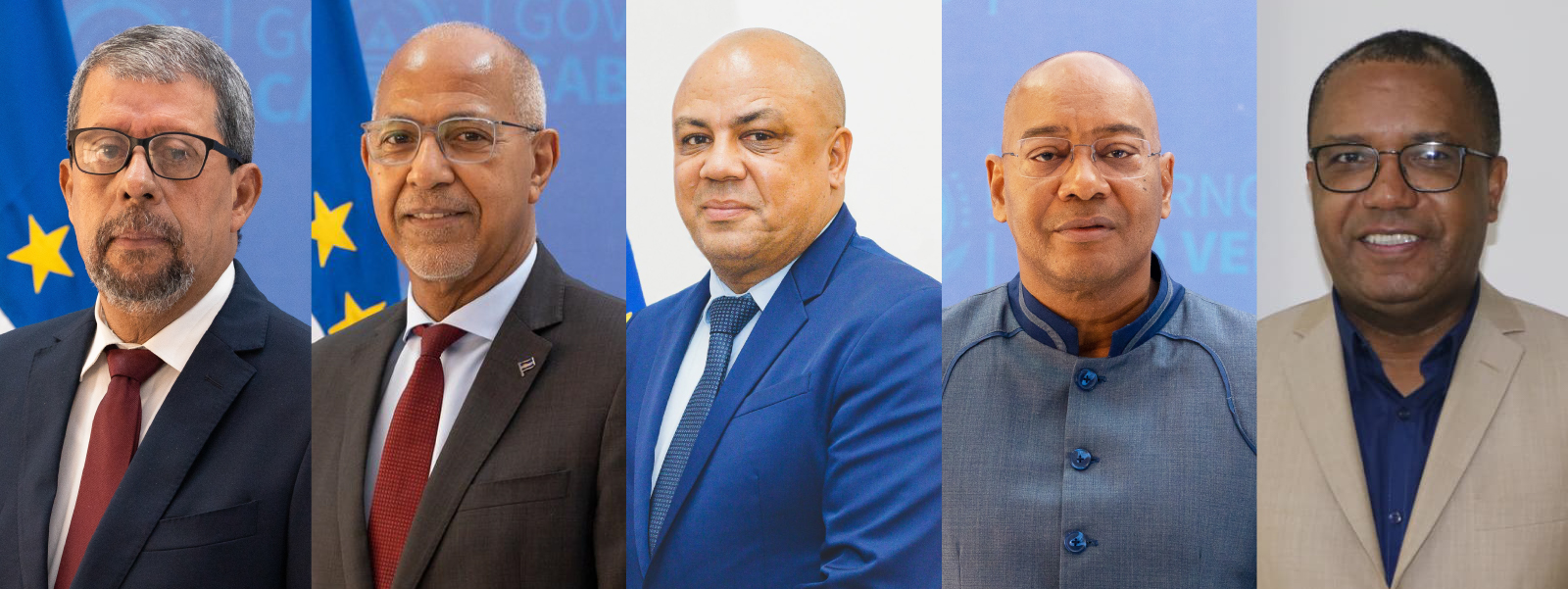
Along with the country’s bright and colorful scenery, the government is modernizing infrastructure and opening doors for financing and development. Penresa speaks to Cabo Verde’s key ministers to discuss the country’s growth, as well as education, and progress in digital systems and energy.
Q: Could you outline your ministry’s role and how it contributes to Cabo Verde’s development?
Dr Eurico Correia Monteiro (Minister for Investment Promotion and Business Development and Minister for State Modernization and Public Administration): The government combined state modernization with investment promotion because both depend on how efficiently the system responds to business. Much of what we do depends on our ability to respond quickly and attentively to expressions of business interest.
When an investor comes with an idea, the best way we promote the country is through our capacity to respond and assist. This depends on administrative simplification and the use of digital tools that increase responsiveness and transparency. With digital platforms, we streamline processes while allowing investors to track their projects, understand where they stand, and identify who is responsible at each stage.
Dr Augusto Jorge De Albuquerque Veiga (Minister of Culture and Creative Industries): The ministry plays a very important role because culture is transversal to all sectors of society and is a strong part of our identity. Having creative industries within the ministry reflects the government’s vision that this sector will play an important role in our economic future.
The shift of culture and creative industries from a social pillar to an economic pillar in the national budget demonstrates this direction. We regulate the sector and create the conditions for artistic activity, ensuring that citizens participate in shaping the cultural future of Cabo Verde through ongoing dialogue with the government.
Engineer Victor Coutinho (Minister of Infrastructure, Spatial Planning and Housing): The ministry ensures that Cabo Verde’s development is built on resilient infrastructure, balanced territorial management, and housing policies that promote dignity and social equity.
Infrastructure is a tool that drives development. Every project—roads, bridges, housing, or urban redevelopment—serves both people and the economy by creating opportunities, improving connectivity, and enhancing living conditions. Our work aligns with the government’s strategic agenda, which places people at the center of development. We connect islands, create jobs, and improve the quality of life across the country.
Dr Jorge Figueiredo (Minister of Health): The Ministry of Health implements protection programs across an archipelago of ten islands. Fifty years ago, Cabo Verde was considered one of the poorest countries in the world. It is now an upper-middle-income country with significantly improved health indicators. Infant mortality has declined from 110 per 1,000 in 1975 to around 10 to 12 per 1,000 today. Vaccination coverage has reached 95%, and diseases such as polio, measles, and rubella have been eliminated.
Cabo Verde is classified as a malaria-free country, and overall mortality has declined to around six per 1,000. These results reflect the country’s capacity to respond, supported by governance, economic development, and increasing domestic financing of health systems.
Dr Amadeu Cruz (Minister of Education): Education has always been viewed as the cornerstone of national development. The development of human capital drives economic growth, which is why the government prioritizes education.
Since independence, Cabo Verde has expanded access to education and is now focused on skills development aligned with international standards. We are strengthening language education, particularly English, and focusing on technology, science, and global integration so that Cabo Verdeans can compete internationally and contribute to national development.
Q: Could you detail the key initiatives currently being implemented and their strategic objectives?
Monteiro: We are implementing administrative simplification by eliminating unnecessary processes and shortening procedures related to licensing, permits, and authorizations. We are also modernizing the state through digital transformation, including the launch of a single portal for state digital services. This portal will bring together all government services in one platform, ensuring interoperability and ease of use.
We are also launching an investor portal where all investment processes can be handled digitally, from certification to project tracking. These tools will strengthen transparency and improve the relationship between the state and investors.
Veiga: One of our most important initiatives is the approval of the artist’s statute , which formalizes the cultural sector and guarantees rights and obligations for artists. This ensures access to social security and pensions for cultural professionals.
We are also conducting a study on the economic impact of culture and creative industries to quantify their contribution to the economy. Additionally, we run programs such as Bolsa de Acesso à Cultura, which reaches thousands of young people across all islands, providing access to arts education and preventing social exclusion.
Coutinho: We have large-scale housing and infrastructure programs. Around 1,400 social housing units are under construction, and more than 3,600 units have already been completed or rehabilitated. Urban redevelopment programs are improving neighborhoods, seafronts, and historic centers.
The country now has over 1,200 kilometers of modern road networks, with additional roads under construction to improve access to rural and agricultural areas. We are also investing in water, sanitation, and climate-resilient infrastructure as part of the National Infrastructure Plan 2040.
Figueiredo: Our focus has shifted toward addressing non-communicable diseases such as hypertension, diabetes, and cancer. Around 36% of the population suffers from hypertension, and we are strengthening healthcare systems through improved equipment, training, and staffing.
We operate a hierarchical healthcare system with central and regional hospitals, as well as local health centers that provide prevention, early diagnosis, and community-based care. We are also digitizing healthcare systems and opening the sector to private investment, including wellness and medical tourism.
Cruz: We are implementing a comprehensive curriculum reform covering all grades, with a focus on mathematics, science, technology, and languages. Enrollment is close to 100%, and over 85% of students achieve passing grades.
We are also advancing digital education through ICT programs, technology labs, and internet access in schools. Higher education is expanding, with 23% of young Cabo Verdeans enrolled in universities. These efforts aim to align Cabo Verde’s education system with OECD standards.
Q: What investment opportunities exist for investors in Cabo Verde?
Monteiro: Cabo Verde offers opportunities in the blue economy, renewable energy, and tourism. With nearly 800,000 square kilometers of ocean, sectors such as aquaculture, fisheries, and marine exploration present strong potential. We are also targeting 50% renewable energy by 2030.
The market includes not only 500,000 residents but also more than one million tourists annually, along with access to ECOWAS markets of over 300 million people. Investors benefit from trade agreements with Africa, the European Union, and the United States.
Veiga: Cabo Verde is developing as a hub for music and cultural production, with international visibility driven by platforms such as the Atlantic Music Expo.
The creative sector extends into digital services and links directly with tourism through events and heritage-based experiences. Investors can establish digital creative hubs that connect local talent with global markets. It also supports investment in cultural exports and in experience-driven tourism built around heritage and live events.
Coutinho: Infrastructure development remains a central focus. The current pipeline includes housing programs, road construction, airport expansion, and water systems.
Public-private partnerships are essential, particularly in large-scale projects under the National Infrastructure Plan 2040. Key opportunities include the National Hospital project, urban development infrastructure, and tourism-related investments. Cabo Verde offers a stable and secure environment with strong incentives for investors.
Figueiredo: Healthcare offers opportunities in private hospitals, wellness services, and medical tourism. The country is open to investment in healthcare infrastructure and services, including physiotherapy, hydrotherapy, and specialized care. The integration of healthcare with tourism creates additional potential for growth and diversification.
Cruz: Investment opportunities exist in education technology, research, and higher education. Cabo Verde offers potential for applied research in water, agriculture, and marine sciences. We also see opportunities in vocational training and technology development, which are critical for supporting the country’s ambition to become a regional technology hub.
Comments (0)
Sign in to join the conversation.
Related Stories

Equatorial Guinea: Charting A New Era Of Sustainable Prosperity
With a renewed focus on diversification and digitalization, Equatorial Guinea is leveraging its resources to create inclusive, long-term growth. “Agro-processing is a key priority, as our goal is to ultimately achieve national self-sufficiency and independence.” President Teodoro Obiang Nguema Mbasogo Equatorial Guinea is entering a new phase in its economic story–one defined by diversification, competitiveness, and connection. […]

Foundations Strengthening A National Future
Policy reforms, national capabilities, and coordinated institutions reinforce long-term growth across Equatorial Guinea. Q. How is your ministry advancing the national development agenda across key sectors such as agriculture, energy, and tourism, and what priorities guide your efforts to drive long-term economic growth and self-sufficiency? Hon. José Juan Ndong Tom Mekina, Minister of Agriculture, Livestock, Forestry, […]

Equatorial Guinea’s Energy Reset And The Revival Of Its Hydrocarbons Sector
As Equatorial Guinea reshapes its position in the regional energy market, GEPetrol is steering the shift to secure production, attract reliable partners, and align upstream growth with long-term economic goals. “Our strategic vision is to develop projects that are sustainable in the long term, and that also revive the economy.” Bienvenido Nguema Envo, General Manager of GEPetrol In 2024, […]
Recommended




The Daily Brief