

Bridging Divides For Football’s Biggest Stage: What Global Tensions Can Mean For Africa’s World Cup Moment
With the quadrennial World Cup football tournament set to kick off in June across North America, amid growing uncertainty in the Middle East, will the love of the game be enough to unite fans the world over once again? Football and war are worlds apart. This year, though, an untimely overlap has them closer than ever. The upcoming FIFA World Cup 2026 promises to be another rendition of footballing brilliance, but it’s facing the tailwinds of global uncertainty. Will the United States (U.S.)-Isr

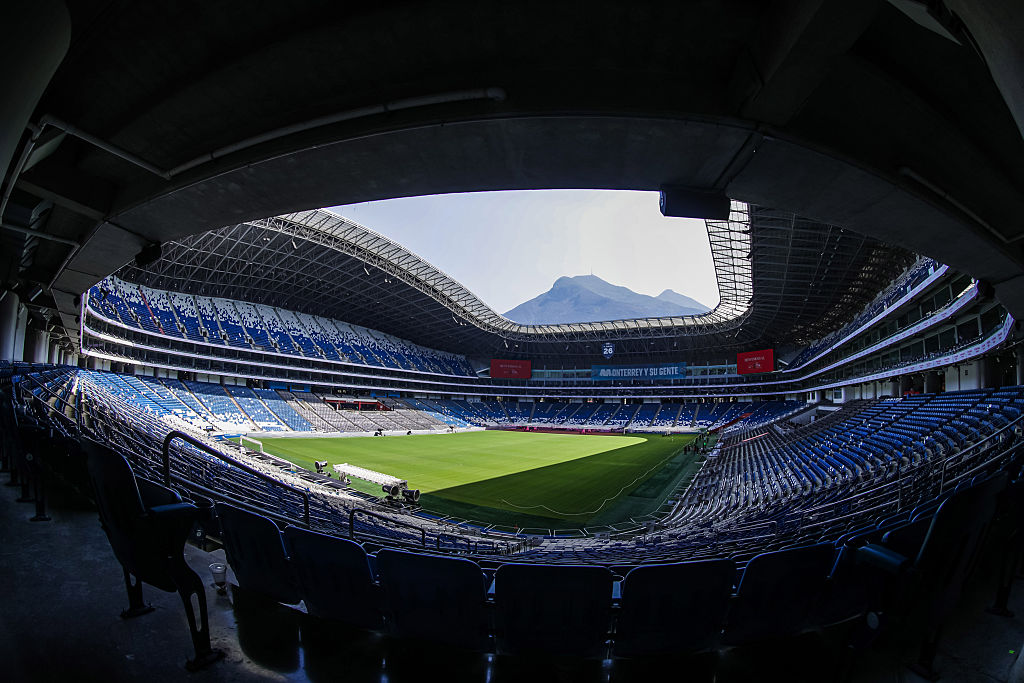
With the quadrennial World Cup football tournament set to kick off in June across North America, amid growing uncertainty in the Middle East, will the love of the game be enough to unite fans the world over once again?
Football and war are worlds apart. This year, though, an untimely overlap has them closer than ever.
The upcoming FIFA World Cup 2026 promises to be another rendition of footballing brilliance, but it’s facing the tailwinds of global uncertainty. Will the United States (U.S.)-Israel war with Iran fizzle out before kick-off in June? Nobody knows. What would it mean if it didn’t? The jury is still out on that.
The chance of postponement is slim, but in a world where the unpredictable is inevitable, one can’t rule out anything.
Sean Jacobs, Professor and Director of the Graduate Program in International Affairs at The New School, New York (U.S.), who focuses on the international politics of sport, shares the sentiment of a tournament likely to proceed, but not necessarily shielded from collapse.
“I doubt it’ll be postponed, but it’s not impossible,” Jacobs tells FORBES AFRICA, adding, “As things stand, all signals still point to it going ahead as planned”.

His green light assessment is merited. At the time of publishing, FIFA reportedly has no intention of furloughing the quadrennial event set to be hosted in the U.S., Mexico, and Canada from June 11 to July 19.
When asked whether cancellation is on the cards, the governing body’s Chief Operating Officer, Heimo Schirgi, told reporters at the International Broadcast Center in Dallas in early March: “The World Cup will go on obviously, right? The World Cup is too big and we hope that everyone can participate that has qualified.”
It was confidence with a caveat. “It’s changing day by day, and we are monitoring closely,” he said.
Schirgi’s optimism prevailed moments later: “We basically take it day by day and, at some stage, we will have a resolution.”
The uniqueness in this scenario isn’t a coinciding with conflict, as several World Cups have occurred during unrest—in 1978, Argentina hosted under the command of a ruthless military dictatorship, while neighbors Brazil faced mass protests due to corruption, inequality and World Cup spending in 2014—but few, if any, have been hosted by a notable figure in a war with such far-reaching implications.
Iran’s retaliatory strikes on the Middle East also have the world in limbo. The inability of the airports in the region to operate seamlessly is having a ripple effect throughout Washington, Africa, and beyond.
With travel costs already exceeding African budgets pre-war, soaring fuel and flight prices, resulting from Iran’s closure of the Strait of Hormuz, seem to further exclude a region renowned for invigorating World Cups with color and cadence.
The Disrupted Global Games
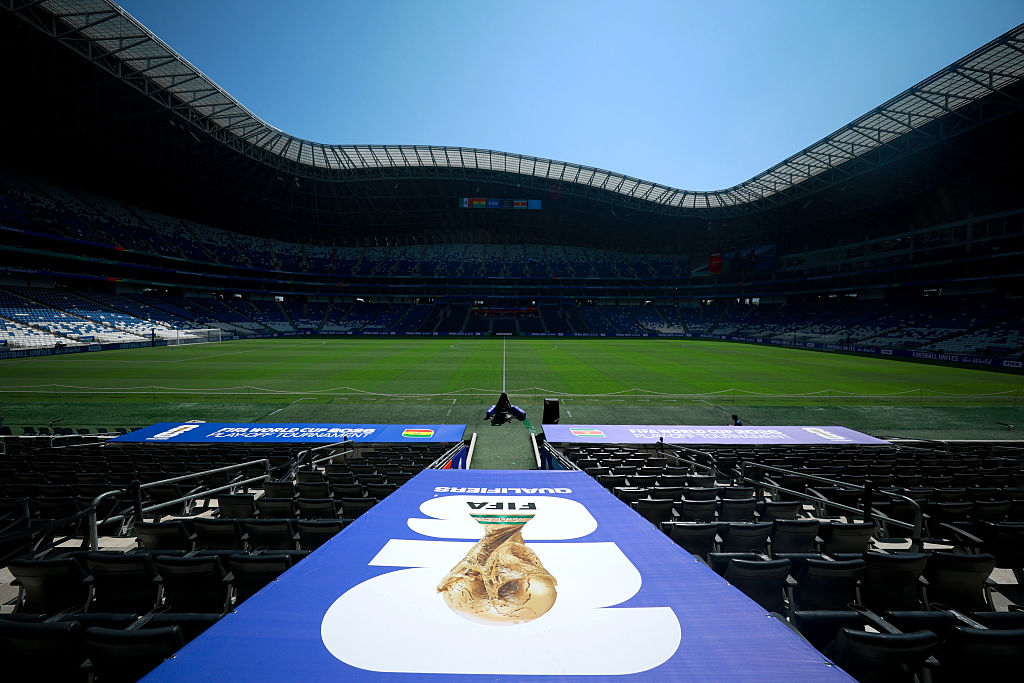
- Set for Doha, Qatar, on March 27, the inter-continental Finalissima between Spain and Argentina was axed over two weeks into the Middle East conflict.
- Football’s quadrennial Asian Cup finals, scheduled for April 11 in Riyadh, Saudi Arabia, have been postponed indefinitely.
- Formula 1 organizers have pulled the plug on the upcoming Grands Prix in Bahrain and Saudi Arabia, initially scheduled for back-to-back weekends in mid-April.
- MotoGP confirmed it has postponed April’s event in Bahrain to November 8.
- An ATP tennis tournament in the United Arab Emirates was canceled in early March.
Setting the scenes of what atmospheric-amplifiers could be missed, Jacobs says: “Each country brings its own rhythm: Ivorian fans with their percussion, Ghanaian brass bands, and, if the DRC makes it through the playoffs, the iconic ‘Patrice Lumumba’ figure standing and singing for an entire match.”
African fans are intrinsic to the World Cup experience, their dances often synchronizing with the rhythm of games as attackers twirl past defenders—a last-gasp tackle can be poetry in motion, too.
Martha Saavedra, Associate Director of the Center for African Studies at the University of California, Berkeley, believes African attendance will be diminished, regardless of whether the conflict comes to a halt.
“The absence of African fans will be noticeable,” she relays to FORBES AFRICA, but recognizes the diaspora of Cape Verdeans in the Northeast, such as Rhode Island, “alongside communities of Ghanaians, Senegalese, and South Africans” across the U.S.
Adding to the complexity of U.S.-Africa relations, some fanbases couldn’t make the pilgrimage even if they tried. Immigration has reportedly been a key agenda of the Trump administration, issuing partial travel bans on several nations set to compete, including Senegal and Côte d’Ivoire.
The amounts generally run between $5,000 and $15,000, and are required for passport holders from certain countries to enter the U.S. legally under B-1 or B-2 visas.
And for those soccer fans exempt from this, tedious hurdles may still have to be navigated. “Difficulty securing visa interviews, high denial rates, the cost and distance of travel just to attend an interview, sometimes in a neighboring country, and very high, non-refundable application fees,” Jacobs shares.
Africa isn’t the only region experiencing restrictions. In early March, Jamaican side, Mount Pleasant, had 10 players that were refused entry into the U.S. for their final against LA Galaxy, six of whom were of Haitian descent, another nation barred from entering U.S. soil, but World Cup-bound.
With several participating teams on the red list, FIFA has made it clear that special visas will be issued to national teams and their delegations. But, as Jacobs notes, “the reality has already been uneven; just ask Mount Pleasant”.
The World Cup also faces serious question marks over Iran, who are scheduled to play New Zealand, Belgium, and Egypt, in games set to be hosted in Los Angeles and Seattle.
Trump has commented on the team’s safety as its Football Federation negotiates with FIFA to move matches to Mexico.
“The Iran National Soccer Team is welcome to the World Cup, but I really don’t believe it is appropriate that they be there, for their own life and safety,” he said on social media site, Truth Social.
Mexico seems to be facing its own security concerns following cartel unrest in February, which predominantly occurred in one of the hosting provinces, Jalisco. The Mexican government has since confirmed it will deploy an additional 100,000 police, backed by aircraft and drones, when the tournament commences.
With chaos emanating from multiple streams, in myriad mediums, FIFA has had to wear its advocacy hat more firmly. After all, it’s in the bylaws to do so–article 3 of the FIFA Statutes reads: “FIFA is committed to respecting all internationally recognized human rights and shall strive to promote the protection of these rights.”
Murmurs of boycotting have also emerged, but none have garnered substantial support.
While FIFA can’t end wars, it has a golden opportunity to be a force for good. Football is a universal game, played from the slums of Senegal to the favelas of Brazil. It’s when ethnicities merge, and the only background check is whether one can kick a ball.
Now is the time to up the ante on harnessing football’s inclusive ideology. Perhaps the mindset should be: the world might be messy, but the show must go on.
Comments (0)
Sign in to join the conversation.
Related Stories

Equatorial Guinea: Charting A New Era Of Sustainable Prosperity
With a renewed focus on diversification and digitalization, Equatorial Guinea is leveraging its resources to create inclusive, long-term growth. “Agro-processing is a key priority, as our goal is to ultimately achieve national self-sufficiency and independence.” President Teodoro Obiang Nguema Mbasogo Equatorial Guinea is entering a new phase in its economic story–one defined by diversification, competitiveness, and connection. […]

Foundations Strengthening A National Future
Policy reforms, national capabilities, and coordinated institutions reinforce long-term growth across Equatorial Guinea. Q. How is your ministry advancing the national development agenda across key sectors such as agriculture, energy, and tourism, and what priorities guide your efforts to drive long-term economic growth and self-sufficiency? Hon. José Juan Ndong Tom Mekina, Minister of Agriculture, Livestock, Forestry, […]

Equatorial Guinea’s Energy Reset And The Revival Of Its Hydrocarbons Sector
As Equatorial Guinea reshapes its position in the regional energy market, GEPetrol is steering the shift to secure production, attract reliable partners, and align upstream growth with long-term economic goals. “Our strategic vision is to develop projects that are sustainable in the long term, and that also revive the economy.” Bienvenido Nguema Envo, General Manager of GEPetrol In 2024, […]
Recommended




The Daily Brief