

Building Healthy Security Through Trust And Long-Term Commitment
“Relationships are the real global currency. Trust strengthens them, but relationships are what ultimately create long-term impact across markets.” Uditha Jayaratne, CEO and Principal Officer, Kenya, Managing Director, Africa, Bupa As healthcare systems across Africa evolve, the role of sustainable health insurance is becoming increasingly important to economic resilience, workforce productivity, and social stability. In […]

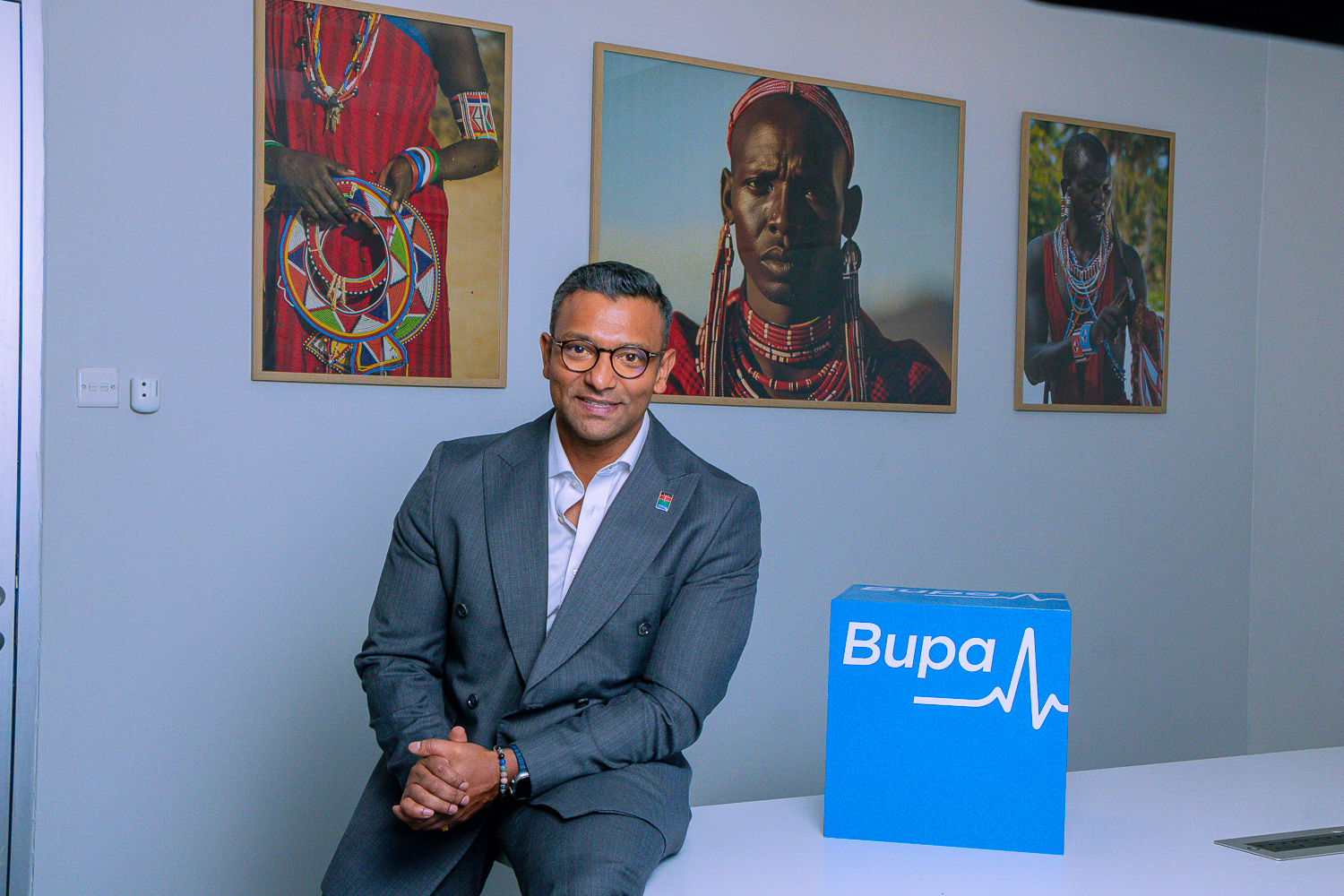
“Relationships are the real global currency. Trust strengthens them, but relationships are what ultimately create long-term impact across markets.” Uditha Jayaratne, CEO and Principal Officer, Kenya, Managing Director, Africa, Bupa
As healthcare systems across Africa evolve, the role of sustainable health insurance is becoming increasingly important to economic resilience, workforce productivity, and social stability.
In Kenya, that conversation is accelerating alongside wider efforts to expand healthcare access, strengthen public-private collaboration, and improve financial literacy around healthcare planning.
For Bupa Global, Kenya represents more than a market expansion. It reflects a wider commitment to helping build healthcare capacity across the continent through customer-focused insurance, responsible partnerships, and community investment.
In April 2025, Bupa Global became the first and only international private medical insurance provider to receive a direct operating license in Kenya, marking a major milestone both for the company and for the country’s insurance sector.
For Uditha Jayaratne, CEO and Principal Officer, Kenya, and Managing Director, Africa, the achievement represented more than speed or market access. It symbolized trust. “We did everything the right way,” he says. “We followed every regulatory requirement, worked transparently, and built strong relationships with stakeholders. The regulator trusted us with this license, and that responsibility carries enormous weight.”
Jayaratne, whose experience spans Asia, Europe, Russia, and the United Kingdom, believes relationships remain one of the most important foundations of successful market expansion.
“Relationships are the real global currency,” he says. “Trust strengthens them, but relationships are what create sustainable progress.”
That approach now shapes how Bupa Global is expanding across Africa. Rather than pursuing rapid short-term growth, the company is focused on building healthcare systems and insurance models that can support customers consistently over time.
“You can plant flags very quickly across multiple countries,” says Jayaratne. “But if you are not building depth, capability, and sustainability underneath, then you are not creating real value.”
The company’s broader global purpose centers around helping people live “longer, healthier, happier lives, and making a better world” while contributing positively to the communities it serves. According to Jayaratne, that purpose becomes especially relevant in emerging healthcare markets where education around insurance principles is still developing.
Drawing on his background in banking, he believes financial literacy and healthcare literacy are closely connected. “In many emerging markets, people often respond to risk only once something happens,” he explains. “Insurance requires a different mindset. It is about preparing before a crisis arrives.”
Part of Bupa Global’s role in Africa, he says, is therefore educational. Beyond providing healthcare solutions, the company also wants to help consumers better understand healthcare planning, sustainable insurance, and the value of preventive protection.
Customer-centricity remains another defining element of the organization’s strategy. Unlike many shareholder-driven financial institutions, Bupa Global reinvests profits back into healthcare ecosystems, allowing the company to focus on lasting value rather than purely short-term returns.
“Our ambition is to become the most customer-centric healthcare partner in every market where we operate,” says Jayaratne. That philosophy also shapes the company’s position on sustainability within the insurance sector itself.
Jayaratne speaks candidly about the risks created when insurers pursue aggressive underpricing strategies that may appear attractive initially but ultimately leave customers exposed once claims increase or chronic conditions emerge.
“Sustainable healthcare matters because these are real lives,” he says. “People need solutions that will still protect them years later when they need support most.”
Alongside healthcare provision, Bupa Global has also expanded its social-impact initiatives in Kenya through clean-water programs supported by the Bupa Global Foundation. The company has already funded several solar-powered boreholes providing access to clean water for tens of thousands of people, while also training local communities to maintain the systems independently over time.
For Jayaratne, the initiative became deeply personal after visiting rural communities where young girls regularly missed school in order to walk long distances collecting water. “You realize very quickly that healthcare is about much more than insurance policies,” he says. “Access to clean water changes education, health outcomes, and opportunity.”
The initiative reflects Bupa Global’s broader effort to improve healthcare access beyond traditional insurance provision while contributing to healthier communities more broadly.
Looking ahead, Jayaratne believes Africa’s healthcare sector holds enormous potential if supported by thoughtful investment, stronger partnerships, and sustainable operational standards.
“I want Bupa Global’s legacy in Africa to help define what good healthcare provision should look like,” he says. “That means raising standards, building capacity, and creating systems that genuinely improve people’s lives.”
Comments (0)
Sign in to join the conversation.
Related Stories

Equatorial Guinea: Charting A New Era Of Sustainable Prosperity
With a renewed focus on diversification and digitalization, Equatorial Guinea is leveraging its resources to create inclusive, long-term growth. “Agro-processing is a key priority, as our goal is to ultimately achieve national self-sufficiency and independence.” President Teodoro Obiang Nguema Mbasogo Equatorial Guinea is entering a new phase in its economic story–one defined by diversification, competitiveness, and connection. […]

Foundations Strengthening A National Future
Policy reforms, national capabilities, and coordinated institutions reinforce long-term growth across Equatorial Guinea. Q. How is your ministry advancing the national development agenda across key sectors such as agriculture, energy, and tourism, and what priorities guide your efforts to drive long-term economic growth and self-sufficiency? Hon. José Juan Ndong Tom Mekina, Minister of Agriculture, Livestock, Forestry, […]

Equatorial Guinea’s Energy Reset And The Revival Of Its Hydrocarbons Sector
As Equatorial Guinea reshapes its position in the regional energy market, GEPetrol is steering the shift to secure production, attract reliable partners, and align upstream growth with long-term economic goals. “Our strategic vision is to develop projects that are sustainable in the long term, and that also revive the economy.” Bienvenido Nguema Envo, General Manager of GEPetrol In 2024, […]
Recommended




The Daily Brief