

Cover Story: THE ICONS
We live in Africa not knowing and realizing the power of our culture, how we have ruled music on the planet,” said five-time Grammy winner from Benin, Angélique Kidjo, in an exclusive interview with FORBES AFRICA in 2022. The power of our culture. Those are telling words. Brand Finance, in early 2026, released its Global […]

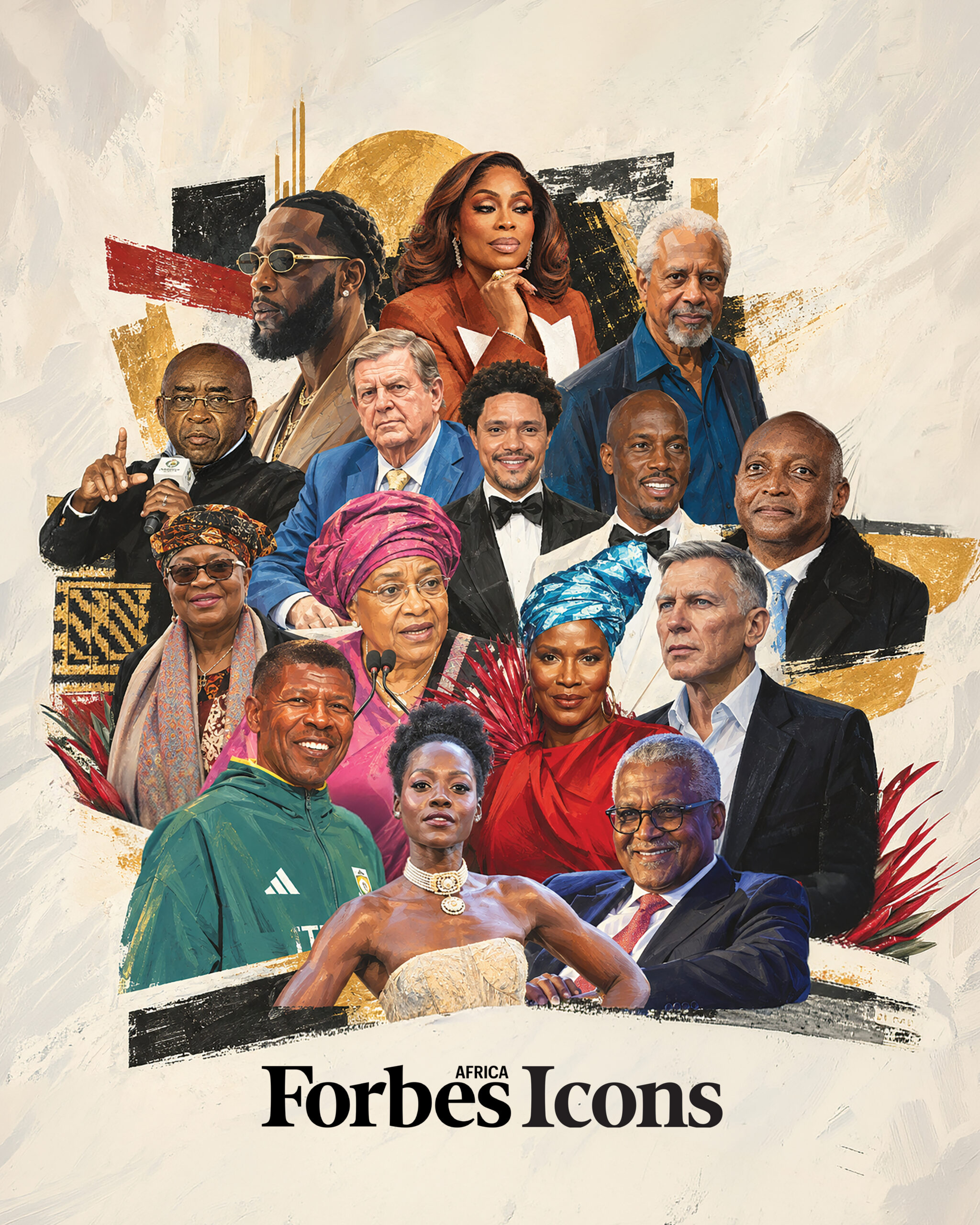
We live in Africa not knowing and realizing the power of our culture, how we have ruled music on the planet,” said five-time Grammy winner from Benin, Angélique Kidjo, in an exclusive interview with FORBES AFRICA in 2022.
The power of our culture. Those are telling words.
Brand Finance, in early 2026, released its Global Soft Power Index, ranking countries based on how they are perceived around the world. The index combined surveys and perception metrics to measure the global appeal, reputation and influence of nations. It showed South Africa ranked at number 43 out of 193 countries, with Nigeria climbing six ranks up to 71st place. This depiction reinforces the notion that Africa has asserted its influence on the global stage not only through economic growth and for its natural resources, but also for its ‘soft power’–the ability to shape global perceptions and conversations through culture, diplomacy and business.
And, at the epicenter of this influence, is the continent’s people.
The 15 individuals on this list would likely not categorize themselves as icons but for a generation of young Africans, they are the role models they idolize for their ambition, discipline, success and distinctly African hustle that the world has taken note of. For FORBES AFRICA, this curation goes beyond being a compilation based on wealth, global fame or achievement–it recognizes their endurance, staying power and impact over many years.
“I never aimed to focus on any domestic or global achievement. My main aim was to create companies that are globally competitive,” South African billionaire and businessman, Dr Patrice Mostepe, said in a Business Day article in 2017.
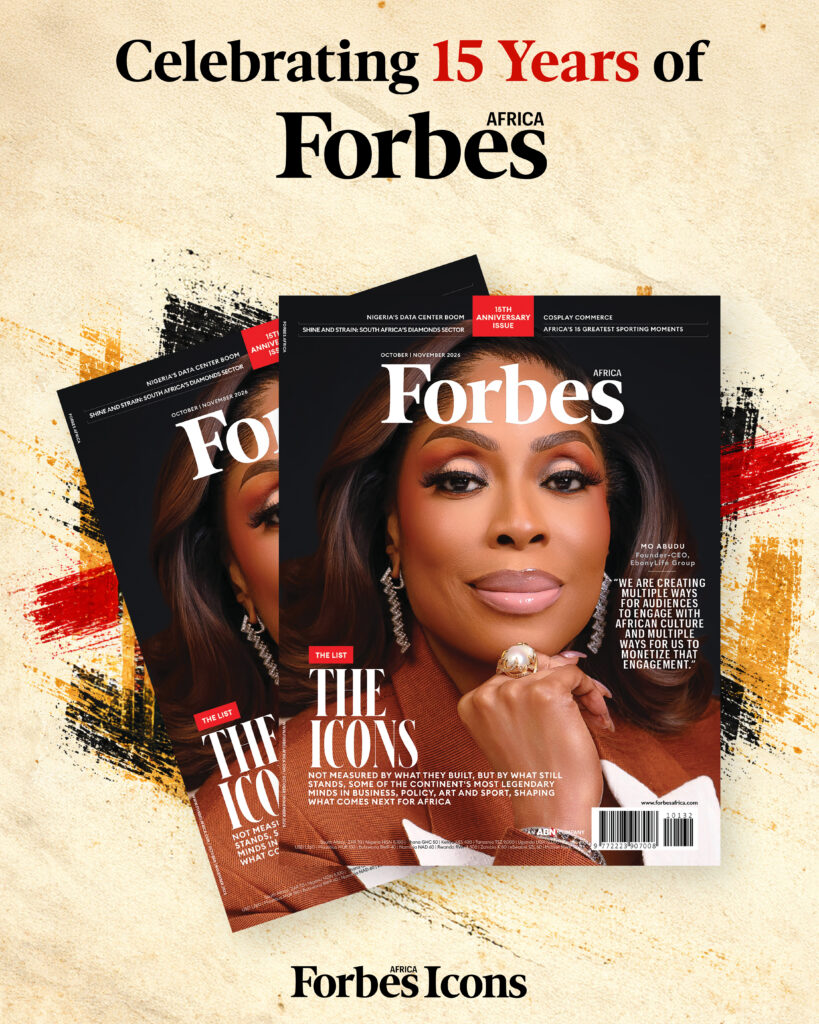
Echoing this point, Nigerian media mogul, business leader and philanthropist, Mo Abudu, says to FORBES AFRICA: “I believe we have to build people as we build businesses. If we do that, we are not just creating companies; we are helping build an industry.”
While the career paths of these two African business tycoons vary, the common thread uniting them, is influence.
With continental GDP expected to reach $3.56 trillion in 2026, each individual on this list has played his or her part in expanding the notion of what is possible for Africa’s people, institutions, creatives and businesses.
The cultural icons and creatives, in particular, have placed Africa on the global stage–icons such as Abudu; South African comedian Trevor Noah; Kidjo; Tanzanian-born novelist Abdulrazak Gurnah; Kenyan-Mexican, award-winning actor Lupita Nyong’o; and Nigerian singer, songwriter, and record producer Damini Ebunoluwa Ogulu (known as Burna Boy).
“We spend so much time being afraid of failure, afraid of rejection,” Noah said in his 2016 book, Born a Crime: Stories from a South African Childhood. “But regret is the thing we should fear most. Failure is an answer. Rejection is an answer. Regret is an eternal question you will never have the answer to.”
Needless to say, the opportunities are here and now in Africa.
In an interview in 2019 with Billboard, Ogulu said: “Most Americans don’t even understand what I’m saying in my records, but they pick up on the vibe, the vibration.”
The article goes on to say that the one reason he believes Afrobeats–the contemporary version of Afrobeat–is having a moment is because “everything started from Africa, and so music started from Africa. It’s all going to come back to its roots eventually. When you hear our music, it resonates in the soul”.
Similarly, in the business and corporate world, titans such as Adrian Gore (South African businessman and entrepreneur), and billionaires like Motsepe, Strive Masiyiwa, Aliko Dangote and Johann Rupert, have endeavored to showcase the continent’s distinctiveness and potential.
“We have to build our own nation by ourselves,” Dangote told Forbes in 2025. “We have to build our own continent by ourselves, not foreign investment.”
In sport, the continent has proven its ability to excel on stages the world over, from rugby and athletics to football. Athletes like Ethiopian runner Haile Gebrselassie and footballer Didier Drogba from Côte d’Ivoire have made their mark, illustrating what is possible for those willing to work hard to pursue their goals.
“Football isn’t just about winning or losing, football is also about being a good person, learning how to live together, in a team full of different nationalities,” Drogba said at an event in 2023, per Inside FIFA.
“…we had to learn how to live together, to respect each other’s culture and play for the same badge. These are the values that you win and you learn when you play football. This is something all the kids should have.”
Equally important is the impact at a policy level, as with the first elected female head of state on the continent, Ellen Johnson Sirleaf, or the first woman and first African to serve as Director-General of the World Trade Organization, Dr Ngozi Okonjo-Iweala.
“We must change the structure of our economy and the structure of our revenues,” Okonjo-Iweala said in a 2020 interview with FORBES AFRICA, on Africa’s need to shift away from commodity dependance, adding, “we have to change all of that… in order to survive because the world outside is changing”.
An icon is one whose achievements have transformed industries, inspired generations and helped shape Africa’s story, and the 15 listed here have seen their influence extend beyond professional success, to create meaningful economic, social, cultural or global impact that will endure for years to come.
Comments (0)
Sign in to join the conversation.
Related Stories

Equatorial Guinea: Charting A New Era Of Sustainable Prosperity
With a renewed focus on diversification and digitalization, Equatorial Guinea is leveraging its resources to create inclusive, long-term growth. “Agro-processing is a key priority, as our goal is to ultimately achieve national self-sufficiency and independence.” President Teodoro Obiang Nguema Mbasogo Equatorial Guinea is entering a new phase in its economic story–one defined by diversification, competitiveness, and connection. […]

Foundations Strengthening A National Future
Policy reforms, national capabilities, and coordinated institutions reinforce long-term growth across Equatorial Guinea. Q. How is your ministry advancing the national development agenda across key sectors such as agriculture, energy, and tourism, and what priorities guide your efforts to drive long-term economic growth and self-sufficiency? Hon. José Juan Ndong Tom Mekina, Minister of Agriculture, Livestock, Forestry, […]

Equatorial Guinea’s Energy Reset And The Revival Of Its Hydrocarbons Sector
As Equatorial Guinea reshapes its position in the regional energy market, GEPetrol is steering the shift to secure production, attract reliable partners, and align upstream growth with long-term economic goals. “Our strategic vision is to develop projects that are sustainable in the long term, and that also revive the economy.” Bienvenido Nguema Envo, General Manager of GEPetrol In 2024, […]
Recommended




The Daily Brief