

Curated Capital: African Art As A Cultural And Investment Instrument
Alongside financial indices, private equity ventures and real-estate portfolios, contemporary art could stake its claim as a next-generation, alternative asset class on the continent. Showcases such as the Investec Cape Town Art Fair, ART X Lagos and the RMB Latitudes Art Fair, reinforce this. A curated and deliberate art collection can serve as a strategic […]

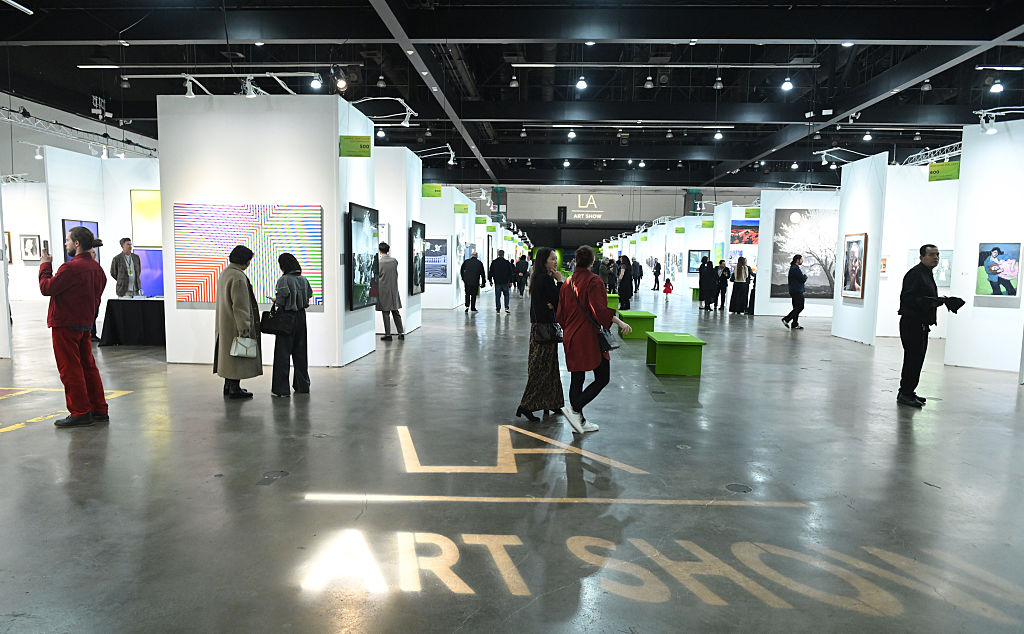
Alongside financial indices, private equity ventures and real-estate portfolios, contemporary art could stake its claim as a next-generation, alternative asset class on the continent. Showcases such as the Investec Cape Town Art Fair, ART X Lagos and the RMB Latitudes Art Fair, reinforce this.
A curated and deliberate art collection can serve as a strategic alternative asset; this as some global investors look to diversify beyond traditional equities and bonds.
“Every client will hold some form of alternative investment within their portfolios—from art to cars and watches,” explains Tristanne Farrell, Senior Investment Manager at Investec Wealth & Investment International.
“We view wealth holistically through a framework of safety, prosperity and legacy. Art generally sits within the legacy pillar, intended for long-term transfer to the next generation.”
Unlike yield-generating assets such as real estate–which has the potential for rental income–or private equity, which targets defined returns, art is more typically a non-income-producing asset. The value depends on various aspects, including an artist’s reputation and institutional validation.
“With art, your investment is partially exposed to a person—their production, career trajectory and broader life circumstances,” Farrell notes. “Diversification is crucial–don’t buy one artist; build a considered collection.”
According to Artnet’s 2025 Intelligence Report, globally, post-war and contemporary art remains the most lucrative category in the secondary market, generating just under $4 billion in sales in 2024.
Within this broader ecosystem, African contemporary art has experienced periods of growth, particularly between 2013 and 2023, when the segment expanded due to rising international demand.
Artnet also indicated that Africa’s sales of ultra-contemporary works by African-born artists jumped from $16.2 million in 2020 to $40.6 million in 2021, with estimates that it could make around $1.5 billion as demand accelerates.
The recently-concluded Investec Cape Town Art Fair, held at the city’s international convention center, showcased how African contemporary art can become a notable factor in wealth conversations rather than simply aesthetic.
It featured 126 exhibitors from 34 cities across 22 countries, representing roughly 490 artists. According to Farrell, the impact extends far beyond the exhibition floor.
“The economic impact of the fair on the city is significant,” she tells FORBES AFRICA.
“Beyond attracting high-net-worth international visitors and collectors, it strengthens Cape Town’s cultural brand and activates institutions across the city, including museums, galleries and pop-up art spaces.”
A Maturing Asset Class
Unlike other asset classes, holding periods in the art market tend to be longer, transaction costs are higher and valuation mechanisms more subjective.
For this reason, art functions most effectively within a diversified portfolio that looks at legacy planning rather than short-term returns, with Farrell stating: “The common theme across all assets is time in the market”.
With African contemporary art, growing international demand, evolving fair infrastructure, shifts in the beliefs of generational collectors and increased institutional validation all reinforce its credibility.
For investors with patience and a long-term lens, the continent’s creative economy could steadily mature into a viable, globally-relevant asset class.
Comments (0)
Sign in to join the conversation.
Related Stories

Equatorial Guinea: Charting A New Era Of Sustainable Prosperity
With a renewed focus on diversification and digitalization, Equatorial Guinea is leveraging its resources to create inclusive, long-term growth. “Agro-processing is a key priority, as our goal is to ultimately achieve national self-sufficiency and independence.” President Teodoro Obiang Nguema Mbasogo Equatorial Guinea is entering a new phase in its economic story–one defined by diversification, competitiveness, and connection. […]

Foundations Strengthening A National Future
Policy reforms, national capabilities, and coordinated institutions reinforce long-term growth across Equatorial Guinea. Q. How is your ministry advancing the national development agenda across key sectors such as agriculture, energy, and tourism, and what priorities guide your efforts to drive long-term economic growth and self-sufficiency? Hon. José Juan Ndong Tom Mekina, Minister of Agriculture, Livestock, Forestry, […]

Equatorial Guinea’s Energy Reset And The Revival Of Its Hydrocarbons Sector
As Equatorial Guinea reshapes its position in the regional energy market, GEPetrol is steering the shift to secure production, attract reliable partners, and align upstream growth with long-term economic goals. “Our strategic vision is to develop projects that are sustainable in the long term, and that also revive the economy.” Bienvenido Nguema Envo, General Manager of GEPetrol In 2024, […]
Recommended




The Daily Brief