

From Equator To Orbit: Africa’s Bold Ascent Into The Skies
With strategic geography, emerging talent and global partnerships, Africa’s space economy is projected to reach almost $40 billion by 2030, and the continent is claiming its place in the global space race. For the region, space is no longer a frontier far, far away anymore. How the region leverages its budding ecosystem could tip the […]

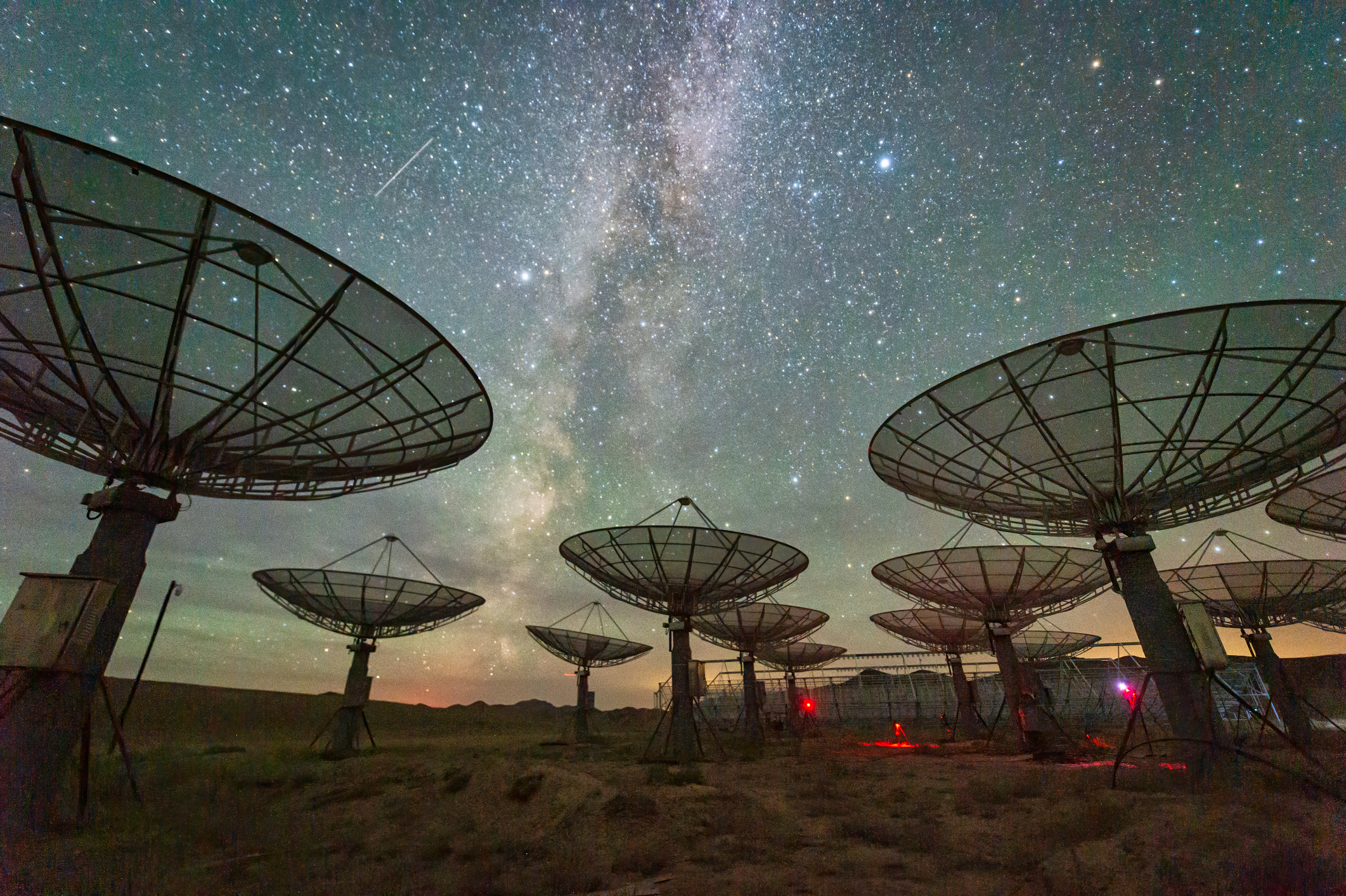
With strategic geography, emerging talent and global partnerships, Africa’s space economy is projected to reach almost $40 billion by 2030, and the continent is claiming its place in the global space race. For the region, space is no longer a frontier far, far away anymore.
How the region leverages its budding ecosystem could tip the geopolitical scales from dependence to unprecedented sovereignty.
It’s a swing of the pendulum worth fighting for. Thousands of satellites orbit among the stars, delivering real-time data, long-term projections, and new pathways for innovation and sustainable development. Africa’s need for indigenous intelligence has perhaps never been greater.
Why Is Expenditure Soaring?
An industry boasting stratospheric potential, Africa’s space economy, valued at $24.95 billion, beating 2022’s estimation by $2.31 billion, is projected to reach $39.52 billion by 2030, an annual report by African-centric consultancy firm, Space in Africa, shows.
“There is growing investment into Africa as it offers a substantial youth labor market, natural mineral wealth, and unique geological areas,” explains Vaneshree Maharaj, spokesperson for the South African National Space Agency (SANSA).
While substantial growth beckons, Africa accounts for a fragment of the entire ecosystem.
According to a 2024 World Economic Forum and McKinsey & Company report, the global space economy is predicted to become a $1.8 trillion industry by 2035. It was worth $630 billion in 2023.
It’s a trajectory signaling global intent. Space faculties have become prized national assets, as countries race to harness space as much as they do Earth.
“The battle for Africa’s future is being fought in the skies. We cannot afford to lose,” Dr Tidiane Ouattara, President of the Council of the African Space Agency (AfSA), said in his opening remarks at the International Exhibition of Artificial Intelligence, Defense and Space in Côte d’Ivoire in 2025.
Business is booming above the clouds, but, from a public perspective, Africa remains sidelined, even as its private sector thrives. This divide largely stems from budget disparity. A 2025 African Space Budget report by Space in Africa revealed the continent’s total budget to be around $420 million for 2025, over $28 billion less than the United States’ (U.S.) space spending in 2024.
Despite such fiscal separation from the West, publicly-backed innovation, councils, policies, and infrastructure are gaining momentum across Africa: east, west, south, and north.
Inaugurated in 2025, the Cairo-based AfSa, an agency of the African Union (AU), was established to focus on collaborative space research and exploration for regional socio-economic development. It symbolizes the continent’s seriousness about space.
“Africa’s space economy is foundational to our future growth; it is no longer a luxury but a vital infrastructure for development,” Ouattara tells FORBES AFRICA.
“As the continent positions itself for the future, building domestic space capabilities will be crucial to closing the gap and unlocking new value chains.”
Although modest when stacked against global spending, it was likely a sharp rise in local investment that was the catalyst for AfSa’s creation. Government contributions increased by 80.38% from 2019 ($289.33 million) to 2021 ($523.2 million), a Space In Africa industry report revealed.
Some may wonder why expenditure is soaring now… Why not 10 years ago?
The answer is simple–barriers to entry have lowered, allowing startups to swarm in by the thousands, and African governments no longer perceive space as experimental practice—it’s now a necessity.

“People tend to think of space as something far away, but in reality, it’s the foundation of modern life. Navigation, communication, banking, climate risk mitigation, and national security—they all depend on space-based infrastructure,” says Richard Folly, CEO of African Geospace–a company leveraging satellites and AI to transform spatial data into actionable insights–to FORBES AFRICA.
“If you don’t have sovereignty in space, you’re basically renting your future from someone else,” he adds.
Africa’s future outlook intensifies the urgency for high-precision systems. With a population expected to reach nearly 2.5 billion by 2050, the continent is projected to represent a quarter of the world population—a figure estimated to reach 40% by the end of the century.
Policymakers need to be acutely aware of the continent’s fragile supply chains, currently lacking the efficiency to sustain and feed a soaring demographic.
Comments (0)
Sign in to join the conversation.
Related Stories

Equatorial Guinea: Charting A New Era Of Sustainable Prosperity
With a renewed focus on diversification and digitalization, Equatorial Guinea is leveraging its resources to create inclusive, long-term growth. “Agro-processing is a key priority, as our goal is to ultimately achieve national self-sufficiency and independence.” President Teodoro Obiang Nguema Mbasogo Equatorial Guinea is entering a new phase in its economic story–one defined by diversification, competitiveness, and connection. […]

Foundations Strengthening A National Future
Policy reforms, national capabilities, and coordinated institutions reinforce long-term growth across Equatorial Guinea. Q. How is your ministry advancing the national development agenda across key sectors such as agriculture, energy, and tourism, and what priorities guide your efforts to drive long-term economic growth and self-sufficiency? Hon. José Juan Ndong Tom Mekina, Minister of Agriculture, Livestock, Forestry, […]

Equatorial Guinea’s Energy Reset And The Revival Of Its Hydrocarbons Sector
As Equatorial Guinea reshapes its position in the regional energy market, GEPetrol is steering the shift to secure production, attract reliable partners, and align upstream growth with long-term economic goals. “Our strategic vision is to develop projects that are sustainable in the long term, and that also revive the economy.” Bienvenido Nguema Envo, General Manager of GEPetrol In 2024, […]
Recommended




The Daily Brief