

From Ford To Tesla, Big Electric Pickups Are A Tough Sell
Current Climate brings you the latest news about the business of sustainability every Monday. Sign up to get it in your inbox. 0none level, news that Ford is taking a massive $19.5 billion charge to downsize its electric vehicle plans, highlighted by the elimination of the battery-only version of the F-150 Lightning pickup, seems to confirm that U.S. automakers are […]

Current Climate brings you the latest news about the business of sustainability every Monday. Sign up to get it in your inbox.
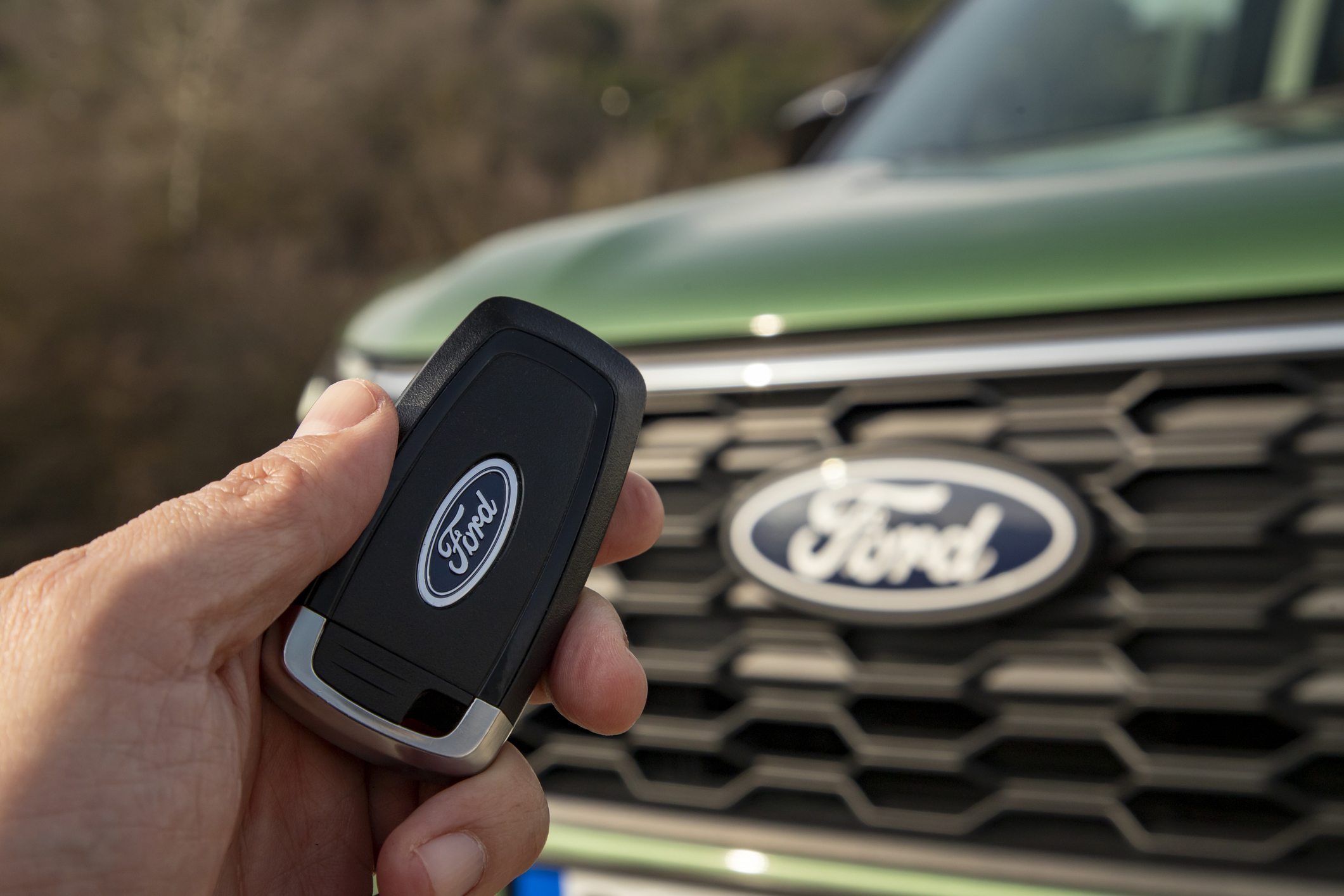
0none level, news that Ford is taking a massive $19.5 billion charge to downsize its electric vehicle plans, highlighted by the elimination of the battery-only version of the F-150 Lightning pickup, seems to confirm that U.S. automakers are falling further behind global rivals as the world’s embrace of EVs accelerates. On another, it makes clear that pricey 6,000-pound EVs probably – especially if they’re expected to tow or haul heavy loads – are a tough sell.
Trucks are Ford’s bread and butter and a battery version of its top-selling F-150 probably seemed like a no-brainer, especially given Elon Musk’s boasts about how the Tesla Cybertruck would shake up the pickup world. Not wanting to be left out, General Motors, another pickup powerhouse, rolled out the twin Chevy Silverado and GMC Sierra EV models to ensure it was in the mix. Toss in Rivian’s R1T and suddenly truck buyers had a range of battery-powered options, albeit pricey ones.
Ford invested heavily in new production capacity and battery factories to support Lightning, but sales fell short of expectations. And the same is true for all its competitors. Cybertruck has been the biggest flop, selling about a tenth as many units as Musk predicted. Its polarizing looks and poor design for hauling and towing turned it into a niche statement purchase for Musk fans, rather than a work vehicle. Rivian, to its credit, positioned R1T as an outdoor activity vehicle, for camping and various adventures, rather than a truck for contractors and ranchers. But its high pricetag, starting at $73,000, minimizes its appeal.
The current limitations of battery technology mean big, heavy trucks are extremely tricky to electrify. Lightning’s battery pack weighs in at over 1,800 pounds, and though it provides driving range of up to 300 miles per charge, that drops precipitously if it’s hauling heavy loads or towing a boat or trailer. Going forward, Ford is turning Lightning into an extended-range electric vehicle – a kind of plug-in hybrid that will allow it to operate solely on battery power for limited periods, but use gas when more range or towing is required. It’s not a bad idea, but unclear whether many truck buyers will be interested.
Ford is also planning to roll out a new electric pickup in 2027, a midsize model using new technology and production techniques, but it seems to be overlooking a more obvious choice for electrification in the near term: its compact Maverick. The affordable small truck, priced from $29,000, has been a hot seller since its introduction in 2021. And it’s already available with a hybrid-electric powertrain that delivers up to 40 mpg. Given its appeal to non-traditional truck buyers, who want a vehicle that can haul bikes, camping gear or yard supplies, not lumber or heavy construction materials, a full electric version would seem like a smart lineup addition. Better still, it would have no direct competition.
(Note: This is the final Current Climate of 2025. It returns on Jan. 5, 2026. Best wishes for a happy and healthy holiday season!)
The Big Read
California Says Tesla Deceived Consumers With Its Self-Driving Claims
Tesla will be temporarily unable to sell new electric vehicles in California for a month unless the carmaker led by billionaire Elon Musk changes what the state and a judge determined are deceptive marketing practices for its Autopilot and Full Self-Driving features.
Administrative Judge Juliet Cox ruled that the Austin-based company has for years misled buyers with regard to the level of automation Tesla’s currently have, leading them to think its vehicles are more capable of driving themselves than they really are, the Department of Motor Vehicles said in a statement. She recommended a 30-day sales and production suspension in California, Tesla’s biggest U.S. market, as punishment. The DMV isn’t immediately imposing the sales ban and instead said it’s given Tesla 60 days to modify marketing language for Autopilot and FSD. The agency said it doesn’t intend to suspend production at Tesla’s Fremont, California plant.
“The DMV’s decision today confirms that the department will hold every vehicle manufacturer to the highest safety standards to keep California’s drivers, passengers and pedestrians protected,” DMV Director Steve Gordon said in an emailed statement. “Tesla can take simple steps to pause this decision and permanently resolve this issue — steps autonomous vehicle companies and other automakers have been able to achieve in California’s nation-leading and supportive innovation marketplace.”
Hot Topic
Colin McCulley, vice president of VEMA Hydrogen, on creating engineered mineral hydrogen
What exactly is the source of hydrogen VEMA is pursuing?
We’re developing engineered mineral hydrogen. This is a method to produce low carbon energy in the form of hydrogen from certain types of underground rocks. We use a proprietary catalyst and some mature technologies from the geothermal and oil and gas industries to access and start this manufacturing process underground and then produce it back to surface.
There are certain types of iron-rich rocks that exist up and down the West Coast of the U.S., they’re on the east coast of Canada, they’re kind of abundant globally. They’re in almost every country, they’re called ophiolites. We take those rocks and we use our catalyst and our technology to stimulate the natural occurring reactions that generate hydrogen. So if you think Discovery Channel, there’s people wandering around, there’s all kinds of hydrogen being produced by nature at all times. The Mariana Trench in the ocean, there’s stuff at every volcano, you can measure it. It’s just not commercial rates. What we’re trying to do is increase that rate of reaction with the catalyst. We’ve had great success with that and then scale it up to the point where we can make it a commercial operation.
Is this similar to geologic hydrogen that companies like Koloma are pursuing?
I would say we are kind of adjacent to geologic hydrogen. We have interest in the same kinds of rocks. Our process is more about manufacturing. We’re going after the easier to identify less risky, iron-rich rocks. And we’re able to use those nearer to the surface at depths of say around a thousand meters to produce this hydrogen. Koloma and some of the other natural or geologic hydrogen guys are exploring for deposits of hydrogen similar to an oil and gas deposit. So they have to find not just these rocks, but they have to find these rocks at the right conditions, in the migration pathway and the reservoir rock and the seal. There’s a five-part system of geologic component that they have to do. Finding all of those individually is its own challenge and frankly it’s a pretty risky endeavor.
We think we have a major advantage over them basically because we have much less exploration risk.
What is the catalyst material you’re adding to make the process work?
I can’t tell you what the element is. We have a provisional patent on it, but we’re not talking chemistry yet. It is non-toxic. … We’ve been developing this in the lab using samples from our field exploration. We’ve tested it on a variety of rocks and we’re confident in its success. We’ve been able to increase the rate of reaction by more than 10,000 times, which was our initial target. Now we’re trying to target 100,000 times. We are confident it works. It’s not toxic, but I can’t tell you any chemistry cycle.
Is your process similar to fracking for natural gas?
We are not at all like fracking. We are trying to pump water into the ground, but our rates are a significantly lower order of magnitude on the injection rate. It is just a much gentler injection of fluid and you can control that. It doesn’t go wherever. And just to be really clear, we are not doing fracturing.
You’ve announced a 10-year supply deal for a data center customer in California. Where are you in the process of scaling up to do that?
We have started a pilot but we are not announcing results of that pilot yet. … We are not announcing any produced hydrogen yet. Hopefully that’s a few months away, but it’s not something I can share right now.
There are many colors used to describe hydrogen, from gray to blue to green to white or gold. Is your form orange hydrogen?
We used to call it orange hydrogen. So one of our founders, Florian Osselin, wrote a seminal paper about what this kind of stimulated geologic hydrogen is and called it orange. We get feedback that people don’t like the rainbow of colors and so we’ve switched to calling it engineered mineral hydrogen.
The company believes its process is energy positive?
Yes, and that allows us to really change the economics. That’s why we can advertise that we think we can get to the sub-$1 per kilogram level as cost. That really takes it from being a niche industry for people that really care about decarbonization … and allows us to eventually compete with and potentially displace traditional oil and gas applications.
Comments (0)
Sign in to join the conversation.
Related Stories

Equatorial Guinea: Charting A New Era Of Sustainable Prosperity
With a renewed focus on diversification and digitalization, Equatorial Guinea is leveraging its resources to create inclusive, long-term growth. “Agro-processing is a key priority, as our goal is to ultimately achieve national self-sufficiency and independence.” President Teodoro Obiang Nguema Mbasogo Equatorial Guinea is entering a new phase in its economic story–one defined by diversification, competitiveness, and connection. […]

Foundations Strengthening A National Future
Policy reforms, national capabilities, and coordinated institutions reinforce long-term growth across Equatorial Guinea. Q. How is your ministry advancing the national development agenda across key sectors such as agriculture, energy, and tourism, and what priorities guide your efforts to drive long-term economic growth and self-sufficiency? Hon. José Juan Ndong Tom Mekina, Minister of Agriculture, Livestock, Forestry, […]

Equatorial Guinea’s Energy Reset And The Revival Of Its Hydrocarbons Sector
As Equatorial Guinea reshapes its position in the regional energy market, GEPetrol is steering the shift to secure production, attract reliable partners, and align upstream growth with long-term economic goals. “Our strategic vision is to develop projects that are sustainable in the long term, and that also revive the economy.” Bienvenido Nguema Envo, General Manager of GEPetrol In 2024, […]
Recommended




The Daily Brief