

‘Investors More Discriminating’: Expert On Global Bond Market’s Impact On Africa’s Biggest Economy
A global benchmark for borrowing rates, the United States (U.S.) 10-Year Treasury Note yield reached its highest level since 2002 last week, exceeding 5.2%, and remains above that threshold at the time of writing. It has seemingly sparked an influx of investors seeking refuge in developed markets, drying up reserves elsewhere. “Higher global yields make […]

A global benchmark for borrowing rates, the United States (U.S.) 10-Year Treasury Note yield reached its highest level since 2002 last week, exceeding 5.2%, and remains above that threshold at the time of writing.
It has seemingly sparked an influx of investors seeking refuge in developed markets, drying up reserves elsewhere.
“Higher global yields make investors more discriminating. They can reduce the attractiveness of equities, tighten financial conditions and weigh particularly heavily on more speculative capital flows, including carry trades,” says Lisette IJssel de Schepper, Chief Economist at the University of Stellenbosch-based Bureau for Economic Research (BER), to FORBES AFRICA.
It isn’t just the U.S. bond market dampening the attractiveness of stocks; the same goes for Japan and European yields, triggering a global pullback. Market dynamics are evolving by the day.
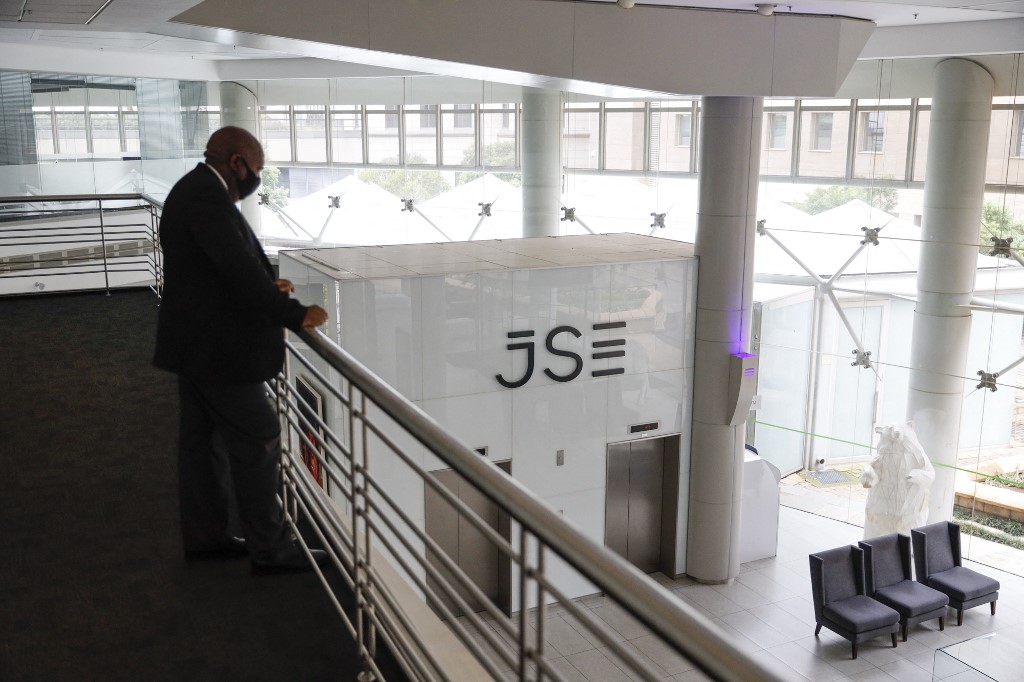
The Johannesburg Stock Exchange (JSE) saw a 6.7% slump in its benchmark stock index (FTSE/JSE Africa All-Share index) in September, escalating an already testing period for the economy.
It’s easy to point fingers at the U.S. Treasury Yield for the sudden shift in investment appetite, but IJssel de Schepper reminds us that while “the rise in global bond yields is certainly a concern,” South African bonds have performed well against some developed markets, “reflecting, at least in part, an improvement in South Africa’s underlying fundamentals”.
Moreover, falling platinum and gold prices, key South African exports, triggered an over 17% drop amongst miners of precious metals.
South Africa’s rand (ZAR) has shown resilience in 2026, but fell for a fourth consecutive week against a strengthening dollar, reporting a weekly loss of nearly 2% last Friday.
“Currencies tend to respond to expected future interest-rate differentials rather than to current policy rates alone,” IJssel de Schepper says, warning that if U.S. rates remain higher for longer while South Africa’s improving medium-term inflation outlook eventually allows for a less restrictive policy stance, “that relative shift could place some pressure on the rand”.
South Africa, however, still offers relatively high real yields, “while improving fiscal and inflation fundamentals can provide an important counterweight… The rand therefore does not necessarily need to weaken sharply simply because U.S. yields are high,” she adds.
Having already been navigating a global energy crisis, the current landscape has not been kind to net oil-importing nations, such as South Africa. Their Achilles’ heel has been exposed by unprecedented fuel prices, hiking logistical costs and tightening household spending power.
Such wariness comes as the South African Reserve Bank (SARB) increased its policy rate by 25 basis points in the last week of September, lifting the prime rate to 10.75%, following a 0.2% contraction in growth in the second quarter of this year.
The near $100 billion dent in the JSE is another harsh reminder of South Africa’s exposure to external threats, initially shaken this year by the ongoing oil shock and now compounded by a global bond market showing few signs of easing.
Comments (0)
Sign in to join the conversation.
Related Stories

Equatorial Guinea: Charting A New Era Of Sustainable Prosperity
With a renewed focus on diversification and digitalization, Equatorial Guinea is leveraging its resources to create inclusive, long-term growth. “Agro-processing is a key priority, as our goal is to ultimately achieve national self-sufficiency and independence.” President Teodoro Obiang Nguema Mbasogo Equatorial Guinea is entering a new phase in its economic story–one defined by diversification, competitiveness, and connection. […]

Foundations Strengthening A National Future
Policy reforms, national capabilities, and coordinated institutions reinforce long-term growth across Equatorial Guinea. Q. How is your ministry advancing the national development agenda across key sectors such as agriculture, energy, and tourism, and what priorities guide your efforts to drive long-term economic growth and self-sufficiency? Hon. José Juan Ndong Tom Mekina, Minister of Agriculture, Livestock, Forestry, […]

Equatorial Guinea’s Energy Reset And The Revival Of Its Hydrocarbons Sector
As Equatorial Guinea reshapes its position in the regional energy market, GEPetrol is steering the shift to secure production, attract reliable partners, and align upstream growth with long-term economic goals. “Our strategic vision is to develop projects that are sustainable in the long term, and that also revive the economy.” Bienvenido Nguema Envo, General Manager of GEPetrol In 2024, […]
Recommended




The Daily Brief