

Next Gen Goes Green: How Africa’s Youth Are Leading The Charge
Young people are key to cultivating a more sustainable and healthier planet. This is evident across Africa as the youth lead the way in developing innovative solutions for the continent’s challenges. FORBES AFRICA speaks to some of the brightest minds about why they believe even more young people need to step forward and play an active role. […]


Young people are key to cultivating a more sustainable and healthier planet. This is evident across Africa as the youth lead the way in developing innovative solutions for the continent’s challenges. FORBES AFRICA speaks to some of the brightest minds about why they believe even more young people need to step forward and play an active role.
Home to a youthful demographic, with roughly 60% of the continent’s population under the age of 25, conversations on the green economy must be inclusive.
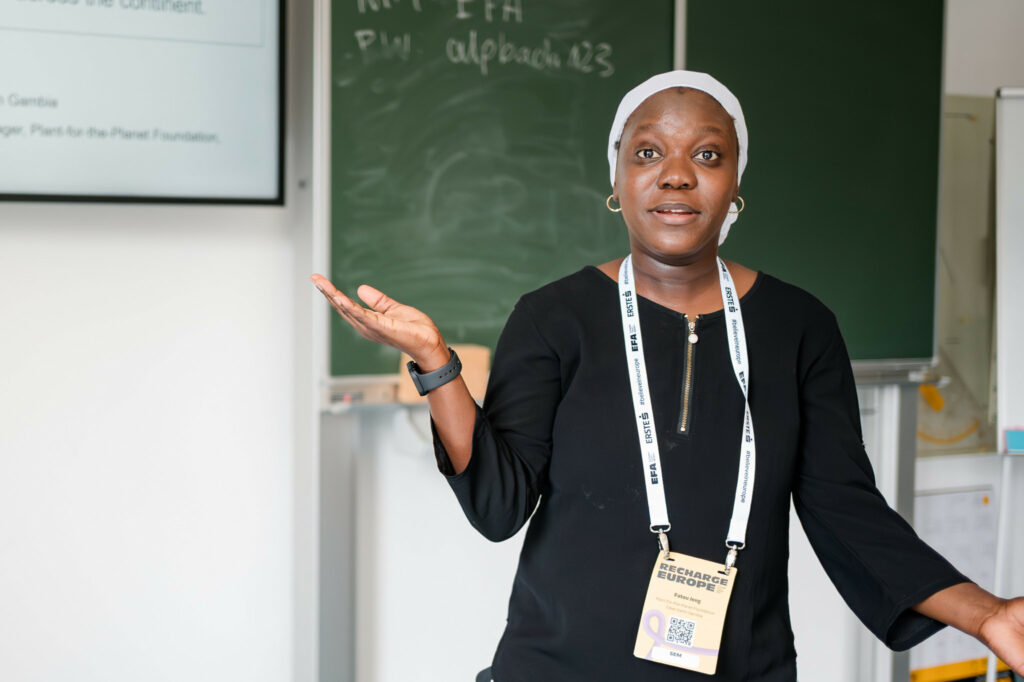
“We cannot talk about addressing the most pressing challenges of our time while leaving out the group that makes up more than half of Africa’s population,” says Fatou Jeng, a climate activist from The Gambia, to FORBES AFRICA.
“In fact, much of the innovation we are seeing today—whether in the circular economy, education, waste management, or climate-smart agriculture—is already being led by young people.”
Echoing this point, Kenyan stove designer, climate activist and 2022 Earthshot Prize winner, Charlot Magayi, explains that young innovators are at the heart of sustainability and climate change solutions.
“What excites me most is their ability to rethink challenges as opportunities, whether it’s turning waste into energy, creating new livelihoods, or designing technologies rooted in local realities,” she says.
“In my work, I’ve seen how young people bring fresh ideas, courage, and a deep connection to their communities. When given trust and investment, they not only participate in the green economy but also have the power to redefine it and position Africa as a global leader in sustainable innovation.”
However, being a young innovator in Africa does not come without challenges.
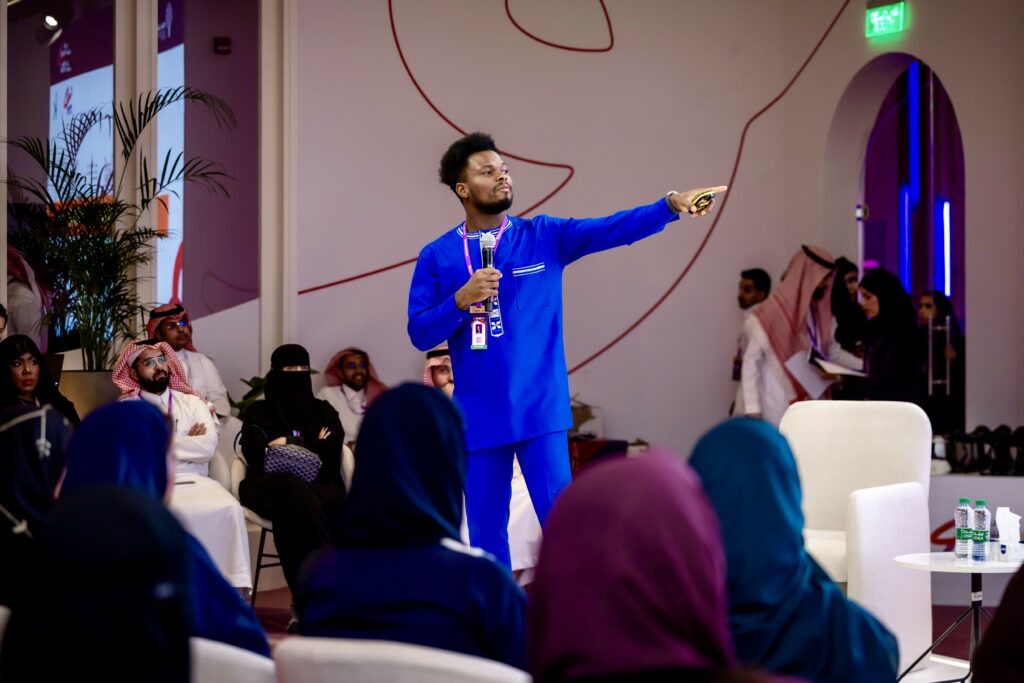
Sierra Leone-born, Jeremiah Thoronka recalls that what drew him to this field was his own upbringing.
Growing up in the West African nation, he witnessed how, for many, survival was the priority—regardless of how it was achieved or sustained.
“When I first started developing solutions,” Thoronka says, “I wasn’t guided by terms like sustainability or climate-friendliness. For me, it was simply about creating something that would last.
“Later on, I learned more about sustainability and climate change, but at the time, my focus was on solutions that worked in my context and reflected the socio-cultural dynamics of my community.”
As a PhD candidate in Social Innovation and Sustainability, researching energy transitions and the diffusion of innovation, Thoronka founded Optim, an off-grid, clean energy system that uses solar power with smart GSM/Bluetooth management to provide electricity and reduce household consumption.
His current work on mini-solar grids and social-value frameworks looks to advance equitable, affordable energy access for climate-vulnerable communities.
“For us, the first thing was not wanting to spend money we didn’t have, to create access to energy. At the same time, the need for energy keeps rising—everyone wants electricity, and today, it has become a cornerstone for development–that’s why the applicability of our solution has such high potential,” he explains.
“When you look across African societies, whether in Ghana, South Africa, or Sierra Leone, there are differences, but also strong similarities in how communities are organized. We relied heavily on those similarities in shaping our approach.”
For Magayi, the start of her sustainability journey was equally as personal.
From being hailed as the ‘Queen of Africa’ by Britain’s Prince William to winning numerous awards, some of which include the Waislitz Global Citizen Award in 2019, being named a Forbes Sustainability Leader and a FORBES AFRICA Youth Icon, Magayi’s work is well-noted. And the reason behind it? As a young mother, she simply wanted to prevent her daughter from being burned again on a stove.
“The inspiration came from a very personal place,” Charlot Magayi told FORBES AFRICA recently. “As a young mother, my daughter was badly burned by a traditional stove, and I knew no family should have to go through that. That experience pushed me to find a safer, healthier solution, which became the foundation of Mukuru Clean Stoves.”
Her company has manufactured and distributed over 700,000 life-saving cookstoves, reportedly impacting the lives of 3.5 million Africans. The biggest barrier that young Africans face in bringing their sustainable ideas to life, according to Magayi, is access to funding, mentorship, and spaces where their ideas are taken seriously.
“I’ve seen so many smart, practical solutions remain stuck at the community level, not because they don’t work, but because the people behind them aren’t trusted or supported enough to scale,” she says.
“Africa doesn’t lack innovation; it just needs more trust and support to let that innovation flourish.”
In The Gambia, where nearly 70% of the population depends on the natural environment, the effects of climate change are deeply felt. As the daughter of a farmer in one of Africa’s smallest mainland countries, Jeng witnessed the impact of this on her family as well as on their income.
“It’s about survival, about our livelihoods and ecosystems,” Jeng says. “At some point, you have no choice but to be involved in climate advocacy, because whether you like it or not, it directly affects your livelihood and your wellbeing.”
Jeng founded Clean Earth Gambia, a youth-led nonprofit organization aimed at raising awareness on environmental issues, with a particular focus on climate change.
“We believe in the power of empowering local communities because, at the end of the day, impact matters most at the grassroots level. While we have platforms to speak at global events and share our work, the ultimate result comes from supporting local communities that remain vulnerable and often lack access to spaces where they can share their stories,” she says.
Jeng’s organization started with an understanding of the challenges faced by young innovators–particularly in the climate space–to develop solutions, build innovations, and establish long-term partnerships.
“It has always been difficult for young people to form solid partnerships, but we’ve approached our work strategically, because, as I always say, the government can’t do it alone–and neither can we,” Jeng explains.
“I see young people not just participating in Africa’s green future, but leading it. They bring bold ideas and a clear sense of what their communities need, and I’ve seen how even small beginnings can grow into solutions that transform lives and protect the planet,” Magayi adds.
Comments (0)
Sign in to join the conversation.
Related Stories

Equatorial Guinea: Charting A New Era Of Sustainable Prosperity
With a renewed focus on diversification and digitalization, Equatorial Guinea is leveraging its resources to create inclusive, long-term growth. “Agro-processing is a key priority, as our goal is to ultimately achieve national self-sufficiency and independence.” President Teodoro Obiang Nguema Mbasogo Equatorial Guinea is entering a new phase in its economic story–one defined by diversification, competitiveness, and connection. […]

Foundations Strengthening A National Future
Policy reforms, national capabilities, and coordinated institutions reinforce long-term growth across Equatorial Guinea. Q. How is your ministry advancing the national development agenda across key sectors such as agriculture, energy, and tourism, and what priorities guide your efforts to drive long-term economic growth and self-sufficiency? Hon. José Juan Ndong Tom Mekina, Minister of Agriculture, Livestock, Forestry, […]

Equatorial Guinea’s Energy Reset And The Revival Of Its Hydrocarbons Sector
As Equatorial Guinea reshapes its position in the regional energy market, GEPetrol is steering the shift to secure production, attract reliable partners, and align upstream growth with long-term economic goals. “Our strategic vision is to develop projects that are sustainable in the long term, and that also revive the economy.” Bienvenido Nguema Envo, General Manager of GEPetrol In 2024, […]
Recommended




The Daily Brief