

Power-ful Currency: The Opportunities In Africa’s Vast Green Energy Potential
As Africa’s digital transformation accelerates, green energy is becoming a marker of economic strength. With vast untapped renewable resources, Africa holds a strategic advantage, but high financing costs and fragmented infrastructure threaten to slow its momentum. The rapid rise of artificial intelligence is turning energy into a form of global currency (and influence). As infrastructure […]

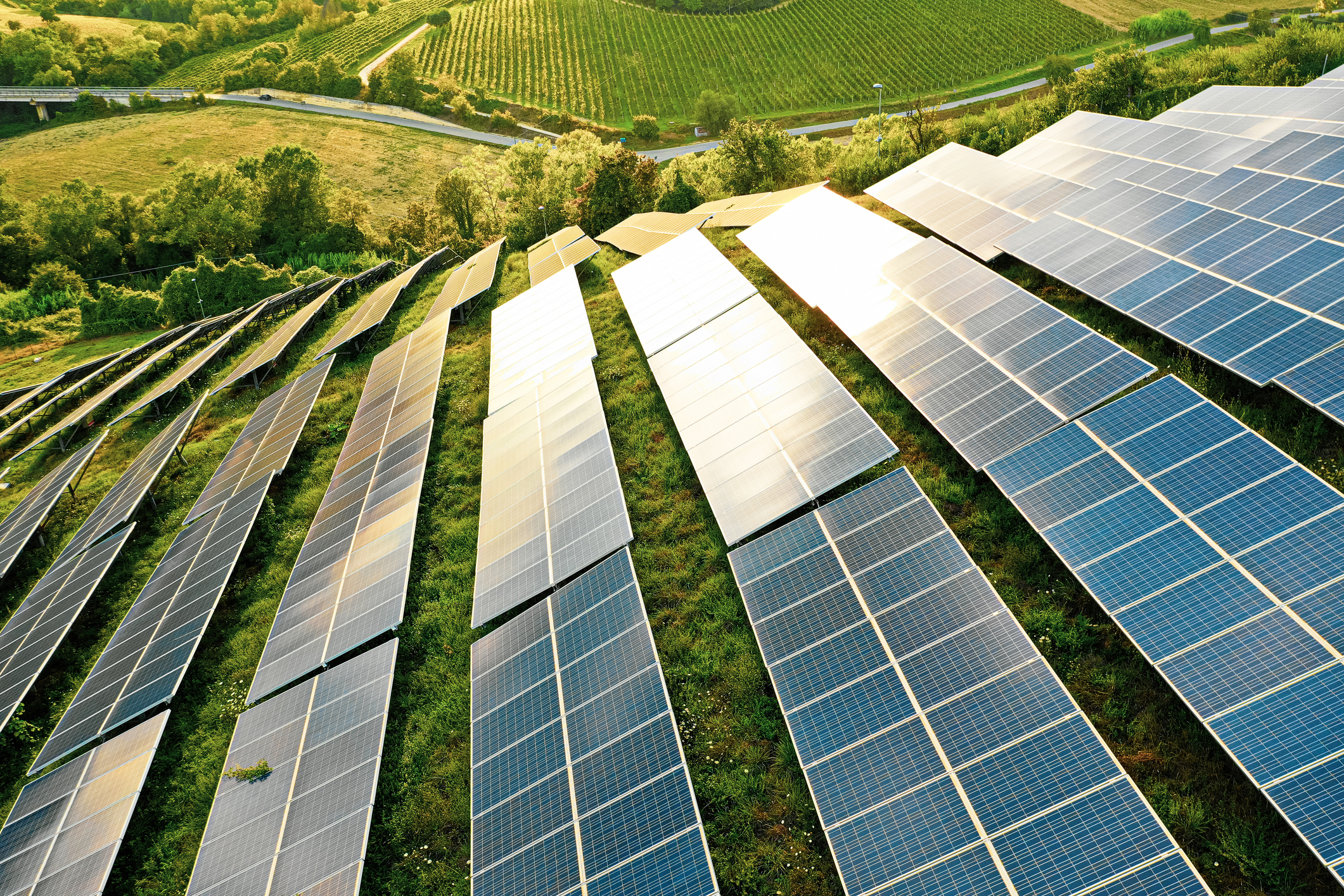
As Africa’s digital transformation accelerates, green energy is becoming a marker of economic strength. With vast untapped renewable resources, Africa holds a strategic advantage, but high financing costs and fragmented infrastructure threaten to slow its momentum.
The rapid rise of artificial intelligence is turning energy into a form of global currency (and influence). As infrastructure scales, the ability to generate reliable, low-cost power increasingly determines which countries can attract billion-dollar investments. For Africa, its vast green energy potential presents a lucrative opportunity.
“As industries increasingly depend on stable, low-cost, low-carbon electricity, clean energy becomes a determining factor in where companies invest and which countries can build modern industrial bases,” Alyssa Pek, Strategy Director of the Global Solar Council tells FORBES AFRICA.
In the West, the emergence of gigawatt-hungry AI data centers is stretching national grids beyond capacity. Alternative solutions, such as solar, hydropower, and geothermal, have become a necessity. And in this shift, nature itself has become a strategic asset, and few regions are as richly endowed as Africa.
“The new strategic advantage lies in being sun-rich or wind-rich,” Pek explains. “Many African countries fall into the category of being among the most sun-rich nations on earth, and this natural endowment is becoming a critical form of economic leverage.”
Home to scorching deserts, raging rivers, and stormy coastlines, Africa is a powerhouse of renewable energy generation, already boasting world-class facilities, including Ethiopia’s Grand Renaissance Dam, now Africa’s largest hydropower project, capable of generating more than five gigawatts of electricity.
Other landmark developments include Kenya’s Lake Turkana Wind Farm, producing around 1,300 gigawatt-hours (GWh) annually, and South Africa’s 400 GWh Xina Solar One farm. Such projects may hint at a market maturing, but in reality, Africa has only scratched the surface.
Rashid Abdallah, Executive Director of the African Energy Commission (AFREC), tells FORBES AFRICA that around 85% of the continent’s hydro potential is untapped.
It’s a sentiment echoed by many in the sector. Matthew Tilleard, co-founder and Managing Partner of Kenya-based investment firm CrossBoundary Energy, which has pledged $1 billion in renewable energy projects by 2030, reveals that Africa utilizes less than 6% of its solar capacity.
“The continent is using only a small fraction of what it could generate from solar, wind, geothermal, and hydro. The potential is almost entirely ahead of us, and the technology curve keeps making more projects viable every year,” Tilleard tells FORBES AFRICA.
As Africa’s digital transformation accelerates, green energy is becoming a marker of economic strength, an incalculable resource reshaping the geopolitical landscape. But despite government agendas that have shifted focus to renewables, high-cost financing hampers large-scale deployment.
“The cost of financing is very expensive for the African continent,” Abdallah admits, a sentiment echoed by President Cyril Ramaphosa at last November’s G20 summit in Johannesburg. Ramaphosa urged global leaders to ease the cost of capital for developing nations.
According to the South African Government News Agency, Africa’s public debt reached $1.815 trillion by the end of 2024, with annual debt servicing costs of $163 billion. Such debt restricts Africa’s ability to invest at scale.
Abdallah believes continental cohesion is the remedy to manufacturing a power-abundant Africa.
“We need financing mechanisms that enable the African continent to utilize its natural resources,” he says. “The solution is to pool resources.”
Rather than nations building infrastructure in isolation, cross-border energy supply, supported by the African Continental Free Trade Area, could unlock faster growth.
“Africa is at the cusp of an energy and economic transformation,” Pek predicts. Abdallah agrees: “I have no doubt that Africa will be able to contribute to the global market by providing green and sustainable energy… No global transition can be done without Africa’s minerals and resources.”
Talk of energy abundance is foreshadowed by the grim reality of living without power in many parts of the continent. Traditional infrastructure bypasses some 600,000 million people. The advancements in renewables, such as micro solar grids, are shrinking the divide, but alone, it won’t plug the gap.
Tilleard maintains that change is approaching. “In the future, energy supply won’t matter much anymore because it will be abundant and available to all countries,” he says. “In a fuel-based energy system, nations need a constant supply of fuel to survive, but in a technology-based energy system, your panels keep generating power without a constant supply, batteries keep working without new lithium, which means that ‘control of the supply’ of energy will matter much less.”
While its geopolitical edge will likely diminish over time, Africa’s opportunity to cash in, is in the present.
Comments (0)
Sign in to join the conversation.
Related Stories

Equatorial Guinea: Charting A New Era Of Sustainable Prosperity
With a renewed focus on diversification and digitalization, Equatorial Guinea is leveraging its resources to create inclusive, long-term growth. “Agro-processing is a key priority, as our goal is to ultimately achieve national self-sufficiency and independence.” President Teodoro Obiang Nguema Mbasogo Equatorial Guinea is entering a new phase in its economic story–one defined by diversification, competitiveness, and connection. […]

Foundations Strengthening A National Future
Policy reforms, national capabilities, and coordinated institutions reinforce long-term growth across Equatorial Guinea. Q. How is your ministry advancing the national development agenda across key sectors such as agriculture, energy, and tourism, and what priorities guide your efforts to drive long-term economic growth and self-sufficiency? Hon. José Juan Ndong Tom Mekina, Minister of Agriculture, Livestock, Forestry, […]

Equatorial Guinea’s Energy Reset And The Revival Of Its Hydrocarbons Sector
As Equatorial Guinea reshapes its position in the regional energy market, GEPetrol is steering the shift to secure production, attract reliable partners, and align upstream growth with long-term economic goals. “Our strategic vision is to develop projects that are sustainable in the long term, and that also revive the economy.” Bienvenido Nguema Envo, General Manager of GEPetrol In 2024, […]
Recommended




The Daily Brief