

South Africa Bets On Exchangeable Pitches Ahead Of World Cup But Proteas’ Coach Expresses Concern
South Africa has developed exchangeable pitches for its main cricket stadia ahead of next year’s One Day International (ODI) World Cup, alongside Namibia and Zimbabwe, but they come with warnings of potentially neutralizing the conditions that often give them an edge. The idea behind the pitches is to avoid wear and tear and future-proof the […]

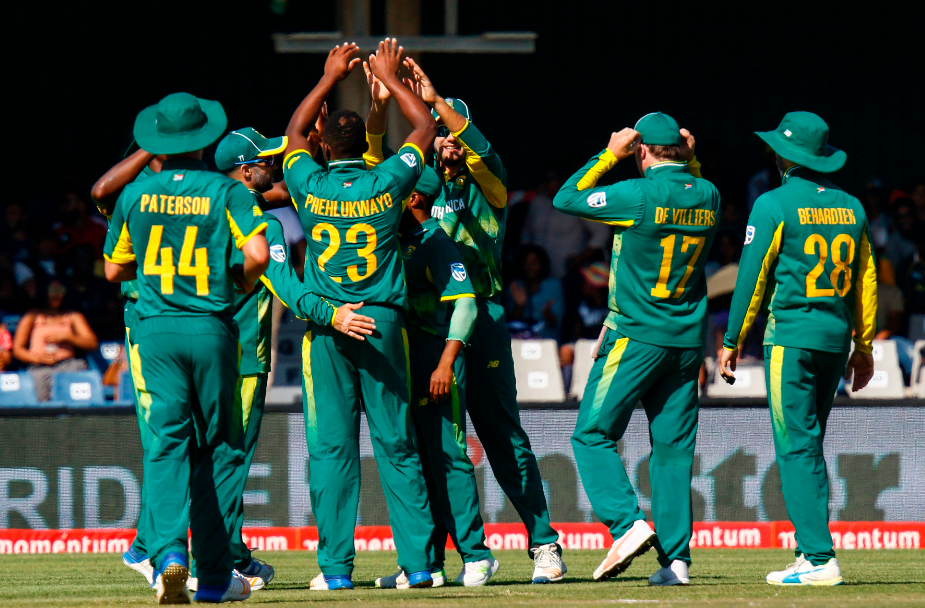
South Africa has developed exchangeable pitches for its main cricket stadia ahead of next year’s One Day International (ODI) World Cup, alongside Namibia and Zimbabwe, but they come with warnings of potentially neutralizing the conditions that often give them an edge.
The idea behind the pitches is to avoid wear and tear and future-proof the country’s leading cricket venues as the calendar becomes even busier.
The popularity of the short format of the game, particularly the Twenty20 competition, means a heavy workload for the top venues, and so Cricket South Africa has invested considerably in what it calls EPS: ‘the exchangeable pitch system’.
Five of the eight South African venues that are to host World Cup matches are installing the system, allowing ground staff to exchange pitches to prevent deterioration from excess usage.
Pitches will be prepared in a tray inside the ground and exposed to usual weather conditions before being fitted.
The Wanderers stadium in Johannesburg, which will host the 2027 World Cup final, has already utilized a strip for a domestic One-Day Cup game that was cultivated adjacent to the playing area in a stainless steel tray before being dropped into the playing area.
It got mixed reviews in terms of what it offered batsmen and bowlers and did nothing to alleviate fears that South Africa could lose its distinctive bounce and pace advantage in their pursuit of winning a first-ever World Cup.
“I’d be disappointed if it were used in the World Cup, because it nullifies whatever home advantage there is, if there is a home advantage. We know our conditions in South Africa are unique at every ground. And I’d like to think that there would be that advantage,” coach Shukri Conrad told FORBES AFRICA at a news conference.
So far, Cricket South Africa have not commented on what their coach has said.
“My hope is that it gets used domestically for, say, two years, and then it will play its part going forward after the World Cup,” added Conrad.
Comments (0)
Sign in to join the conversation.
Related Stories

Equatorial Guinea: Charting A New Era Of Sustainable Prosperity
With a renewed focus on diversification and digitalization, Equatorial Guinea is leveraging its resources to create inclusive, long-term growth. “Agro-processing is a key priority, as our goal is to ultimately achieve national self-sufficiency and independence.” President Teodoro Obiang Nguema Mbasogo Equatorial Guinea is entering a new phase in its economic story–one defined by diversification, competitiveness, and connection. […]

Foundations Strengthening A National Future
Policy reforms, national capabilities, and coordinated institutions reinforce long-term growth across Equatorial Guinea. Q. How is your ministry advancing the national development agenda across key sectors such as agriculture, energy, and tourism, and what priorities guide your efforts to drive long-term economic growth and self-sufficiency? Hon. José Juan Ndong Tom Mekina, Minister of Agriculture, Livestock, Forestry, […]

Equatorial Guinea’s Energy Reset And The Revival Of Its Hydrocarbons Sector
As Equatorial Guinea reshapes its position in the regional energy market, GEPetrol is steering the shift to secure production, attract reliable partners, and align upstream growth with long-term economic goals. “Our strategic vision is to develop projects that are sustainable in the long term, and that also revive the economy.” Bienvenido Nguema Envo, General Manager of GEPetrol In 2024, […]
Recommended




The Daily Brief