

South Africa’s Uphill Task: Restoring One Of Earth’s Most Endemic Landscapes
One of the new seven wonders of nature, Table Mountain is increasingly being challenged by alien flora and a warming climate. Restorers are working hard to re-establish its indigenous biodiversity. Few urban backdrops are as iconic as Cape Town’s Table Mountain. It greets you as your flight descends into the Mother City, it caresses the […]

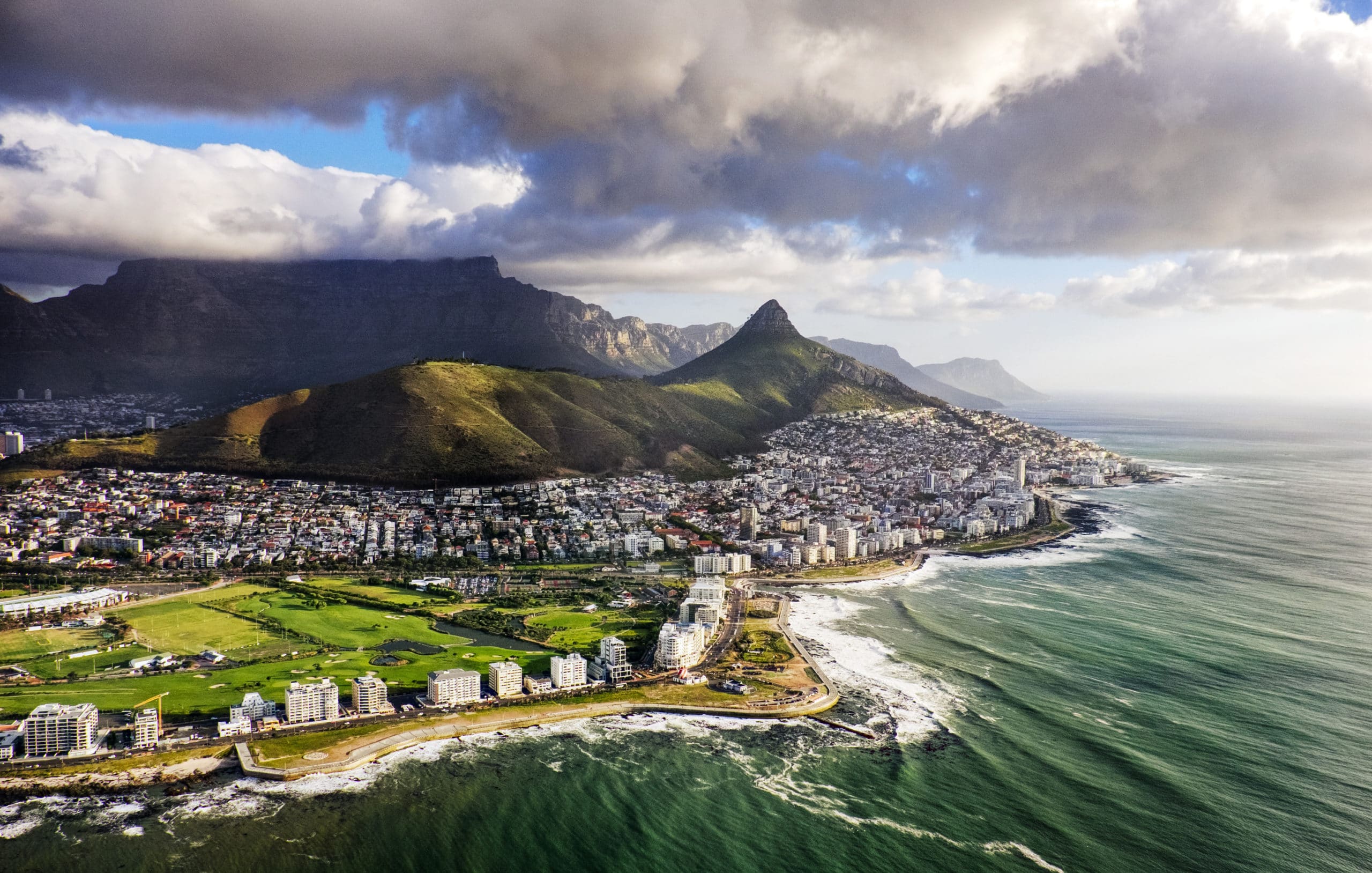
One of the new seven wonders of nature, Table Mountain is increasingly being challenged by alien flora and a warming climate. Restorers are working hard to re-establish its indigenous biodiversity.
Few urban backdrops are as iconic as Cape Town’s Table Mountain. It greets you as your flight descends into the Mother City, it caresses the city bowl, and offers more hiking routes than a jester has jokes.
From certain peaks, one can see the Atlantic and Indian Oceans sparkling into the abyss; but it’s perhaps the environment that is most enchanting. Spanning the mountain are several biomes, offering a unique habitat rich in endemism.
“There are several species that occur on the Table Mountain chain and nowhere else in the world,” says Dr Nicola Wilgen-Bredenkamp, Global Change Scientist, to FORBES AFRICA.
However, its indigenousness is facing an uphill battle.
Across the mountain, alien vegetation, including Wattle, Port Jackson and Rooikrans, is overpowering endemic flora, such as fynbos and renosterveld, in the process, destabilizing riverbanks, hydrology and habitats.
Such seed-bearing invasive plants pose long-term threats, and can thrive for 70 to 100 years. For a mountain that, experts believe, is 240-million years old, the presence of alien species is a somewhat new phenomenon, originating from the dawn of travelers.
While Portuguese explorer Bartholomeu Dias is said to have first reached the Cape of Good Hope area in 1488, the Dutch East India Company in 1652, led by Jan van Riebeeck, developed the first permanent European settlement in Cape Town, bringing with them their foreign spices, spirits and seeds.
On the eastern base of Table Mountain, Groote Schuur—historic land once associated with the Dutch East India Company and used within a broader agricultural and game landscape—became a haven for alien trees, swiftly displacing the renosterveld that once thrived here.
In April 2021, a wildfire swept through the area, affecting it adversely.
This presented South African National Parks (SANParks), the nation’s governing body for national parks, with an unprecedented opportunity to revive this section of the Table Mountain National Park (TMNP), and thus, the climate-smart restoration project was born in 2024.
With an extensive team, including honorary rangers, project coordinator Keaton Hattingh and advisors Dr Pat Holmes and Tony Rebelo, have since sowed approximately 9,000 seedlings and 10 kilograms of seeds, establishing several plots that, they hope, will eventually spread beyond its fixed parameters, transforming the mountain to its former fully-indigenous self.
“It’ll take years, but this is the start,” Dr Wendy Foden, project lead and part of SANParks’ scientific services unit, admits to FORBES AFRICA
A three-year collaboration (2023-2026), supported by the French Development Agency (AFD) and focused on strengthening ecosystem resilience in biodiversity hotspots, has spurred the restoration project.
“The biodiversity on Table Mountain itself is buffered from climate change because of the frequent cloud cover. However, rainfall declines are expected, which have consequences for species that require water, and also for fire, as fires are harder to manage under hot, dry conditions,” notes Wilgen-Bredenkamp.
“Fire is an important component of fynbos ecology, but fires that are too frequent can lead to compositional shifts in species diversity and will favor many alien species.”
The average temperature in Cape Town has notably risen, as Foden confirms, adding: “This site is beautiful because it’s got all of these different microclimates. It goes high up, low down, it’s got a north slope and a south slope, allowing us to plant some species that we think are most climate change sensitive at various sections. So, effectively, we’re helping them to adapt to climate change by shifting them to the cooler areas.”
Listed as one of the new seven wonders of nature, Table Mountain’s flat top remains stationary. With its endemic vegetation widely succumbing to alien invasion and climate change, human intervention is needed to preserve its pristine nature.
Without prevention projects, its flora could blur into something generic, stripped of the endemic character that makes it worth protecting in the first place.
Comments (0)
Sign in to join the conversation.
Related Stories

Equatorial Guinea: Charting A New Era Of Sustainable Prosperity
With a renewed focus on diversification and digitalization, Equatorial Guinea is leveraging its resources to create inclusive, long-term growth. “Agro-processing is a key priority, as our goal is to ultimately achieve national self-sufficiency and independence.” President Teodoro Obiang Nguema Mbasogo Equatorial Guinea is entering a new phase in its economic story–one defined by diversification, competitiveness, and connection. […]

Foundations Strengthening A National Future
Policy reforms, national capabilities, and coordinated institutions reinforce long-term growth across Equatorial Guinea. Q. How is your ministry advancing the national development agenda across key sectors such as agriculture, energy, and tourism, and what priorities guide your efforts to drive long-term economic growth and self-sufficiency? Hon. José Juan Ndong Tom Mekina, Minister of Agriculture, Livestock, Forestry, […]

Equatorial Guinea’s Energy Reset And The Revival Of Its Hydrocarbons Sector
As Equatorial Guinea reshapes its position in the regional energy market, GEPetrol is steering the shift to secure production, attract reliable partners, and align upstream growth with long-term economic goals. “Our strategic vision is to develop projects that are sustainable in the long term, and that also revive the economy.” Bienvenido Nguema Envo, General Manager of GEPetrol In 2024, […]
Recommended




The Daily Brief