

Sudan’s SMEs On Technical Support And Financial Assistance Amidst Civil War
Sudan’s economy has shrunk dramatically since fighting erupted between the Sudanese Armed Forces (SAF) and the paramilitary Rapid Support Forces (RSF) in April 2023. However, there are now tentative signs of recovery. The latest Sudan Country Focus Report from the African Development Bank (AfDB), published in July, estimates that GDP grew by 1.2% in […]

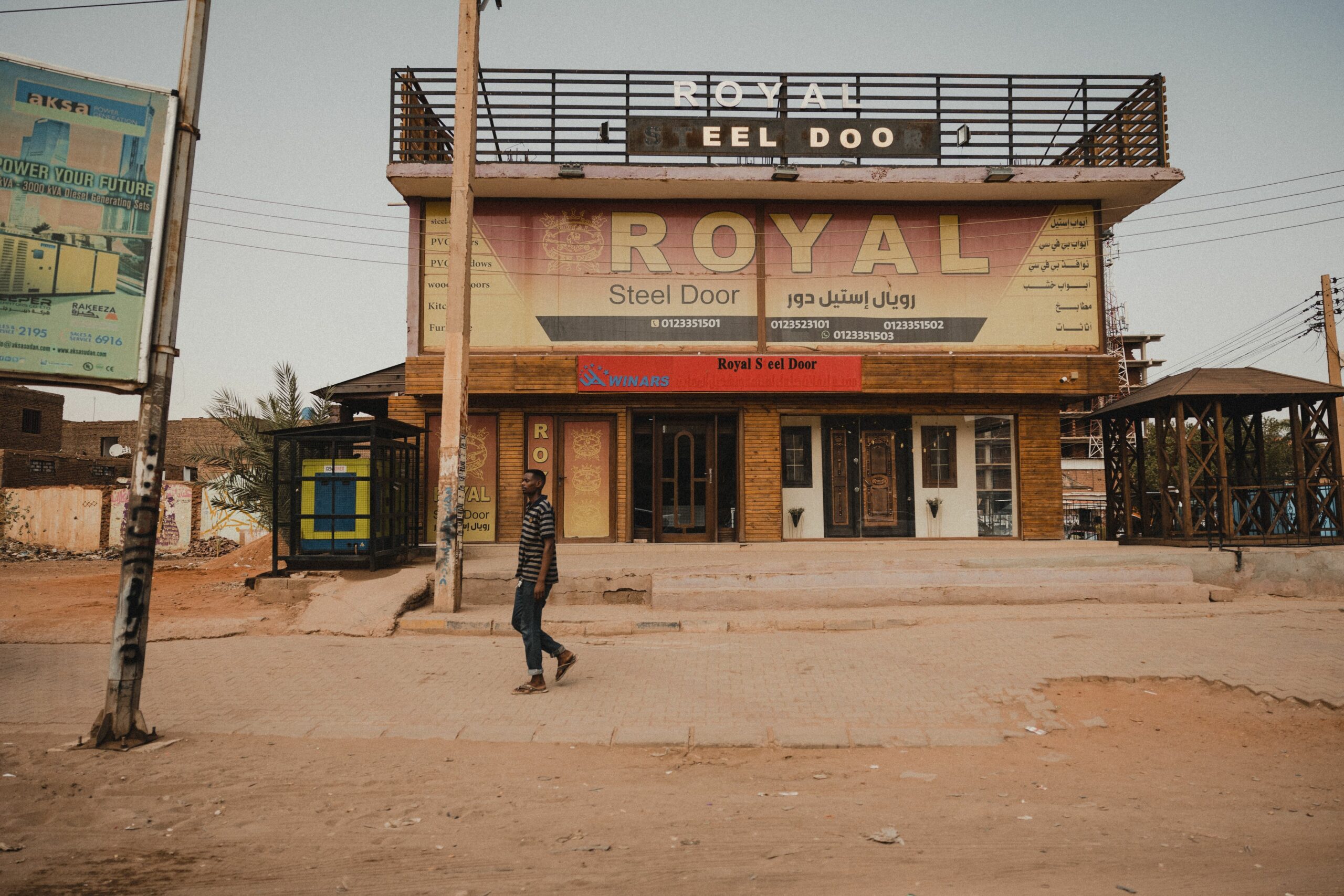
Sudan’s economy has shrunk dramatically since fighting erupted between the Sudanese Armed Forces (SAF) and the paramilitary Rapid Support Forces (RSF) in April 2023. However, there are now tentative signs of recovery.
The latest Sudan Country Focus Report from the African Development Bank (AfDB), published in July, estimates that GDP grew by 1.2% in 2025 and forecasts growth of 2.1% this year, supported by agriculture, services and reconstruction activity in parts of the country.
But recovery remains fragile. The same report warns of high inflation, a weakened financial sector, damaged infrastructure, debt distress and continuing political uncertainty, all while the war continues. Even as parts of the economy begin to recover, rebuilding Sudan will require enormous amounts of capital that the country cannot finance alone.
So, when the conflict subsides, who will aid that recovery, financially?
For Sudan’s small business owners, the question is urgent. Many have lost their premises, equipment, stock and access to finance. Some have relocated and started again, often in unfamiliar markets.
Others have closed altogether. According to an April 2026 analysis by the United Nations Development Programme (UNDP), around one-third of Sudanese businesses have shut down since the war began.
Ahmed Adam Abuh Mohamed manages Jebel Kidta, a company selling and installing solar energy systems. Before the war, the business operated in Nyala, South Darfur, where Mohamed had spent years building its customer base, technical capacity and supplier relationships.
“When the war reached Nyala, we lost most of our capital, assets and operating capacity,” he says.
“Our offices were looted, burned and destroyed. We also lost members of our team, and others were forced to flee the country. We moved more than 1,400 kilometers east to Gedaref, and started again. Today, we operate from there.”
The business received financing and technical support through the Sudan SME Catalyser Fund, a German-backed program implemented by the Africa Enterprise Challenge Fund (AECF) in partnership with 249Startups, a Sudanese organization that supports entrepreneurs and small businesses. For Jebel Kidta, the results have been tangible.
“Our own recovery shows what outside financing can do. The support we received through 249Startups and AECF helped turn a business that had lost almost everything into one that has sold more than 1,253 solar systems.”
Mohamed says those systems have helped provide electricity to farms, homes, schools and health clinics across Gedaref State, also spelled Al Qadarif. He now wants to expand into more rural communities.
Another business facing similar challenges is Nutricrop, a supplier of fertilizers, seeds and agrochemicals. Its owner, Mujahid Hamza, is also General Secretary of the Sudanese Agrochemicals Association.
Before the war, Nutricrop distributed agricultural products from international suppliers, including companies in China, Turkey and the United Kingdom.
“Our biggest obstacle was liquidity. When the war started, almost all of our capital was held as stock in our warehouses. We had no cash. Losing the stock meant losing the capital itself, and without cash you cannot import, pay suppliers or restart sales.”
Hamza says financing and technical support from the same program that helped Jebel Kidta also enabled Nutricrop to resume operations.
“Agricultural inputs are a capital-intensive business: stock has to be imported and paid for months before the farming season, and a supplier without working capital cannot serve farmers when they need it.”
Ahmed Elmurtada, managing partner and Growth & Investments Director at 249Startups, says roughly half of the businesses and founders the organization supports are still operating, most having relocated since the war began.
According to the organization, it and its partners have facilitated more than €30 million in committed and deployed financing, alongside technical and venture support, for Sudanese startups and small businesses since 2018.
Among graduates of Orange Corners Sudan, a Dutch-backed entrepreneurship program implemented by 249Startups, 155 now run businesses across 13 states. Seven of the 11 companies supported by its Rhino Impact Fund, which invests in growing businesses, are still trading.
Other businesses have found ways to adapt. Solar Foods, for example, relocated from Khartoum to Kassala, in eastern Sudan, and switched its food-processing operations to solar power. According to Elmurtada, the business has since created more than 100 jobs. Most of the staff it rehired are women, many of whom were, themselves, displaced by the fighting.
Their experiences highlight a central concern: will international reconstruction financing reach smaller Sudanese companies, or remain concentrated in large infrastructure projects and government agreements?
There is no single pot of money big enough to rebuild Sudan. The money will have to come from several places, perhaps the Gulf states, multilateral and African development institutions, private investors and, potentially, Sudan’s large diaspora.
Dr Yassine El Yattioui, an assistant professor at Université Lumière Lyon 2 in France and a research associate at the Benemérita Universidad Autónoma de Puebla, specializing in geopolitics and international relations, believes the financing landscape will be fragmented.
“Sudan’s post-conflict reconstruction will almost certainly be financed through a fragmented, multi-tiered coalition rather than a unified multilateral framework, shaped as much by geopolitical competition as by humanitarian imperatives,” says Yattioui.
“Given the scale of capital required to rebuild destroyed infrastructure and stabilize a severely weakened economy, the primary sources of liquidity are likely to be the Gulf monarchies, particularly Saudi Arabia, the United Arab Emirates and Qatar.”
Sudan’s position on the Red Sea, its agricultural potential and mineral wealth give it strategic and commercial importance.
In its published guidelines for the 2026 emergency budget, the country’s Finance Ministry identified reconstruction, infrastructure rehabilitation and support for small and medium-sized enterprises (SMEs) among its objectives. But it also explicitly committed to continue financing the war effort as a priority.
The published announcement did not specify how much money would be allocated to reconstruction or SME financing.
Meanwhile, some economic decisions may make recovery more expensive. In April, Sudan’s customs authority increased the exchange rate used to calculate import duties by 14%. The National Chamber of Importers warned that the move would increase business costs and put further pressure on the economy.
Another increase followed in August, adding to the costs facing companies dependent on imported machinery, agricultural inputs and replacement stock.
The authorities have also taken measures intended to ease some of those pressures. In August, Prime Minister Kamil Idris announced exemptions from customs duties, taxes and other government charges for imported solar energy systems intended for personal use.
In September, the Finance Ministry and UNDP brought together business representatives, financial institutions and development partners to discuss private-sector recovery, including access to finance, agricultural production and investment. The forum sought to develop a roadmap for improving financing and cooperation between the government and private sector.
The bigger test will be whether these measures improve access to working capital, reduce the costs of trading and create opportunities for Sudanese companies to participate in the country’s reconstruction.
- Additional reporting by Hayley Bentley
Comments (0)
Sign in to join the conversation.
Related Stories

Equatorial Guinea: Charting A New Era Of Sustainable Prosperity
With a renewed focus on diversification and digitalization, Equatorial Guinea is leveraging its resources to create inclusive, long-term growth. “Agro-processing is a key priority, as our goal is to ultimately achieve national self-sufficiency and independence.” President Teodoro Obiang Nguema Mbasogo Equatorial Guinea is entering a new phase in its economic story–one defined by diversification, competitiveness, and connection. […]

Foundations Strengthening A National Future
Policy reforms, national capabilities, and coordinated institutions reinforce long-term growth across Equatorial Guinea. Q. How is your ministry advancing the national development agenda across key sectors such as agriculture, energy, and tourism, and what priorities guide your efforts to drive long-term economic growth and self-sufficiency? Hon. José Juan Ndong Tom Mekina, Minister of Agriculture, Livestock, Forestry, […]

Equatorial Guinea’s Energy Reset And The Revival Of Its Hydrocarbons Sector
As Equatorial Guinea reshapes its position in the regional energy market, GEPetrol is steering the shift to secure production, attract reliable partners, and align upstream growth with long-term economic goals. “Our strategic vision is to develop projects that are sustainable in the long term, and that also revive the economy.” Bienvenido Nguema Envo, General Manager of GEPetrol In 2024, […]
Recommended




The Daily Brief