

‘The Idea Of Economic Opportunities Driven By Green And Clean Technologies Is A Clear One’: Wanjira Mathai On The Legacy That Endures
As a leading voice in environmental sustainability and an advocate for Africa’s growth and development potential, Wanjira Mathai sits down with FORBES AFRICA to discuss how her journey began, where the opportunities lie and more. For Wanjira Mathai, the transition from public health–which is where her training lies–to becoming one of the leading voices in […]

As a leading voice in environmental sustainability and an advocate for Africa’s growth and development potential, Wanjira Mathai sits down with FORBES AFRICA to discuss how her journey began, where the opportunities lie and more.
For Wanjira Mathai, the transition from public health–which is where her training lies–to becoming one of the leading voices in environmental advocacy and activism on the continent, was a natural one.
Currently, serving as Managing Director, Africa and Global Partnerships at the World Resources Institute, an Advisory Council Member at the World Future Council and Chairperson of the Wangari Maathai Foundation–established in 2015 to support projects that further the values, legacy and vision of her mother–she was drawn into the world of environmental sustainability.
“, I came back to Nairobi , more or less, to think about what I wanted to do next. And it was in that ‘what next’ that I got sucked into my mother’s work. It was really fun for me. I was resting but I was busy,” she tells FORBES AFRICA.
Her mother, Professor Wangari Maathai, founded the Green Belt Movement in 1977 in Nairobi, under the auspices of the National Council of Women of Kenya (NCWK), to respond to the needs of rural Kenyan women. She was awarded the Nobel Peace Prize in 2004; the first environmentalist and African woman to receive it.
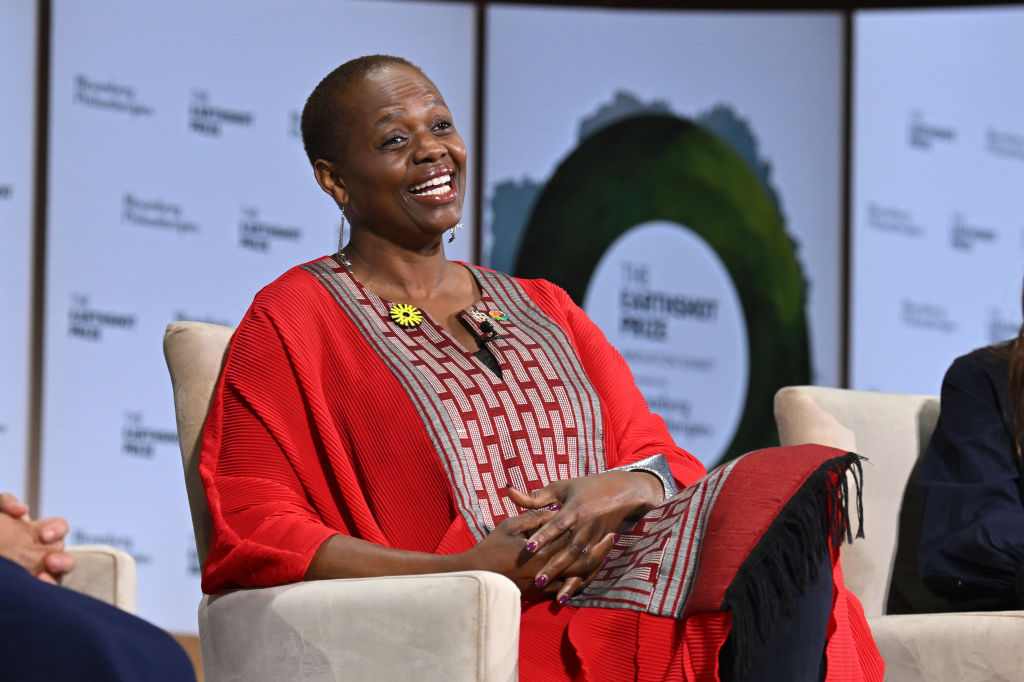
“The genius of the work that the Green Belt Movement was doing–mobilizing local women around environmental issues that seem so complex on the outside, but in ways that they could understand–that they actually had the agency to manage and control, that they were responsible for the health of their environment, the health of the soils that produce the food they ate; it was such an empowering process,” says the proud daughter.
This was after the women reported that their water streams were drying up, their food supply was less secure, and they had to walk further and further to get firewood for fuel and fencing.
“The Green Belt Movement had developed this 10-step procedure that was the at the center of how they mobilized communities. I was drawn into how it was so systematic; and it was in the 70s that this was developed. Already then, they were
so inclusive.”
Community engagement and women empowerment, in particular, seem to be a key focus for Mathai, with her passion for people clearly evident each time she speaks about impact and the potential on the continent.
“I have no doubt that my mother, my grandmother, and all the women around me had a huge influence in who I’ve become,” she explains.
“But I also know that it is so much a part of the fact that feminist energy is about collaboration; it’s about inclusion; it’s about opening up to new ideas; it’s about never giving up. That energy is found in men and it’s found in women, and so we want to make sure that that’s the energy that drives us forward.”
According to the United Nations Development Programme: “Africa’s largest land, solar and mineral resources are critical in driving a renewable energy revolution that can also power the continent’s industrialization.” It also notes that the continent could meet nearly a quarter of its energy needs from local and clean renewable energy by 2030.
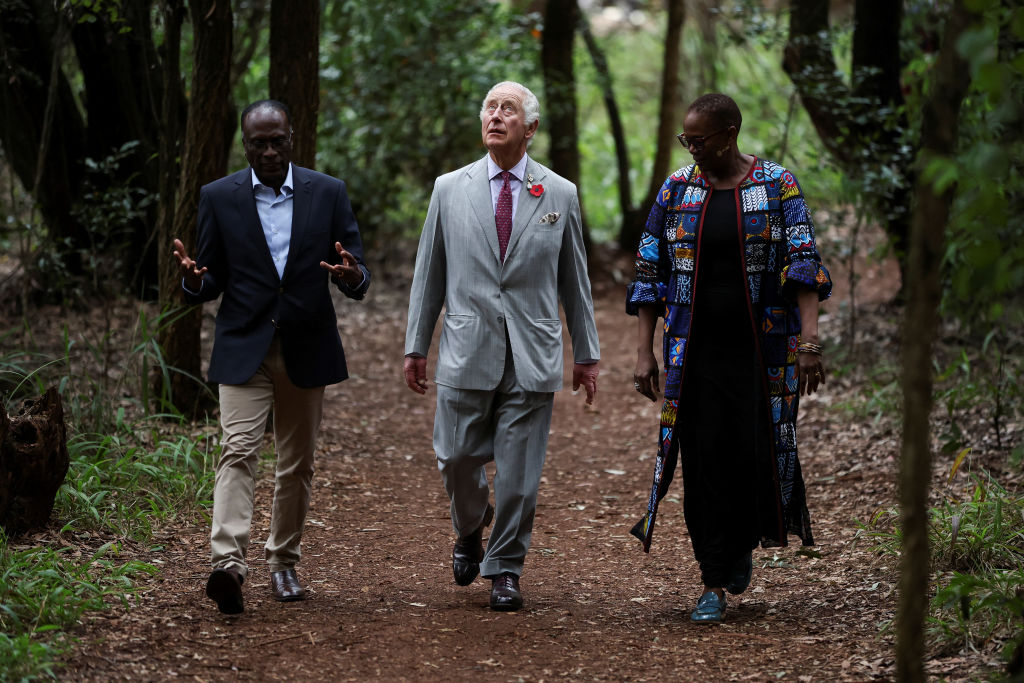
Mathai shares this optimism for the continent, emphasizing the need for collaboration and partnerships, policy and incentives, and market access for communities and businesses.
“It is actually part of the climate solutions to build opportunities for job creation, for our growing youth population, to invest in the knowledge that’s needed, the technology that’s needed to power the green industries of the future, that are powered with renewable energy that we have; that are powered to process the raw materials that we have,” she says.
“This is the reality of a just climate future where green, climate-resilient growth is not about us sending resources out, but us building right here and serving us and the world.”
Another point she is certain of is that opportunities for climate-resilient growth and development abound in every sector, not least of which is the protection of green spaces and forests as an economic activity, as an example.
“We have 60% of the best solar potential right here on the African continent. We are the hub of green energy solutions–that’s a very clear one. We are also living in a place where we produce a lot of fruits and vegetables, and the ability to address gluts of production by processing with clean energy, so that they can last longer, be transported, be consumed in different products, is also a real opportunity for our food security,” emphasizes Mathai.
“We’ve got to see climate solutions as engines of economic development. We have to remove ourselves from abject poverty lines–we cannot adapt against poverty. You have to move out of the poverty extremes and move to a place where you can adapt; you can make choices about where you live, what you eat, and those you cannot do if you do not have money. The idea of economic opportunities that are driven by green and clean technologies is clear one.”
Having grown up with women who inspired her, the tenacity to effect change is not the only quality Mathai believes was instilled in her.
“We were close friends. She trusted my opinion; she listened. She was so committed to listening to everybody; she believed in the power of young voices had a lot of friends who were of a different generation than her–people who she called in to come close and have conversations ,” she says of her mom. “I learned a lot about commitment from her–committing to a process; committing no matter how difficult it is… if this is the purpose that you feel you’re on, just go with it, because it’s not going to always be easy. She never gave up. My mother, some of the campaigns she led, were the most inspiring and enduring,” remembers Mathai.
Comments (0)
Sign in to join the conversation.
Related Stories

Equatorial Guinea: Charting A New Era Of Sustainable Prosperity
With a renewed focus on diversification and digitalization, Equatorial Guinea is leveraging its resources to create inclusive, long-term growth. “Agro-processing is a key priority, as our goal is to ultimately achieve national self-sufficiency and independence.” President Teodoro Obiang Nguema Mbasogo Equatorial Guinea is entering a new phase in its economic story–one defined by diversification, competitiveness, and connection. […]

Foundations Strengthening A National Future
Policy reforms, national capabilities, and coordinated institutions reinforce long-term growth across Equatorial Guinea. Q. How is your ministry advancing the national development agenda across key sectors such as agriculture, energy, and tourism, and what priorities guide your efforts to drive long-term economic growth and self-sufficiency? Hon. José Juan Ndong Tom Mekina, Minister of Agriculture, Livestock, Forestry, […]

Equatorial Guinea’s Energy Reset And The Revival Of Its Hydrocarbons Sector
As Equatorial Guinea reshapes its position in the regional energy market, GEPetrol is steering the shift to secure production, attract reliable partners, and align upstream growth with long-term economic goals. “Our strategic vision is to develop projects that are sustainable in the long term, and that also revive the economy.” Bienvenido Nguema Envo, General Manager of GEPetrol In 2024, […]
Recommended




The Daily Brief