

The Light At The End Of The Grid: Sparking A Solar Revolution In Nigeria
The sun shines abundantly over Nigeria. Now, panel by panel, battery by battery, solar power is being used to power businesses and lives in the West African nation, offering a much-needed electricity source. It’s September 2025, and the all-too familiar news, that the national power grid has collapsed yet again, spreads across Nigeria. In Lagos, […]

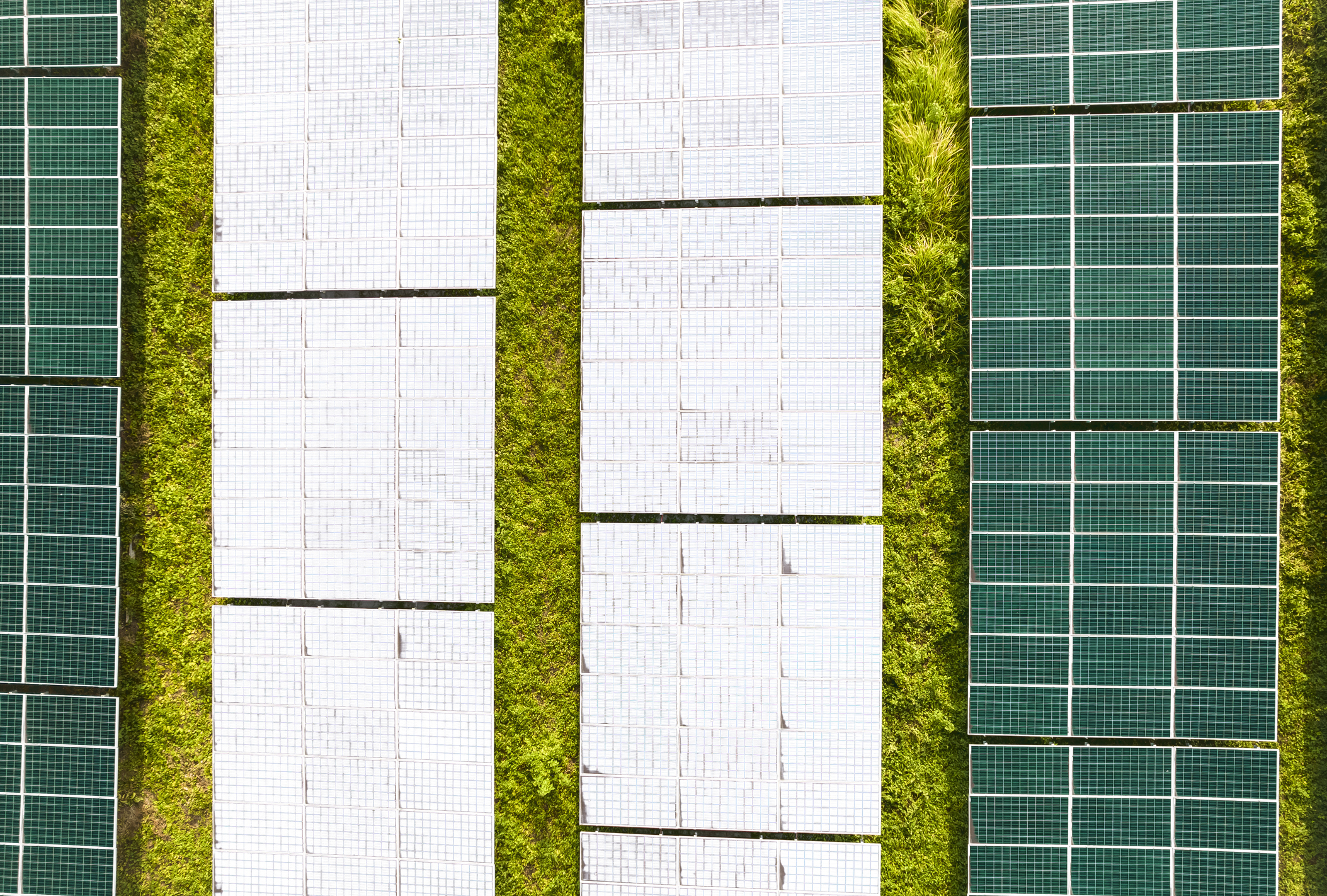
The sun shines abundantly over Nigeria. Now, panel by panel, battery by battery, solar power is being used to power businesses and lives in the West African nation, offering a much-needed electricity source.
It’s September 2025, and the all-too familiar news, that the national power grid has collapsed yet again, spreads across Nigeria.
In Lagos, the country’s capital Abuja, Kano, and Port Harcourt, streetlights flicker, before switching off completely, plunging entire parts in darkness.
The Nigerian Independent System Operator (NISO), a state-backed authority charged with balancing power flows, reports that a single generator has tripped, triggering a cascade of failures. In minutes, electricity has evaporated for millions.
Hospitals scramble for solutions. Office towers go dark. Shopkeepers groan and roll up their shutters, resigning themselves to yet another day of non-negotiable compromise. Generators–the sputtering machines that have come to symbolize modern Nigerian life–rumble awake.
For many, it’s just another ordinary Wednesday.
However, inside a two-story duplex in southeastern Enugu, the air conditioners continue to hum; freezers stay cold and life goes on. Alexandra Ngozi Umeh, a writer, barely notices the interruption to the power.
“Since November, we haven’t recharged light,” Umeh says to FORBES AFRICA, using the Nigerian shorthand for paying electricity bills. “We are not using generator; we are not using NEPA ,” she adds, referring to the defunct state power company, whose name still serves as slang for grid power.
“We have been relying on solar—30 panels and lithium batteries—and the light is constant, powering anything, everything, even AC.”
Her neighbors are not so fortunate. Across the street, men wrestle with a rusty petrol generator that belches smoke, before coughing to life.
“Having solar is cheaper than using NEPA, even generator,” Umeh explains. “I know it is costly to install. But if you can do it, over time, it is cheaper. And the joy is that the light is always on.”
A Country Running On Generators
Nigeria, Africa’s most populous country, home to more than 200 million, has one of the world’s most unpredictable electricity systems.
The national grid reportedly collapses several dozen times a year. Even when ‘stable’, it delivers less than a third of its installed capacity–about 14,000 megawatts—which is a fraction of what South Africa produces for a population three times smaller.
“Nigerians have, interestingly, been ‘off-grid’ for decades due to the lack of reliability provided by the national grid,” says Chidalu Onyenso, Founder and CEO of Earthbond.
“But while previously they achieved this through the use of heavily-subsidized diesel and petrol to power generators, the removal of these subsidies, coupled with higher overall energy prices and a drastic devaluation of the currency over the past years has made generators more and more painful for residential, commercial, and industrial energy users.”
Manufacturers spent a reported ₦1 trillion ($664.8 million) on self-generation in 2024 alone, and the World Bank estimated that Nigeria loses $29 billion, annually, in economic output because of unreliable power.
But the costs are not just financial–hospitals report spoiled vaccines when cold storage fails; surgeons delay operations mid-procedure; students lose study hours at night and women fetching water at dusk face added danger in unlit neighborhoods.
And yet, across rooftops in Lagos, Abuja, Enugu, Sokoto, and even in the remote villages, another soundtrack is beginning to emerge: silence. Solar panels, shimmering blue-gray under the sun, power homes without a single cough of smoke.
‘Why Didn’t We Do This Sooner?’
In early September, tech and startup lawyer, Modupe Odele, shared her surprise at how quickly solar had transformed her home, stating: “Had a company come do a test run of solar in my house for the plot and so far we have been 100% off-grid and diesel,” she posted on X (formerly Twitter).
“My only recurring question is ‘why we didn’t do this sooner??’ You mean I can just harvest sunlight to power my appliances? It has been like magic to me. I mean I know how the technology works but i still cannot believe it.”
Tech entrepreneur and venture capitalist, Victor Asemota, in May, announced that his Lagos office had gone fully off-grid. Replies poured in.
“The drastic advancements and access to high-quality solar technology that can power more than just lightbulbs, all the way to highly energy-intensive processing plants, has made more and more Nigerians see off-grid solar as the most affordable, reliable and durable source of energy,” says Onyenso.
Solar, once seen as a luxury for wealthy households, is entering the mainstream. Rising fuel prices, falling panel costs, and the wider access of lithium batteries has shifted the trend. For a growing class of Nigerians, it is no longer a matter of aspiration but survival.
“You walk on the road now, look at rooftops, and you’ll see panels everywhere,” says Livingstone Ifeanyichukwu Ngoziukwu, a Marketing Manager at Longi-Weran Solar, to FORBES AFRICA.
“People are tired of the instability. They want reliability, and solar is giving them that. The clean energy part is a bonus, but the main thing is power that doesn’t disappear.”
He adds that it’s mostly reliable and not too expensive, if you factor in the costs, especially compared to how much is spent over time for other forms of electricity.
“It’s independent, like you could control it independently. And you can store enough energy, and store enough electricity, if you’re not using it. It’s there; it’s not going away.”
A Grid Stuck In The Past
It is said in some quarters that Nigeria’s grid has been plagued by the same structural flaws for decades.
The system relies on gas-fired plants in the southern regions and hydroelectric dams in the north. But pipelines can get damaged, plants run below capacity, and the lines that carry the power will age. As per the Transmission Company of Nigeria (TCN), transmission losses average 7.79 megawatts for every 100 megawatts injected into the grid. In addition, some infrastructure is over 40 years old.
In 2013, the government privatized a part of the power system, hoping to unlock efficiency. However, the 11 distribution companies, sold to investors, struggled to expand infrastructure or collect payments. Tariffs also remained sensitive.
Sabotage made things worse. The Transmission Company of Nigeria reported 108 attacks on towers and lines between January 2022 and September 2023, most of which occurred in the country’s northern regions.
Despite holding one of the largest natural gas reserves, development in this space is still ongoing. As a result, rooftop solar has become the more immediate answer.
“Innovators are at the forefront, helping reduce technology and cost-barriers, accelerating the adoption of decentralized systems. The results speak for themselves: in the past 12 months alone, Nigeria deployed over 1.4 GW of off-grid solar, equivalent to nearly 30% of its operational grid capacity,” says Abraham Mohammed, CEO and Co-Founder of Rana Energy.
“As momentum builds, the path for Nigeria to become the solar capital of Africa is clearer than ever, leading the continent’s energy transition not by waiting for the grid to catch up—but by leapfrogging it altogether.”
A Different Kind Of Independence
For Pius Ayobami Ayoola, an engineer who installs solar systems for businesses and households, the calculus is clear.
“The main motivation is reliability,” he explains to FORBES AFRICA. “People are weary of constant blackouts, of running diesel at crazy costs. Stable electricity means productivity, lower costs, and growth.”
Households, meanwhile, are motivated by comfort. “Being able to power essential appliances without fear of fuel scarcity—that changes life,” he adds. “This is not just desperation. Nigerians see solar as the future. It’s long-term savings, energy independence, and pride in living sustainably.”
For small businesses, solar means continuity: hair salons keep dryers running, cybercafes offer steady Wi-Fi, pharmacies preserve medicine. For larger firms, it means competitiveness.
Ubong Sunday, another installer, puts it bluntly: “We have what it takes to go off-grid. The sun in the north is strong for panels. The sea breeze in the south works for wind. The only thing holding people back is capital.”
The Economics Of Light
Installing a system like Umeh’s—30 panels and lithium batteries—can cost upwards of ₦10 million ($6,648). Even modest kits cost several hundred dollars.
That upfront barrier is steep in a country where 30.9% of the population lived below the international extreme poverty line of $2.15 per day in 2018/19. Since then, the World Bank projects that an additional 42 million people may have fallen into poverty.
“People are settling for clean energy, renewable harvest, and no pollution,” says renewable energy enthusiast, Akubueze Anyanwu, to FORBES AFRICA.
“But the setback is always upfront funding.”
For those who can afford it, the math is compelling. Diesel now sells at more than ₦1,000 ($0.67) per liter while petrol sells at more than ₦800 ($0.53). A midsize generator guzzles several liters per hour. In contrast, once solar panels are installed, the sun is free.
Banks and startups are experimenting with financing models—loans, leasing, pay-as-you-go—to lower the barriers. Some cooperatives allow households to pool resources.
But the pace remains uneven and the inequality is stark. In the wealthy neighborhoods of Lagos, entire streets gleam with panels. In rural Kogi or Zamfara, families still depend on dimly-lit kerosene lamps.
The Policy Catch-Up
With more than 200 million people, vast sun-drenched land, and an urban population growing by 4.1% annually, the scale of potential in Nigeria is enormous. The power generation companies estimate the country could generate 427 gigawatts of solar power—100 times its current output.
In 2019, the country launched its first grid-connected solar power plant, a 60-kilowatt facility serving 350 households in Sokoto. Currently, regulators have licensed 24 bulk consumers to generate their own power and approved 22 new off-grid projects, adding nearly 300 megawatts outside the grid.
Constitutional reforms have allowed states to establish their own electricity markets. Lagos, Delta, and Jigawa have all signed renewable energy deals this year.
The presidency has joined in: early this year, the federal government allocated ₦10 billion ($6.67 million) to install a solar mini-grid at Aso Rock.
The National Agency for Science and Engineering Infrastructure (NASENI) is also attempting to build local capacity. Nigeria imported ₦237 billion ($157.87 million) worth of solar panels in late 2024 alone. To reduce dependence, NASENI has begun building the country’s first Solar Industrial Park in Nasarawa State.
“Our goal is simple,” said its Executive Vice Chairman, Khalil Halilu, on X. “Accelerate adoption, create jobs, and power Nigeria sustainably.”
A Future Off-Grid?
Some critics worry that the shift to private solar systems, while empowering, may deepen inequality. Wealthy households and firms can insulate themselves from the grid’s failures, while the poor are left in the dark. And efforts by the World Bank and private firms to expand mini-grids in rural communities are promising but limited. In addition, Nigeria’s diesel generator market is worth billions. Importers and distributors of fuel wield influence, lobbying against reforms that might diminish demand.
For Umeh, the decision to go solar was more of a cost-cutting measure.
“Do you know how much light we would have used since November till now?” she asks. “We enjoy uninterrupted power supply.”
Her words echo across a nation where power failure has long been a metaphor for broken promises. But as the grid falters again and again, Nigeria’s solar revolution hums on, powered not by policy but by necessity—and by a source that has always been free; just waiting to be harnessed.
Comments (0)
Sign in to join the conversation.
Related Stories

Equatorial Guinea: Charting A New Era Of Sustainable Prosperity
With a renewed focus on diversification and digitalization, Equatorial Guinea is leveraging its resources to create inclusive, long-term growth. “Agro-processing is a key priority, as our goal is to ultimately achieve national self-sufficiency and independence.” President Teodoro Obiang Nguema Mbasogo Equatorial Guinea is entering a new phase in its economic story–one defined by diversification, competitiveness, and connection. […]

Foundations Strengthening A National Future
Policy reforms, national capabilities, and coordinated institutions reinforce long-term growth across Equatorial Guinea. Q. How is your ministry advancing the national development agenda across key sectors such as agriculture, energy, and tourism, and what priorities guide your efforts to drive long-term economic growth and self-sufficiency? Hon. José Juan Ndong Tom Mekina, Minister of Agriculture, Livestock, Forestry, […]

Equatorial Guinea’s Energy Reset And The Revival Of Its Hydrocarbons Sector
As Equatorial Guinea reshapes its position in the regional energy market, GEPetrol is steering the shift to secure production, attract reliable partners, and align upstream growth with long-term economic goals. “Our strategic vision is to develop projects that are sustainable in the long term, and that also revive the economy.” Bienvenido Nguema Envo, General Manager of GEPetrol In 2024, […]
Recommended




The Daily Brief