

The Menace Of Microplastics: Africa’s Pervasive, Hidden Threat And What It Means For The Present
It’s in your food, your tea, your blood—and possibly even your liver and brain. It’s inside us, and around us, and it’s alarming. Like the rest of the world, Africa too is grappling with the rising threat of microplastics. This persistent, nearly indestructible material could bring environmental ruin, or create financial and economic opportunity. How is the continent dealing with it? In South Africa, another load […]

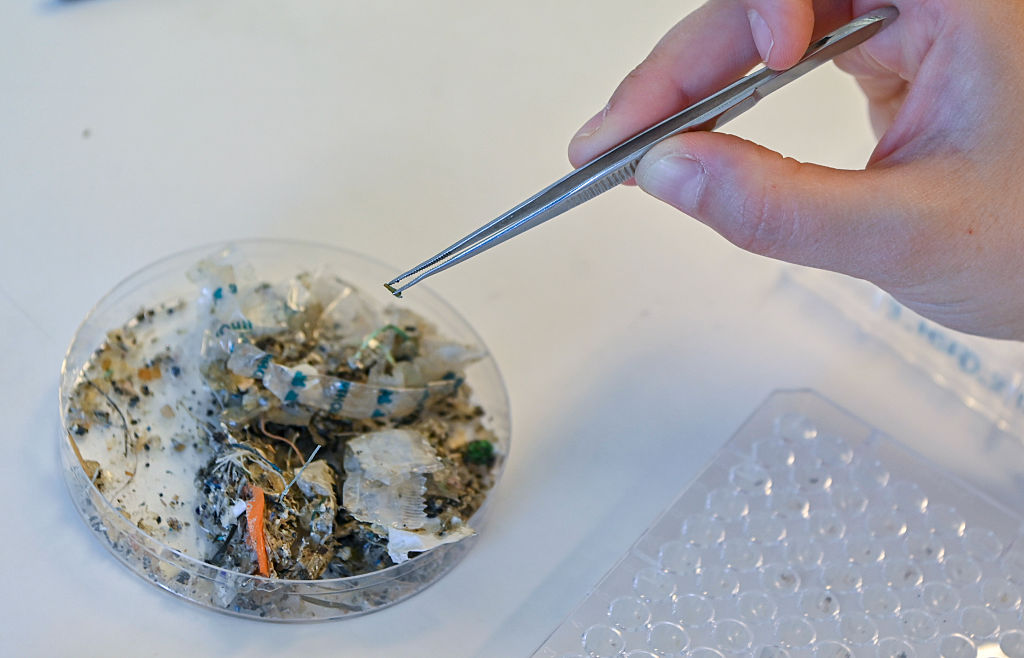
It’s in your food, your tea, your blood—and possibly even your liver and brain. It’s inside us, and around us, and it’s alarming. Like the rest of the world, Africa too is grappling with the rising threat of microplastics. This persistent, nearly indestructible material could bring environmental ruin, or create financial and economic opportunity. How is the continent dealing with it?
In South Africa, another load of waste enters Cape Town’s Coastal Park Landfill on a wintry Tuesday morning in September, prompting a flock of seagulls to continue its daily ritual of pecking through what seems to be a contaminated pile of plastic, food, clothes, and everything in between.
Two driving lanes separate the landfill from the Indian Ocean, but these opportunistic gulls have found a feeding loophole, an endless supply of human excess. On a bad day, it can be seen as a drive past mountains of stinking waste, dramatized by the deafening tone of countless seagulls squawking. On a good day, the mountain is more reminiscent of a hill, but the high-pitched sounds remain.
Like these birds, millions across the continent depend on waste for food and income, regardless of its toxicity, which, for the majority of Africa, is spiraling out of control, like wildfire.
Communities from around the continent are grappling with plastic pollution, along with diminishing biomes and desolated food supplies. It’s an omnipresent reality garnering worldwide attention. In addition, scientists are fearful of another escalating threat: microplastics (MPs).
Developed around the 1950s, plastic–a cheap polymer produced from petrochemicals–has become unimaginable in the modern world. It helps to transport and preserve fresh fruit and vegetables, aids in the production of smartphones and medical supplies, and is used extensively in construction and automotive components.
However, many plastic products are single-use–some last for years–and they all eventually deteriorate, their synthetic framework unable to biodegrade. Instead, they are broken down into hundreds, thousands, and, sometimes, millions of particles, subsequently entering our environments and food chains.
Part Of Everyday Life…
Defined as plastic particles smaller than 5mm, MPs are split into two categories: primary and secondary. The former relates to purposefully small-produced plastics, such as microbeads found in skin cleaners and toothpaste, pellets in plastic bottles and shopping bags, and microfibers in clothes and home textiles, while secondary MPs are released from the breakdown and mismanagement of primaries.
Cleaning a single cloth can release thousands of microfibers into wastewater, a McIlwraith et al. report shows; while another study–Sudheshna et al.–identified that one wash load can shed several million microfibers.
We wear it, breathe it, and ingest it, without noticing.
Research linking the impact of MPs on human health remains inconclusive; however, we know that plastics contain toxic chemicals, such as plasticizers, and that marine species are ingesting MPs at an unprecedented rate, many of which are staples on the continent.
“Plastic is harmful, but currently, we can’t confirm whether particles can cross your biological barriers. Not every particle can enter your organs; there’s filtering systems in our bodies. For us to understand its human impact, we first have to understand which particles cross at what size,” says Elvis Okoffo, a research fellow at Queensland Alliance for Environmental Health Sciences at the University of Queensland Australia, which has been studying the impact of MPs on human health since 2020.
Okoffo adds: “We’re trying to measure plastics in biological tissues, using refined methods to identify single particles, because we don’t know what people are measuring. For studies identifying plastics in bodies, you need to be able to measure single particle bases. Within a few years, we should get conclusive data regarding how it impacts humans.”
Oceans Of Plastic
Ghana’s Kpeshie and Mukwei lagoons, seen as crucial to the support of aquatic biodiversity or as a habitat for several bird species, have felt the impact. A Chico-Ortiz et al. report discovered 964 MP particles between these lagoons. Kpeshie, in particular, once flourished with fish, but now houses a collapsed ecosystem.
Approximately 1.53 metric tons (Mt) of plastic waste and 0.13 Mt of primary MPs enter the ocean through African waterways annually, indicates a Billard and Boucher report, The Challenges of Measuring Plastic Pollution.
Unsurprisingly, commercial seafood, including mussels, oysters, and fish, as well as fruits and vegetables, have not escaped the impact of MPs—a 2020 Yu et al. report suggested that humans may consume around 80 milligrams (mg) of it a day.
That’s the equivalent of consuming a plastic bottle cap every 12 days, and a standard plastic bag every two to three months.
While these MPs may be manufactured on land, their journey often becomes aquatic. They slip into drains and wastewater, wash out with storm runoff, or spill from industrial and agricultural sites—eventually flushing into waterways. They are then ingested by marine life, and eventually end up on our plates.
A 2021 report by Alimi et al. revealed that 5%-100% of all aquatic organisms sampled during the study contained microplastics, including 73% of all fish surveyed in Durban (South Africa); 75.90% of Tilapia in the Nile River (Egypt); and 98% of mussels in Cape Town (South Africa).
The oceanic presence of this material has become so extreme that, at the going rate, there will be more synthetic particles in the oceans than fish, by weight, by 2050, the World Economic Forum predicts.
It has also been revealed that MP levels may be higher in lakes near intensive agricultural activities and high populations, both of which are prevalent across Africa. This, per a Yang et al. report surveying microplastics in lake systems, which identified pellets as a primary MP found in African lakes due to the region’s widespread small-scale fishing activities, use of beads and fishing lines.
Bursting At The Seams
Africa’s population demographics are on an upward trajectory, with reports indicating that, by 2050, it will reach nearly 2.5 billion, accounting for around 25% of the global population, a notion expected to surpass 40% before the end of the century.
Rapid urbanization is also abundant across Africa. The Organization for Economic Cooperation and Development (OECD) predicts that urban areas will account for 80% of Africa’s growth, with around 159 cities exceeding one million residents by 2050—up from about 60 currently.
Exponential growth beckons for the continent, backed by housing seven of the top 10 fastest-growing economies worldwide. And while that bodes well economically, it suggests that Africa’s plastic intake, already at bursting point, will reach new heights due to ballooning markets.
Wastewater treatment plants, proven to remove 40%–99.9% of MPs (Yang et al., 2022), are among the most effective eradicators. However, such infrastructure is lacking across Africa.
The continent’s inefficiency—approximately only 10% of plastic waste generated on the continent is appropriately managed, according to the United Nations (UN)—coupled with its population boom, insinuates that, unless regulations and waste-specific facilities are effectively implemented, MPs will continue rising vigorously.
However, Africa faces another conundrum.
A fraction of global plastic production and consumption occurs in Africa (5% and 4%, respectively), yet it contributes around 24% of the global emissions of mismanaged plastic.
The figure is striking, but understandable given that Africa is viewed by some as a global dumping ground. Container ships and bulk carriers transporting tons of waste reach the continent’s shores every day.
“Global powers aren’t just shipping second-hand products, or donations, they are shipping literal waste,” David Ewusi-Mensah, plastic scientist and Co-Founder of Eco Amet Solutions Ltd, explains to FORBES AFRICA.
The lead author of Macro Problems from Microplastics, Gideon Deme, adds: “We are not even at the alarming rate yet, because it keeps increasing. We estimate that by 2040, we will be importing a minimum of 100 million to 200 million tons of plastics in Africa, and by 2060, we will be importing 10 billion tons of plastics.”
Before China banned plastic waste importation in January 2018, it handled around 45% of the world’s plastic waste since 1992. A 2018 study by Brooks et al., examining the potential implications of China’s law, estimated that 111 million Mt of plastic will be displaced by 2030.
“Ordinary Africans are disproportionately impacted by plastic pollution and the climate crisis, yet we contribute the least to both. Plastic takes countless lives in Cameroon by clogging drainage systems; in the Democratic Republic of Congo, it’s messing with their food supply because fish are ingesting plastic pollution and dying off,” explains Angelo Louw, Greenpeace International’s content editor and documentarian, to FORBES AFRICA.
Economic recoveries (post-2008 recession and pandemic) and free trade agreements, such as the U.S.-sanctioned African Growth and Opportunity Act (AGOA), further increased Africa’s plastic intake. AGOA opened the doors for synthetic-heavy manufacturing giants, such as Lesotho’s China-backed textile boom, as nations rushed to establish jobs and investment.
A Deme, Ewusi-Mensah et al. report identified Africa as a major global MP contributor through city dust (22%), and microbeads (16%), but ranked low in textile washing (4%), compared to China’s 28%.
Inhumane and inefficient landfills—renowned MP hotspots abundant across Africa—are another tedious battle the continent faces; an estimated 38% of the world’s largest landfills are in Africa.
“Landfills are very bad. In many African cities, you see huge ones, often in open areas. They overflow with single-use plastics that, under sun and rain, break into smaller pieces. But because they aren’t biodegradable, decomposers can’t act on them, and over time they shrink into MPs that enter the soil, and then, the food chain,” Deme states.
Lagos, in particular, reportedly generates approximately 13,000 Mt of waste daily. Once nestled on the city’s outskirts, Olasosun–a 100-acre dump, one of Africa’s largest–now intertwines with the northern suburbs of Ojota, Ketu, and Oregun.
It’s estimated that 57.4 million Mt of e-waste was produced worldwide in 2021. Meanwhile, Ghana has become a depository, on the continent, for e-waste, the fastest-growing stream of solid waste worldwide, reports show.
Having said this, large swaths of Ghana’s informal economy depends on e-waste. The Institute for Security Studies revealed that it receives around 150,000 Mt annually, which, the UNDP predicts, contributes between $105 million and $268 million to the economy, sustaining approximately 200,000 people.
Kenya too, like many African countries, is being inundated by fast fashion. Nairobi’s Dandora dumping site, nestled between suburbs, is a constant frenzy of people and birds foraging through waste to find value.
A 2023 report by the Changing Markets Foundation discovered that over 900 million items of used clothing were exported to Kenya in 2021 alone, of which around 20%-50% was deemed waste, and a significant amount likely contained plastic-based fibers that don’t biodegrade.
“When it comes to fast fashion, the clothes are not made with high-quality fabrics. So, when people donate clothes, it’s often spoiled before it reaches Africa. The recipient nation opens the goods and realizes they cannot use much, so they just dump them,” Ewusi-Mensah comments.
Further down the continent, South Africa’s waste infrastructure was exposed in a 2024 audit, disclosing that 85.8% of the 189 landfills inspected failed to meet minimum environmental standards.
The Silver Lining In A Stack Of Plastic
It’s worth noting that waste in Africa supports millions, meaning outright bans could be catastrophic. Circular solutions offer a practical way to convert waste into both value and jobs.
By managing Kigali’s landfills, Rwandan waste management and recycling company, Depot Kalisimbi, has recycled over three million kilograms (kg) of plastic waste into flexible materials, pavers, and bricks, and produced over one million kilograms of compost from organic waste streams.
“The challenge of MPs is urgent, but with innovation, regional cooperation, and strong policy enforcement, we can protect ecosystems and livelihoods while building a circular economy that benefits all,” Depot Kalisimbi says.
The Flipflopi Project, a non-profit based in Kenya, also showcases how harnessing waste can spark awareness and local empowerment. In 2019, they built a sailing boat from recycled plastic for expeditions across East Africa’s coastline; while on Limu island, where over 400kg of plastic has been recovered, they create and sell upcycled heritage-inspired furniture.
“Our ultimate goal is to design a model that can be adopted across the continent, and the only way to do that is through a holistic systemic approach on the ground,” Hannah Evans, Flipflopi’s Digital Communications Manager, tells FORBES AFRICA.
…Something In The Soil
A common misconception is that MPs drift only through water and air, but research shows they’re just as prevalent in the soil. Ragoobur et al. (2021) verified around 230 microplastics particles kg-1 in agricultural soils near a Mauritian landfill, with 96% found in the deeper soil layers.
“The soil and terrestrial environment are often overlooked in MPs research. In reality, soils are one of the largest sinks for MPs, through biosolids, compost, landfills, wastewater irrigation, atmospheric deposition, tire wear particles, and litter breakdown. Once in the soil, MPs can interact with soil microbes and potentially transfer into the food chain,” Okoffo adds.
Deme expands on this, saying, “MPs release toxic chemicals like Bisphenol A that disrupt soil organisms responsible for decomposition, reducing nutrient availability for plants. Plants themselves absorb MPs through their roots, interfering with their physiology and nutrient uptake. This double impact—on soil health and plant function—ultimately reduces crop yield and agricultural productivity”.
The ability of MPs to alter soil structure could also insinuate the possibility of it meddling with Africa’s precious agriculture industry, the continent’s biggest employer.
The sector employs around 49% of sub-Saharan Africa’s workforce, World Bank data indicates. Food demand is set to soar amid Africa’s demographic boom, emphasizing the importance of food security.
“There’s the trophic level system. If people don’t eat much seafood, they may eat cattle and probably vegetables. Cattle ingest MPs through eating grass, so when you eat their meat, the MPs carried in their blood end up in your body, no matter how you cook it. The same applies for plant produce,” Deme clarifies.
Plastics’ relationship with climate change is another threat to agriculture. The production, transport, and degradation of plastic exude vast amounts of carbon dioxide and methane, greenhouse gases synonymous with driving the regularity of droughts, floods, and cyclones.
Extreme weather then ravages farmlands. The drought in Zimbabwe in 2024—reportedly the worst in four decades—triggered a 72% drop in corn production. Meanwhile, Kenyan authorities confirmed that at least 9,973 livestock were lost, and 41,562 acres of cropland, including maize, were destroyed in May 2025 following severe floods.
Humans are adept at handling natural particles, but their ability to handle MPs remains scientifically obscure. Organisms are typically unable to discern between food and non-food, suggesting that MPs could sync with dietary intake.
Toxicological studies link MPs to carrying an array of toxic chemicals, such as polyvinyl chloride, a heat stabilizer and plasticizer, and titanium oxide, a common additive found in plastics proven to provoke cytotoxicity on colon cells and epithelial tissues; other chemicals include phthalates, flame retardants, and UV stabilizers.
Numerous heavy metals associated with cancers and cognitive skills deterioration are also found in MPs, including aluminum, mercury, selenium, and lead. They simultaneously enter the body and affect its wellbeing.
Ingestion, whether through the food chain, drinking from plastic bottles, or swallowing floating particles, is the primary source of human exposure, the rate at which this happens, Okeke et al. (Microplastic Burden in Africa) explains, is dependent on the size and volatility of the additive, pH, temperature of the surrounding medium (air, water, or soil), and the polymer’s permeability.
MPs have been detected in nearly every part of the human body, including blood, bone marrow, placentas, organ systems, and even in breast milk. However, deciphering the exact number of MPs remains ambiguous.
A 2025 report on the bioaccumulation of MPs in decedent human brains revealed nearly 5,000mg of MPs per gram—the equivalent to a standard tablespoon of sugar—over 1,000mg more than 2016’s findings. In comparison, the same study found under 600mg in the liver and kidneys during both examinations.
Intentional Impact
Governments play a vital role in addressing plastic pollution, and while 34 African nations have banned single-use plastics, many have failed to implement this effectively.
“Most of the solutions in Africa are segregated. The sad part is that everyone is doing something, whether through NGOs or private companies, but it’s difficult for them to collaborate and scale, because government support is not there… Rwanda is the only nation that has got it right,” Ewusi-Mensah says.
Having banned the use and importation of non-biodegradable packaging bags in 2009, Rwanda may be setting the blueprint for Africa’s green economy, supported by strict governance, from import fines to raising public awareness.
“Why Rwanda succeeded was because it passed the responsibility to local leaders: the bottom-top approach. Most African countries do the top-bottom approach, which never works,” Deme explains.
Policies that foster a circular economy—through recycling, repurposing, and recovery—promote innovation and acceptance. Yet, in Africa, only eight countries have recycling mandates, with Morocco and Zimbabwe the only ones setting clear targets, Deme et al. confirms.
While effective legislation is vital, it’s imperative that it coincides with infrastructure upgrades and the establishment of cheap plastic alternatives; otherwise, Africa, ripe with poverty, will seemingly continue using the most affordable choice, regardless of the policies.
The continent’s low-income nature presents unique obstacles, but governments should be reminded of a powerful tool at their disposal: education. Progress starts with changing perceptions. Without awareness, people struggle to compute the severity of littering or using single-use plastics.
“If we are not tackling people’s behavior through education, we will never tackle plastic pollution. It should be part of every school’s curriculum,” emphasizes Ewusi-Mensah.
Research guides informed decision-making, yet, Africa accounts for just 1.63% of global plastic research, while, according to researcher, Edmond Sanganyado, most African countries spend less than 1% of their GDP on research and development.
Without Africa-centric research, establishing homegrown frameworks will remain scarce in a multifaceted continent home to various social-cultural contexts, population growth rates, terrains, economies, and plastic importation. Each element requires tailored solutions, highlighting the need for African-made models.
The continent’s complexities suggest, from a regulatory standpoint, a one-size-fits-all approach won’t work. To tackle plastic pollution and, thus, MPs effectively, it will take a continental effort spurred by research, education, collaboration, infrastructure, and innovation.
It’s a lot to juggle, but then again, so is plastic.
The Plastic Busters:
While Africa faces many obstacles against plastic pollution, it’s home to an array of unyielding individuals willing to help navigate the turbulence. Some of them spoke to forbes africa: Modou Fall
Often draped—somehow elegantly—in plastic, Modou Fall, widely known as the ‘plastic man’, was awarded the National Order of Merit in 2015 in Senegal.
As Founder of Clean Senegal, Fall, travels the country, educating learners at school level, organizing clean-ups, and campaigning against single-use plastics.
“We organized an ecological march from Dakar to Saint Louis, walking 10 days over 270 kilometers, to raise awareness about environmental education, to talk about the dangers of plastics to the most vulnerable populations and those who don’t know how bad the pollution is,” says Fall.
Nicole Menemene
Based in her hometown of Bukavu, in the Democratic Republic of the Congo, where plastic chokes lakes and public passages, Nicole Menemene founded Plastycor RDC in 2019, upcycling plastic waste into household goods like chairs, tables, baskets, and flowerpots.
Her efforts have helped to revitalize the region’s waste management sphere, introduce environmental education in schools, and establish a network of 250+ waste collection groups, uplifting around 1.9 million people, with nearly 500 earning their livelihoods directly from the initiative.
“The connection between plastic pollution and public health is poorly understood. We want to train a new generation of eco-entrepreneurs, focusing on youth and women, through recycling and green entrepreneurship workshops,” says Menemene.
Cordie Aziz Nash
A notable figure in Ghana’s plastic fight, Cordie Aziz Nash founded Environment360 in 2014, which has since trained over 200 waste pickers and prevented over 500 tons of plastic from entering the environment. Located in the town of Dodowa, the NGO’s focus on youth shines through its Green Complex, which educates, empowers, and creates circular solutions for those of all ages. “Plastic remains the most affordable packaging… I think innovation, packaging redesign, and consumer choices will be the key areas that determine how Africa deals with plastic waste,” says Nash.
Richmond Kennedy Quarcoo
A former Merchant Navy Officer, Richmond Kennedy Quarcoo is still devoted to the seas, co-founding Plastic Punch, a Ghanaian-based NGO focused on protecting coastal ecosystems from plastic pollution. Since its inception in 2018, it has collected and managed over 45 tons of plastic, facilitated nationwide initiatives, and established sustainable solutions.
“Africa’s blue economy is dependent on tackling plastic pollution. Healthy oceans and coasts are the foundation for coastal livelihoods… protected ecosystems create blue and green jobs and drive inclusive and sustainable growth,” says Quarcoo.
Comments (0)
Sign in to join the conversation.
Related Stories

Equatorial Guinea: Charting A New Era Of Sustainable Prosperity
With a renewed focus on diversification and digitalization, Equatorial Guinea is leveraging its resources to create inclusive, long-term growth. “Agro-processing is a key priority, as our goal is to ultimately achieve national self-sufficiency and independence.” President Teodoro Obiang Nguema Mbasogo Equatorial Guinea is entering a new phase in its economic story–one defined by diversification, competitiveness, and connection. […]

Foundations Strengthening A National Future
Policy reforms, national capabilities, and coordinated institutions reinforce long-term growth across Equatorial Guinea. Q. How is your ministry advancing the national development agenda across key sectors such as agriculture, energy, and tourism, and what priorities guide your efforts to drive long-term economic growth and self-sufficiency? Hon. José Juan Ndong Tom Mekina, Minister of Agriculture, Livestock, Forestry, […]

Equatorial Guinea’s Energy Reset And The Revival Of Its Hydrocarbons Sector
As Equatorial Guinea reshapes its position in the regional energy market, GEPetrol is steering the shift to secure production, attract reliable partners, and align upstream growth with long-term economic goals. “Our strategic vision is to develop projects that are sustainable in the long term, and that also revive the economy.” Bienvenido Nguema Envo, General Manager of GEPetrol In 2024, […]
Recommended




The Daily Brief