

The South African Scientist Championing AI That’s Africa-Led
Benjamin Rosman, one of TIME’s 100 Most Influential People in AI in 2025, tells FORBES AFRICA that he actually “stumbled” into AI, at the end of his undergraduate studies. “There was a course we had that touched on some ideas, very loosely, in artificial intelligence, and I was really excited about that,” says Rosman, now a Professor […]

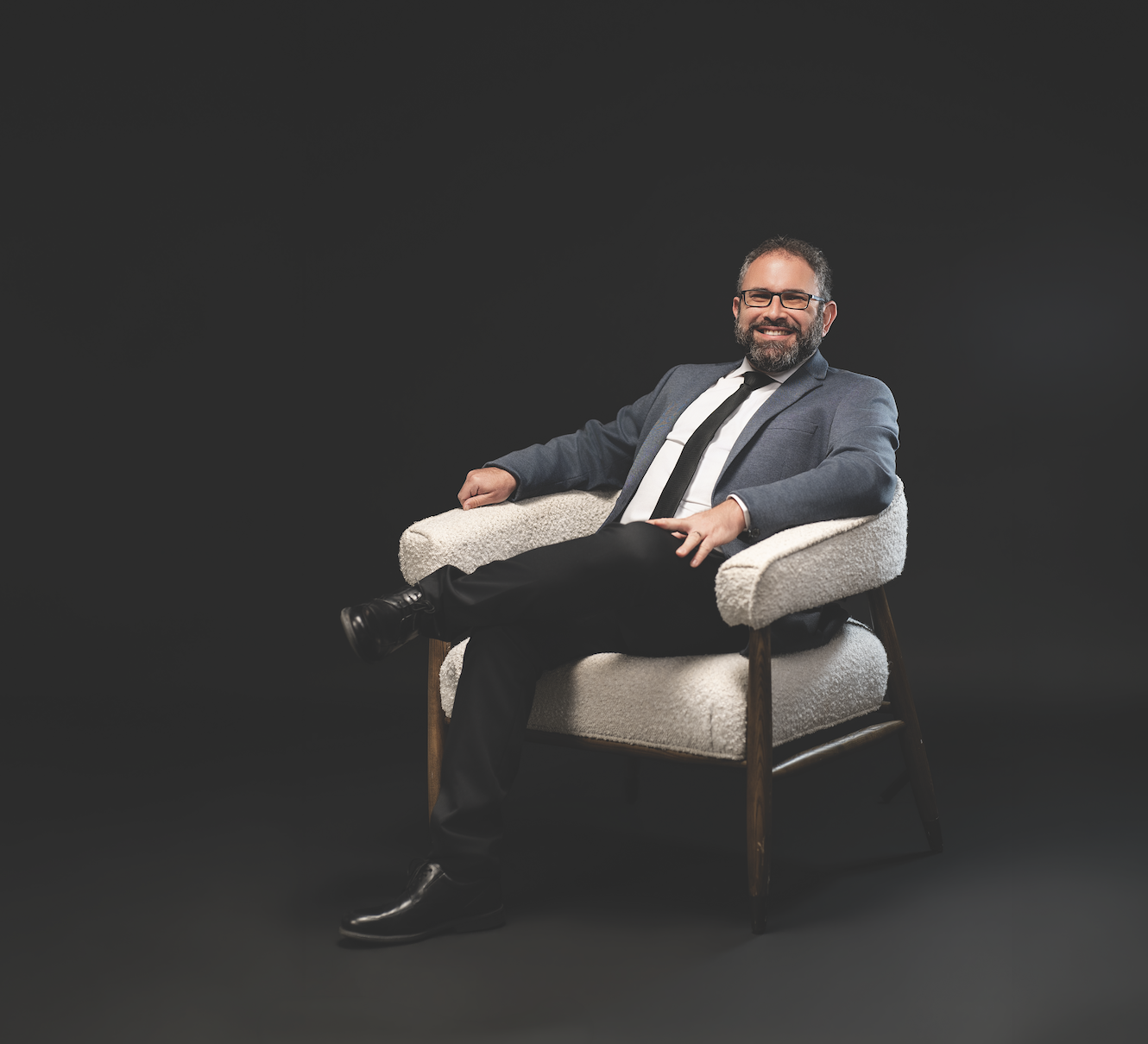
Benjamin Rosman, one of TIME’s 100 Most Influential People in AI in 2025, tells FORBES AFRICA that he actually “stumbled” into AI, at the end of his undergraduate studies.
“There was a course we had that touched on some ideas, very loosely, in artificial intelligence, and I was really excited about that,” says Rosman, now a Professor at the School of Computer Science and Applied Mathematics at the University of the Witwatersrand (Wits) in South Africa.
“I attribute this to my philosophy that you’ve always got to do the coolest thing you can with the coolest people you can find–that’s where it ended up.”
Rosman, who runs the Robotics, Autonomous Intelligence and Learning (RAIL) Laboratory at Wits, also became the founding Director of the Machine Intelligence and Neural Discovery (MIND) Institute in 2024, focusing on the fundamental science of intelligence in machines, humans, and animals.
As central as his work is in the classroom, he has long been an advocate for taking the AI conversation beyond academia, while ensuring Africa is an active participant in shaping it.
As one of the founders of Lelapa AI, a resource-efficient AI system that includes small language models tailored to African languages, dialects and real-world environments, he believes that “it’s important that technical expertise is sitting in every place in every community”.
He also co-founded the Deep Learning Indaba, a summer school that focuses on strengthening machine learning across the continent and, now, has satellite events in around 47 countries.
“It’s really important that AI is not just a conversation that happens elsewhere and is imported here,” Rosman says.
“By the same token, building the technology itself is a very technical thing, but the way it interfaces with society in so many ways depends on society. It shouldn’t depend on computer scientists.”
Last year, the South African scientist was appointed a fellow at the prestigious CIFAR (Canadian Institute for Advanced Research), in Learning in Machines and Brains.
Comments (0)
Sign in to join the conversation.
Related Stories

Equatorial Guinea: Charting A New Era Of Sustainable Prosperity
With a renewed focus on diversification and digitalization, Equatorial Guinea is leveraging its resources to create inclusive, long-term growth. “Agro-processing is a key priority, as our goal is to ultimately achieve national self-sufficiency and independence.” President Teodoro Obiang Nguema Mbasogo Equatorial Guinea is entering a new phase in its economic story–one defined by diversification, competitiveness, and connection. […]

Foundations Strengthening A National Future
Policy reforms, national capabilities, and coordinated institutions reinforce long-term growth across Equatorial Guinea. Q. How is your ministry advancing the national development agenda across key sectors such as agriculture, energy, and tourism, and what priorities guide your efforts to drive long-term economic growth and self-sufficiency? Hon. José Juan Ndong Tom Mekina, Minister of Agriculture, Livestock, Forestry, […]

Equatorial Guinea’s Energy Reset And The Revival Of Its Hydrocarbons Sector
As Equatorial Guinea reshapes its position in the regional energy market, GEPetrol is steering the shift to secure production, attract reliable partners, and align upstream growth with long-term economic goals. “Our strategic vision is to develop projects that are sustainable in the long term, and that also revive the economy.” Bienvenido Nguema Envo, General Manager of GEPetrol In 2024, […]
Recommended




The Daily Brief