

Trade Visionary: Africa’s New DFI Head With A $250-Billion Agenda
Afreximbank’s new chief is betting that Africa’s future lies in an industrial renaissance that promises jobs, export diversification, and a more resilient market. On a recent afternoon at African Export-Import Bank’s (Afreximbank) glass-fronted headquarters, Dr George Elombi sits in the same office he has attended meetings in for more than a decade as Vice President. The view outside, stretching over the sprawl […]

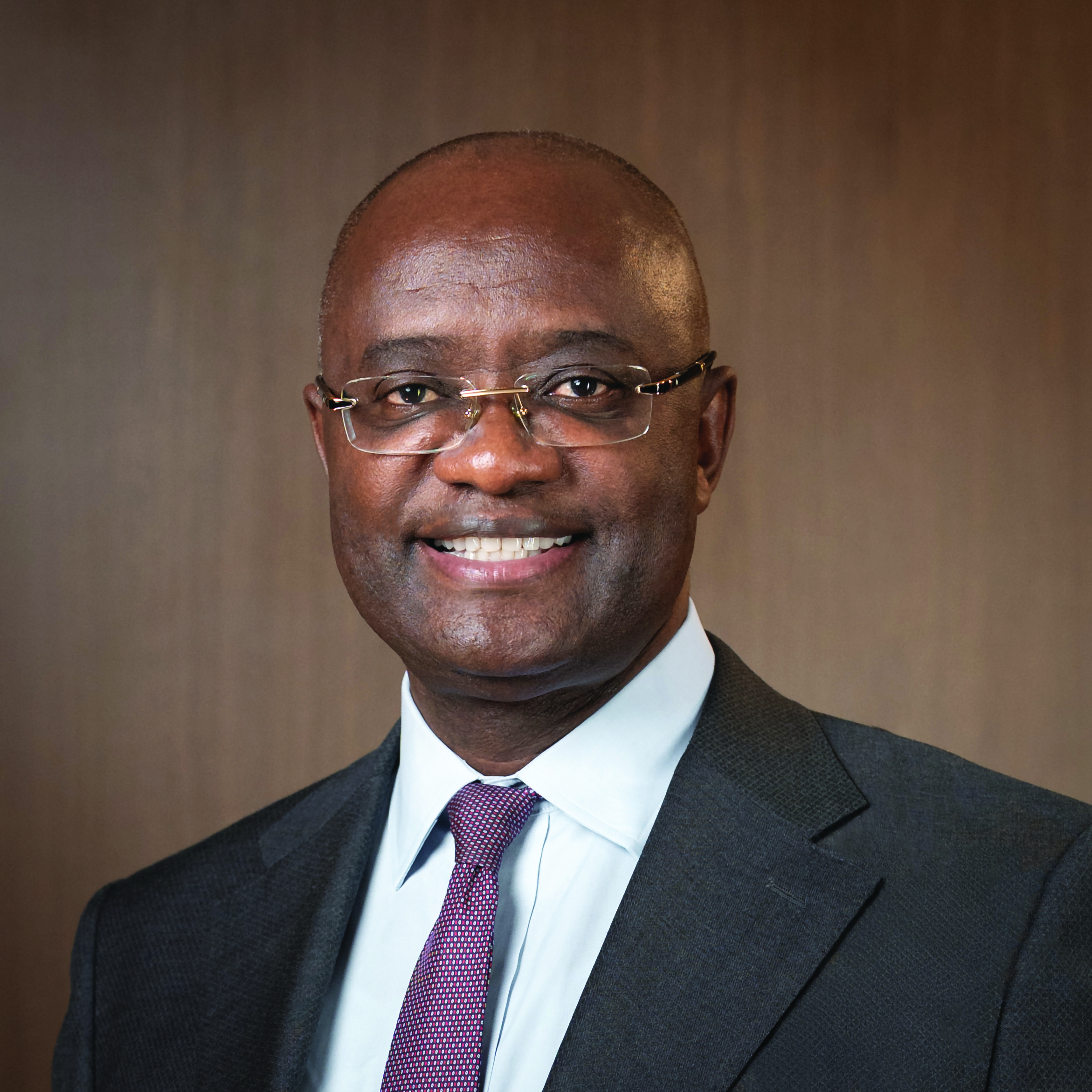
Afreximbank’s new chief is betting that Africa’s future lies in an industrial renaissance that promises jobs, export diversification, and a more resilient market.
On a recent afternoon at African Export-Import Bank’s (Afreximbank) glass-fronted headquarters, Dr George Elombi sits in the same office he has attended meetings in for more than a decade as Vice President.
The view outside, stretching over the sprawl of Cairo’s Heliopolis district, is familiar. So are the stacks of reports and the screen where he has fielded hundreds of calls during the same period.
“There hasn’t been much of a change,” Elombi says to FORBES AFRICA with a gentle laugh. “I have used everything inside here… So, nothing, nothing really is new.”
Yet, something has changed. About two weeks before this virtual conversation, Elombi, 59, assumed the presidency of the Afreximbank, succeeding his longtime colleague, Prof Benedict Oramah. After nearly three decades inside the institution, his appointment marks both continuity and transition for one of Africa’s most influential financial engines.
Elombi’s challenge is to guide the Cairo-based multilateral lender through its next decade: a period he believes must define Africa’s industrial rebirth.
“We now have to move to export processing,” he says. “And what is very comforting to me is the fact that everyone agrees with that view. There’s consensus.”
A Bank Built For A Different Kind Of Growth
Founded in 1993, Afreximbank was conceived as an African response to global trade imbalances—a lender that could finance trade, stabilize markets and reduce the continent’s dependency on external creditors.
Three decades on, it has grown into an approximately $44 billion institution with shareholders ranging from African governments to the African Development Bank (AfDB) and several non-African investors.
Under Oramah’s tenure, the bank’s balance sheet grew almost eight-fold from $6 billion. Its interventions during crises, from Covid-19 to the fallout of the Ukraine war, positioned it as Africa’s go-to countercyclical lender. When vaccines were scarce, Afreximbank financed procurement and distribution through the Africa Medical Supplies Platform. When global trade snarled, it deployed billions to keep essential goods moving.
In his farewell address, Oramah, who led the bank for 10 years, offered a clear mandate. “As I hand over to Dr George Elombi,” he said, “I do so with complete confidence. The future of Afreximbank, and of Africa, shines even brighter.”
He set the bar high: assets of at least $250 billion within a decade, and perhaps $350 billion beyond that.
“It is by owning and controlling a bank of that size,” Oramah said, “that Africa can hope to escape from the shame of poverty and underdevelopment.”
Continuity With A Mission
Elombi is quick to note that the vision is shared. “We agreed on this agenda,” he says. “The board, the former president, myself. The priority is export processing.”
In his telling, the strategy rests on two essential ingredients: money and expertise. The first, he says, “we think we have.” The second—technical know-how to turn cocoa into chocolate, bauxite into aluminum, cotton into garments—is where Africa’s gap remains most glaring.
“Strange as it may be, with Africa’s very large youth force, that expertise is not yet in the continent,” he says. “So, we need partnerships to build that expertise.”
That conviction informs what Elombi calls “sector-by-sector transformation”. The bank’s model begins with a single product—say, cotton—and builds an ecosystem around it.
“In Benin, Togo, and partially in Côte d’Ivoire and Nigeria, we’ve started to ensure that Africa’s cotton is no longer exported as lint,” he explains. “It should become T-shirts, socks, dresses, towels, bed sheets.”
He describes a $2 billion to $3 billion project underway in southwest Nigeria’s Ogun State, championed by Governor Dapo Abiodun. “We don’t want to see Nigerian cotton go out again in the form of the raw product,” he says.
The approach is pragmatic. Identify a cluster of industries—minerals, timber, agro-processing—and build special industrial zones around them, complete with infrastructure, customs posts, and transport links to ports.
“If we can process at least five of our raw resources on the continent, the change and wealth we create would be dynamic for Afreximbank and for the host countries,” he says.
Industrial Ambition, African Scale
Afreximbank’s new agenda is a blueprint for structural transformation. The institution also aims to finance industries that process Africa’s minerals into finished goods. Its new Strategic Minerals Development Program is designed to fund entire value chains—from extraction to manufacturing—and to catalyze investments in refining and energy-intensive industries like steel and aluminum.
At the heart of it lies a simple ambition: to make Africa produce what it trades, and trade what it produces.
“Only a strong and well-capitalized Afreximbank can deliver the scale of interventions required to transform Africa’s trade and development landscape,” Elombi says.
To reach the $250 billion goal, he plans to combine new shareholder capital with retained earnings, co-lending, and asset-management initiatives—“all anchored in sound risk management and credit discipline,” he adds.
The transformation, he says, is not about size for its own sake. “Every dollar must translate into positive change on the ground—funding projects that create jobs, build industries, and advance Africa’s self-reliance.”
From Raw To Refined
Africa’s dependence on commodities is as old as its integration into global trade. Oil, cocoa, copper, and timber still dominate its export baskets, and their prices are set in trading platforms thousands of miles away in London, Chicago, Frankfurt, and New York.
“The prices are set regardless of the cost of production for us in Africa,” Elombi says. “If your production cost comes close to the market price, then your margin is very small. And when the prices begin to fall, you start selling at a loss.”
His remedy is deliberate: process what Africa produces. “It’s better to take the risk that when we process cocoa into chocolate, it may be tariff-hit in a way that affects us,” he says. “That risk is worth taking, rather than staying on this commodity side where the margins are just too slim.”
The goal is not only to boost export revenues but also to anchor value addition within the continent to ensure that Africa retains more of its wealth at home.
The Youth Equation
By 2050, one in every four people in the world will be African. And Africa is largely youthful. Elombi sees that demographic not as a burden, but as an asset, if the right industries can absorb its potential.
In his vision, the creative economy and technology sectors are central to engaging Africa’s youth. “We thought that because the youth are not easily associated with factories or big trading companies, the easiest way to reach them was through the creatives: design, film, music, fashion, cuisine,” he says.
Five years ago, Afreximbank began what it called the Creative Africa Nexus (CANEX), a platform that now supports artists, designers, and entrepreneurs across the continent. But Elombi believes it’s time to go further.
“One component we didn’t pay much attention to was innovation—digitalization, technology—where the youth is also very active,” he says. “So, our proposal now is to integrate that fully into our youth project.”
The new plan, he explains, merges CANEX with innovation. “The digital industry plus the creative industries is where we have given a rendezvous to the youth of the continent,” he says. “We will keep our part of the rendezvous. We hope they keep theirs.”
A Continent Trading Elsewhere
For decades, Africa’s share of global trade has hovered around 3%, a figure that frustrates economists and policymakers alike. Much of that trade still flows outward—to Europe, Asia, and North America—rather than within Africa itself.
Afreximbank sees its mission as changing that equation. The African Continental Free Trade Area (AfCFTA), launched in 2019, offers the framework. The bank’s task is to make it work.
“We’re going to focus on the creation of what Africa needs to trade,” Elombi says. “When you hear about global trade and Africa’s role in it, our role is new. We have not created the things we have to trade, even between African countries.”
To make intra-African trade a reality, Afreximbank is investing in logistics, transport, and payments systems. Its digital platforms, such as the Pan-African Payment and Settlement System (PAPSS), allow businesses to settle transactions in local currencies. Others, like the Africa Trade Exchange (ATEX) and MANSA, a centralized Know Your Customer database, aim to simplify compliance and boost trust.
Through the Africa Trade Gateway—a one-stop digital ecosystem linking exporters, banks, and regulators—the bank is creating a digital infrastructure to match its financial ambitions.
Innovation, Elombi says, will be at the core of Afreximbank’s next phase. “They are powerful tools for overcoming barriers to trade, expanding inclusion, and accelerating value creation.”
The Partners, The Diplomacy
Afreximbank’s reach extends far beyond finance. The bank operates at the intersection of economics and diplomacy, often shaping how African nations negotiate and collaborate.
Nigeria’s finance minister, Wale Edun, who chairs the bank’s general meeting for 2025–26, called Elombi’s appointment “a seamless transition from a solid foundation to a bold leap toward the future”.
“You are not just called to lead a bank,” Edun said at the inauguration ceremony. “You are called to steward a vision—a vision of a self-reliant, integrated, and prosperous Africa.”
Private sector leaders echo that sentiment. Africa’s richest man, Aliko Dangote, praised Elombi’s “dedication and passion for Africa’s transformation”. He recalled his decisive role during the pandemic.
“It demonstrated that we can rise to global challenges with African solutions,” he said. “Our own $100 billion 2030 growth target at Dangote Group will be met even sooner with the continued collaboration of Afreximbank under your leadership.”
Elombi responded with characteristic humor. “Dangote says he will come for an additional $5 million to expand his refineries,” he said. “And Afreximbank will look everywhere to get the funds.”
Other leaders were equally effusive. Chad’s finance minister, Tahir Hamid Nguilin, describes Elombi as “a capable helmsman”. The bank, he notes to FORBES AFRICA, had already signed a $2 billion memorandum of understanding with Chad to support agro-industries, export agriculture, and oil refining.
Abdul Samad Rabiu, chairman of Nigeria’s BUA Group, offers a wider perspective. “The world is entering a new cycle,” he says through an exclusive statement shared with FORBES AFRICA. “The end of African Growth and Opportunity Act (AGOA) is not a crisis; it’s a reminder that access given can also be withdrawn. Africa must now create access for itself.”
Rabiu’s remarks reflect a growing sentiment across the continent—a push for self-determination and intra-African trade as global alliances shift. “When African countries trade with one another, they build both prosperity and peace,” he says. “We must build an Africa that no longer waits for permission to prosper.”
Resilience And Reputation
Afreximbank’s credibility, Elombi says, rests on three pillars: governance, discipline, and impact.
The bank is also deepening its partnerships with other African multilateral lenders, as well as institutions such as the European Investment Bank, the Islamic Trade Finance Corporation, and the Arab Bank for Economic Development in Africa. “All partnerships will be guided by the principle of mutual benefit and respect for African ownership, ensuring that collaboration supports Africa’s priorities and strengthens its economic sovereignty,” he adds.
The goal is not dependency, but collaboration. “Through these efforts,” he adds, “Afreximbank will remain a trusted bridge between Africa and the world, connecting partners, investors, and innovators to the continent’s growth story.”
A Digital Turn
Perhaps the most ambitious part of Elombi’s plan is digital. His team is betting that technology can help small and medium enterprises, the backbone of Africa’s economies, overcome barriers to cross-border trade. The bank’s AfCFTA Accelerator Program will provide them with financing, data, and digital tools to access new markets.
Afreximbank is also exploring the idea of a pan-African digital currency or stablecoin—a potential game changer for financial integration. “The bank will continue to scale and strengthen digital platforms, harness artificial intelligence and advanced analytics to improve risk management and efficiency and explore digital-currency innovations that deepen Africa’s financial integration,” Elombi says.
He notes the institution will continue to emphasize the importance of innovative financial mechanisms in driving Africa’s green transformation.
‘’The bank will push for greater utilization of blended finance, green bonds and concessional funding to support the continent’s climate action agenda. Our aim is to build a stronger, more innovative Afreximbank—one that mobilizes African and global capital, drives industrialization, and delivers measurable impact through every financial instrument we deploy. The success of our industrialization agenda depends on securing markets within Africa. Integration is not just about trade; it is about building a shared African market, where production, finance, and opportunity flow freely.”
A Measured Man With A Vision
For all his technocratic precision, Elombi is not without humor or warmth. He admits that his doctors have recently advised him to rest his voice, but he presses on with meetings. “If I had respected their order, I’d be fine tomorrow,” he says, smiling.
Away from the boardroom, he is a football enthusiast. “On Saturdays or Sundays, I’m likely to be sitting with staff watching the games,” he says. “If Liverpool is playing, there’ll be about 12 of us. If it’s Manchester United, maybe four.”
He walks or runs daily, six kilometers on the treadmill, or 10 kilometers around the compound. It is a discipline that mirrors his professional philosophy: steady, consistent, focused on endurance.
“I inherit a strong institution, built on the vision, discipline and achievements of my predecessors,” he says. “My first commitment is to preserve those achievements and build on them.”
The Broader Horizon
Elombi’s appointment has drawn optimism from across Africa’s financial and political circles, not least because he represents a generation that came of age inside the institutions shaping Africa’s economic identity.
He joined Afreximbank not long after its founding, climbed through its ranks, and served as Executive Vice President for Governance, Legal and Corporate Services before ascending to the presidency.
His challenge will be to translate the bank’s grand plans into tangible projects in a world of growing geopolitical fragmentation.
Still, he insists the mission is clear. “The ultimate goal is a self-reliant, industrialized, and interconnected Africa,” he says, about the continent’s next leap forward.
Comments (0)
Sign in to join the conversation.
Related Stories

Equatorial Guinea: Charting A New Era Of Sustainable Prosperity
With a renewed focus on diversification and digitalization, Equatorial Guinea is leveraging its resources to create inclusive, long-term growth. “Agro-processing is a key priority, as our goal is to ultimately achieve national self-sufficiency and independence.” President Teodoro Obiang Nguema Mbasogo Equatorial Guinea is entering a new phase in its economic story–one defined by diversification, competitiveness, and connection. […]

Foundations Strengthening A National Future
Policy reforms, national capabilities, and coordinated institutions reinforce long-term growth across Equatorial Guinea. Q. How is your ministry advancing the national development agenda across key sectors such as agriculture, energy, and tourism, and what priorities guide your efforts to drive long-term economic growth and self-sufficiency? Hon. José Juan Ndong Tom Mekina, Minister of Agriculture, Livestock, Forestry, […]

Equatorial Guinea’s Energy Reset And The Revival Of Its Hydrocarbons Sector
As Equatorial Guinea reshapes its position in the regional energy market, GEPetrol is steering the shift to secure production, attract reliable partners, and align upstream growth with long-term economic goals. “Our strategic vision is to develop projects that are sustainable in the long term, and that also revive the economy.” Bienvenido Nguema Envo, General Manager of GEPetrol In 2024, […]
Recommended




The Daily Brief