

Turning Leaves Into Leverage: Brewing Impressive Returns In Rwanda
Rwanda is famous for coffee, but tea is fast emerging as a quiet powerhouse, one that earns the country even more foreign exchange and supports thousands of local smallholder farmers. Around the world, Rwanda is synonymous with rich, high-quality coffee. The coffee sector is a cornerstone of the national economy, contributing about 24% to agricultural exports […]


Rwanda is famous for coffee, but tea is fast emerging as a quiet powerhouse, one that earns the country even more foreign exchange and supports thousands of local smallholder farmers.
Around the world, Rwanda is synonymous with rich, high-quality coffee. The coffee sector is a cornerstone of the national economy, contributing about 24% to agricultural exports and generating over $450 million in export revenue between 2017 and 2023, according to the International Trade Centre. Rwanda produces around 20,000 metric tons of coffee annually, with over 90% destined for the international specialty market. The economy supports an estimated 400,000 smallholder farming families who rely on coffee for their livelihoods.
But coffee isn’t the only warm beverage that Rwandans enjoy, nor is it the only one powering the agricultural economy.
Tea also plays a major role in Rwanda’s export landscape. The Silverback Tea Company is one of the companies shaping the sector. Its CEO Nzeki Munyao says tea earns Rwanda more foreign exchange than coffee. The challenge, he says, is that Rwandan tea has long been marketed in bulk as a commodity.
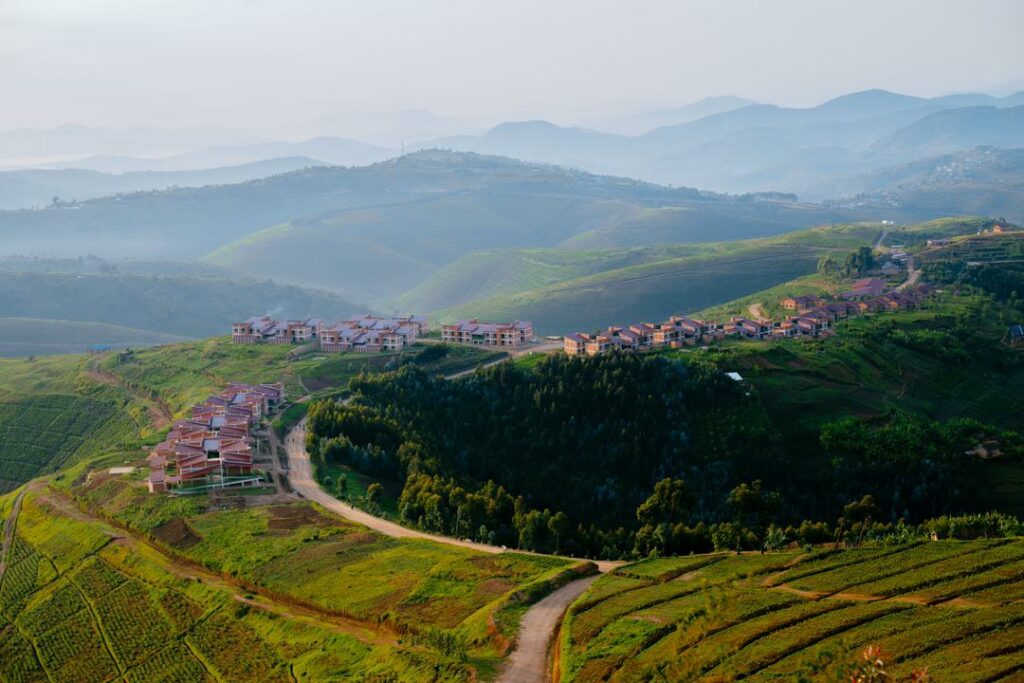
Tea generated about $114.8 million in export revenue in 2023 and 2024 and is the country’s third-largest employer.
“Now, we’re working to build strong brands around it. It’s only through branding that ‘Made in Rwanda’ tea can reach global markets and truly leverage the Rwanda name, which, in itself, is already a powerful brand. I genuinely believe Rwanda is the best in Africa. And just for context, I’m from Kenya,” Munyao quips.
Silverback Tea Company includes three top Rwandan tea gardens: the Gisovu Tea Company, Rugabano Tea Company, and Pfunda Tea Company. Together, they work with over 11,000 tea farmers. Founded in 2019, the company draws inspiration from one of Rwanda’s most iconic tourist attractions, the silverback gorilla.
“It’s become part of our culture, something we want to share with the world. Through our work, we’re creating awareness for this majestic animal while also contributing, in our own way, to conservation efforts. We may not be directly involved in conservation activities, but by building awareness and engaging in conversations like this, we help make these magnificent creatures better known globally. At the same time, we’re also creating brand awareness around them.”
The biggest challenge, Munyao explains, is that their tea is also sold in bulk and incorporated into the blends of major international brands.
“But what we really want is to step out from behind those global brands and be recognized as African producers, as African brands, and to build that presence not just across Africa but globally. Rwanda began with the idea of ‘Buy Rwanda, Develop Rwanda,’ but we now need to expand that vision to ‘Buy Africa, Develop Africa,’ all while maintaining good relationships with our international partners.”
Looking more broadly at continental growth, Munyao says one of the biggest opportunities lies in infrastructure and connectivity.
“It might surprise you to know that for many people traveling within Africa, they often have to fly outside the continent first and then back in,” he says. For instance, travelers from Mali or Senegal often have no direct route. They must fly to Europe and then return to Africa. The same goes for trade; moving products across the continent can be unnecessarily complicated.
“It’s really a story of African connectivity, connecting Africa to itself. If we could achieve that, it would be incredibly exciting. We already have everything we need right here on the continent. We shouldn’t have to go outside for what we can produce and trade among ourselves. Even now, our teas reach Nigeria through a packaging plant in Europe, in Poland, to be exact, before being brought back to Africa. That has to change.”
Comments (0)
Sign in to join the conversation.
Related Stories

Equatorial Guinea: Charting A New Era Of Sustainable Prosperity
With a renewed focus on diversification and digitalization, Equatorial Guinea is leveraging its resources to create inclusive, long-term growth. “Agro-processing is a key priority, as our goal is to ultimately achieve national self-sufficiency and independence.” President Teodoro Obiang Nguema Mbasogo Equatorial Guinea is entering a new phase in its economic story–one defined by diversification, competitiveness, and connection. […]

Foundations Strengthening A National Future
Policy reforms, national capabilities, and coordinated institutions reinforce long-term growth across Equatorial Guinea. Q. How is your ministry advancing the national development agenda across key sectors such as agriculture, energy, and tourism, and what priorities guide your efforts to drive long-term economic growth and self-sufficiency? Hon. José Juan Ndong Tom Mekina, Minister of Agriculture, Livestock, Forestry, […]

Equatorial Guinea’s Energy Reset And The Revival Of Its Hydrocarbons Sector
As Equatorial Guinea reshapes its position in the regional energy market, GEPetrol is steering the shift to secure production, attract reliable partners, and align upstream growth with long-term economic goals. “Our strategic vision is to develop projects that are sustainable in the long term, and that also revive the economy.” Bienvenido Nguema Envo, General Manager of GEPetrol In 2024, […]
Recommended




The Daily Brief