

Why Fast Fashion Needs To Slow Down: An African Perspective
With consumers globally reportedly spending between $25 and $100 a month on affordable everyday items, including apparel, from low-cost online retailers, it has meant more accessible clothing options for Africa’s growing middle class–but has this sartorial excess been at the expense of the environment? The fast fashion online shopping experience is rapidly becoming a global […]

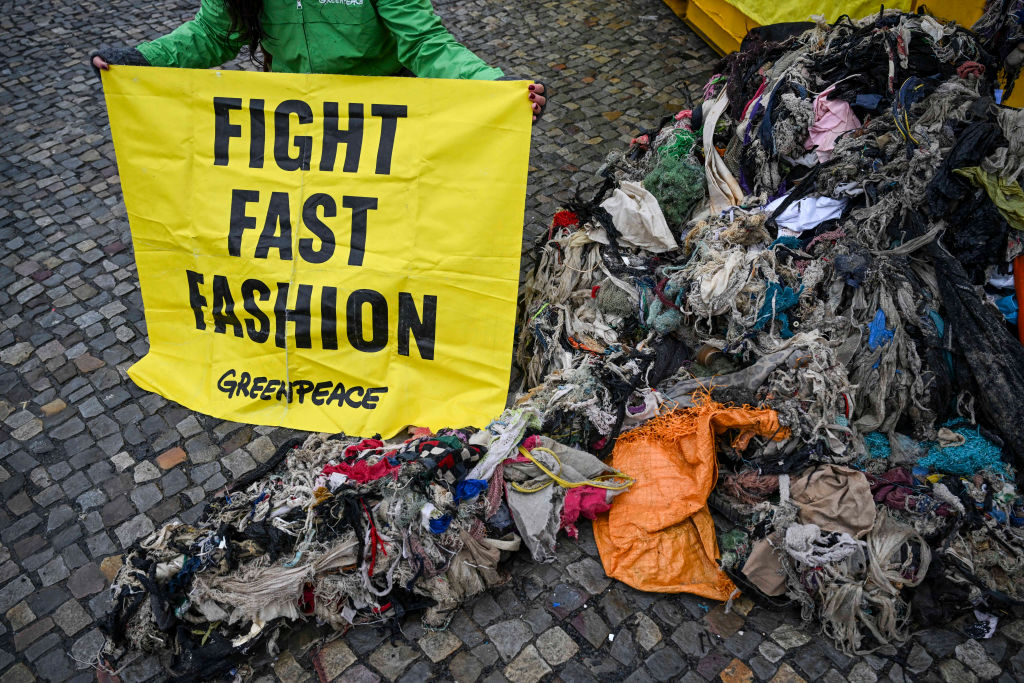
With consumers globally reportedly spending between $25 and $100 a month on affordable everyday items, including apparel, from low-cost online retailers, it has meant more accessible clothing options for Africa’s growing middle class–but has this sartorial excess been at the expense of the environment?
The fast fashion online shopping experience is rapidly becoming a global norm. Imagine scrolling through Facebook, Instagram, or even X, when suddenly pop-up ads light up your screen—featuring a shirt or skirt that might normally cost over $30, now slashed to a wallet-friendly $5.99.
At the top of the fast fashion pyramid and massively popular are the online retailers from China to the United States, offering an eye-popping plethora of low-cost products, from clothing and accessories to home goods and electronics, targeting price-conscious consumers through fast, app-driven shopping experiences.
“They are so reliable,” says Poloko Makgoe, a finance coordinator based in South Africa and who regularly shops online. “The apps are so easy to navigate. I am lazy as well, so I prefer shopping from the comfort of my bed with my tea next to me… I also feel like they are cheaper than some of the online South African stores.” Another South African shopper, Sengezo Jubane, says she feels the Chinese brands she regularly follows and shops at are about “30% cheaper than the brick-and-mortar South African retailers in general”.
There are studies that state the average online shopper spends around $100 per month on clothing.
“On average, I probably spend about R1,500 ($86) every time I buy online,” Jubane says. “I actually calculated how much I have spent since starting to use the app in 2020,” Makgoe also admits. “It’s bad, because when I add up all of my orders, it’s about R15,000 ($855) to R20,000 ($1140)… with each order maybe coming to about R3,000 ($171) to R4,000 ($228).”
The brands are massively favored, but however their popularity, the complex paradox between affordability and sustainability is increasingly being globally deliberated by environmental experts. The fast-fashion brands are expanding, rapidly, across the globe with ultra-fast production cycles and mass, prêt-à-porter lines.
As the world seeks sustainable solutions in everyday life, it’s part of a broader debate on fast fashion, slow fashion, and their lasting impacts.
Life In The Fast Lane
Liz Ricketts, the Founder and Executive Director of The Or Foundation in Ghana—which works directly with fast fashion waste in the Kantamanto market in the country—is concerned about the volume and speed with which fast fashion is dispensed by such business models and e-retailers worldwide.
Over the past two decades, the influx of clothing from the EU, U.S., Canada, and China, has surged with the rise of fast fashion, while the value of clothing has steadily declined.
Environmental experts agree that this imbalance has fueled excessive waste and deepened the environmental crisis, placing even greater strain on the global fashion ecosystem.
“Under a fast fashion business model, excess is accepted as the norm but no country in the world has the waste management infrastructure to adequately manage textile waste. In fact, only 1% of clothing produced globally is recycled into new clothing,” Ricketts says.
“It comes as no surprise that Accra lacks recycling facilities and sufficient, engineered landfills, meaning much of this waste ends up in informal dumpsites, burned in open air or swept into gutters, ultimately ending up in the ocean. Our team removes a minimum of 20 tons of clothing and other plastic waste from the beach every single week.”
Studio 189, a community-based, artisan-led label rooted in Ghana and the U.S., states that ultra-fast fashion relies, heavily, on oil-derived synthetics and low-cost processing. This pushes prices down, but pushes emissions and toxic impact up.
Co-Founder Abrima Erwiah adds that when clothing is made and sold cheaply, people buy quickly and discard quickly.
“We prefer not to single out individual companies,” she adds. “The challenge is the ultra-fast fashion model itself. It is built on speed, volume and synthetics, which accelerates extraction, pollution and waste at every stage of the value chain.
“By the numbers: apparel sector emissions rose 7.5% in 2023 to 944 million tons CO2, nearly 2% of global emissions, driven by overproduction and heavy reliance on polyester.”
However, even major retailers pose a massive threat to the fast fashion revolution. While many are moving to create more eco-friendly garments, it may not be enough, according to Rewoven Co-Founder, Esethu Cenga.
“The challenges we face because of fast fashion are quite dire,” Cenga says with a sigh, in an interview with FORBES AFRICA. “The growth of international fast fashion retailers, particularly in South Africa, has significant consequences.”
She adds: “When these low-priced products enter South Africa, local brands struggle to compete, impacting job creation and reducing opportunities for South African workers in the manufacturing sector. The issue isn’t just about profits, it’s about the local fashion industry’s ability to sustain employment and create meaningful work.”
The biggest concern for Cenga is the waste generated by international fast fashion. She explains that brands that aren’t present in Africa often send their waste to the continent under the guise of second-hand clothing donations. A large number of these garments are not durable, having been cheaply produced and designed with a short lifespan in mind.
“In Ghana alone, it’s estimated that 50 million second-hand items arrive in Accra each week, generating around 160 tons of textile waste daily. The oceans are so polluted with discarded textiles that people have even reported finding jeans while swimming,” Cenga says.
“In South Africa, Customs intercept much of this waste and incinerates it to prevent environmental damage, but this isn’t a sustainable solution. While some of the second-hand clothing has led to a thriving resale market, much of it still hampers local fashion brands because imported, cheap clothing reduces demand for locally-produced products.”
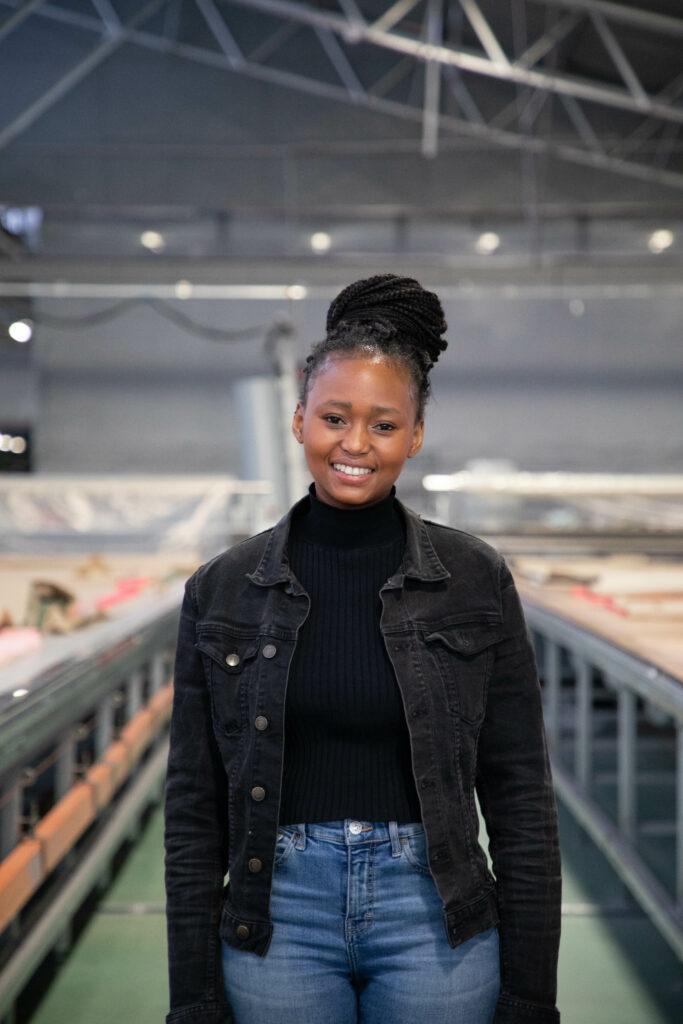
Ricketts reiterates this point, explaining that Ghana has imported over 147,000 metric tons of second-hand clothing in 2023, and much of this passes through Kantamanto.
Fifteen million items of second-hand clothing (called obroni w’awu or ‘dead white man’s clothing’ locally) pass through the market on a weekly basis, with 40% of that clothing ultimately going unsold and leaving the market as waste. Though, it’s important to note, this is different from what is immediately discarded as waste on arrival because it is so badly-stained or torn.
“This wasn’t always the case,” she adds, to FORBES AFRICA. “For decades, before fast fashion, this gamble paid off because enough of the garments inside the average bale were high-quality, durable, and easily resold. Such sales funded the repair or upcycling of the lower-quality items that would arrive in every bale. But today, the risk far outpaces the reward, with over half of the items in each bale having less value than the cost to manage the same items, driving retailers into debt and threatening a collapse of one of the largest reuse and upcycling economies in the world.”
Erwiah explains that “in Accra, large volumes of imported second-hand clothing regularly exceed what local markets and infrastructure can handle, especially when low-quality items arrive damaged or unsellable”.
“The result is pressure on livelihoods and public systems: bales that can’t be sold become waste, clogging waterways, contributing to flooding, and, when burned, polluting communities. The root cause sits upstream: global overproduction, overconsumption and the rapid churn of ultra-fast fashion.”
International Wear, Local Impact
In general, the fashion industry poses significant environmental challenges. According to Earth.org, it is a major driver of ecological strain due to its dependence on non-renewable resources, high greenhouse gas emissions, and intensive use of water and energy. In fact, it is the world’s second-largest consumer of water, requiring an estimated 700 gallons to produce a single cotton shirt and about 2,000 gallons to manufacture one pair of jeans.
The business model of most of the online retailers selling low-cost clothing involves producing a vast number of new designs weekly, encouraging consumers to buy more clothes than they need, and fueling, according to some experts, a culture of overconsumption.
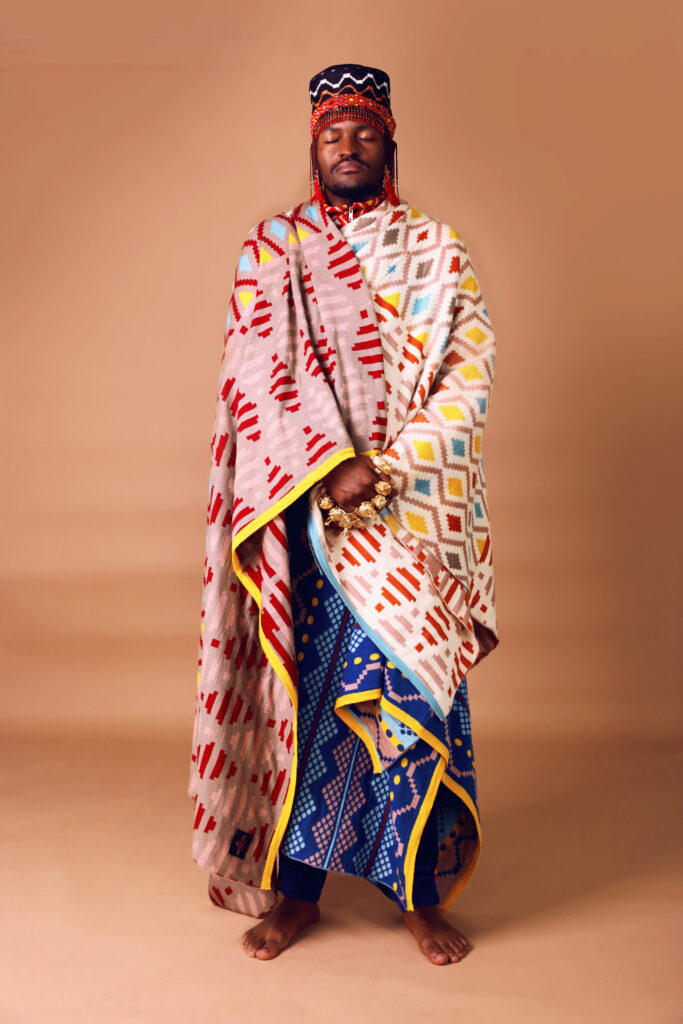
This has also made it difficult for local designers, such as MAXHOSA AFRICA and Rewoven, who create unique products with a sustainable mindset.
“It’s a pressure that has been quite difficult for us to keep up with, especially given the new challenge we’ve been facing over the past three years—counterfeits,” Laduma Ngxokolo, Founder and Creative Director of the South African knitwear brand MAXHOSA AFRICA, tells FORBES AFRICA.
“The main difference between us and fast fashion is that we cultivate original creative ideas and bring them to life through our manufacturing.”
Aja Barber, author of Consumed: The Need for Collective Change: Colonialism, Climate Change, and Consumerism, and a global voice critiquing fast fashion, says that the big problem with fast fashion and the impact it has on the continent also comes back to colonialism.
“Today’s legacy of colonialism looks just like the past. The raw resources and labor come from the Global South, the profit extracted from the Global North,” Barber tells FORBES AFRICA. “I would look at the fact that the fashion capitals of the world are all in the United States and Europe. Or the fact that the majority of the high-paid creative directors are White and men. Or the fact that many people cannot name African designers off the top of their head and would never consider supporting African designers.”
On the concern around waste, she adds: “The idea that so much of the industry’s excess ends up in Africa (Ghana, Kenya, Rwanda and Uganda) is painfully unfair. And now, the industry has its sights set on various spots in Africa as manufacturing hubs but we know good and well how the industry treats its workers in the manufacturing sector.”
This then begs the question: Is slow fashion the sustainable solution?
…Not A Wasted Opportunity
The South African brand MAXHOSA AFRICA has built its ethos on the conviction that achieving zero waste is possible within this lifetime.
For its 2023 collection, the brand turned inward to embrace more sustainable practices, exemplified by the ‘mosaic-like Bib Vest’ crafted entirely from off-cut materials—a striking demonstration that environmental consciousness and luxury can coexist. According to Ngxokolo, MAXHOSA chooses to manufacture internally rather than outsource to countries like China, emphasizing sustainability through the use of natural materials. The brand sources wool, mohair, and cotton from the Eastern Cape in South Africa, and incorporates viscose, a semi-natural fiber, to create garments that reflect its commitment to responsible production.

“It’s important for us because our brand is built on three pillars: Ubuntu, arts, and culture. Ubuntu isn’t just about taking care of the people around you, but also the environment,” he says. “As much as we enjoy being alive today, we know we won’t be here in the next 50 years—and future generations deserve to enjoy the same fresh air, clean water, and sustainable, organic food that we have.”
In the city of Cape Town, three young people–Tshepo Bhengu, Cenga and Lonwabo Mgoduso–started Rewoven in 2018 when they started noticing that the big retail players were looking to sustainable materials for their garments.
“We quickly realized, ‘Oh, interesting, could Africa become one of the markets supplying sustainable materials to the global fashion retail industry?’ ” Cenga says.
The trio then began researching and found that there was a massive problem: textile waste.
“My business partner and I started visiting clothing manufacturers, literally knocking on their doors, asking, ‘Do you have textile waste? How much? Ehat do you do with it?’ ” Cenga recalls.
“We were shocked to see how much production waste they generated daily. They admitted it was a massive problem—they had to dump it every day and didn’t know what else to do. That’s when we thought, ‘Could textile waste be recycled the way plastic is, and could new products be made from it?’ ”
The first few years of Rewoven’s operations have been focused on understanding the landscape and determining what a feasible and scalable textile recycling model would look like. The next phase is to implement that model and scale it.
“Over the past five years, Rewoven has primarily operated as a collector and sorter,” Cenga says. “We have collected textile waste from factories, hospitals, hotels, and other entities, then sorted, baled, and sold it to fiber producers. These fibers are used in downcycled products like automotive carpet underlays and upholstery.”
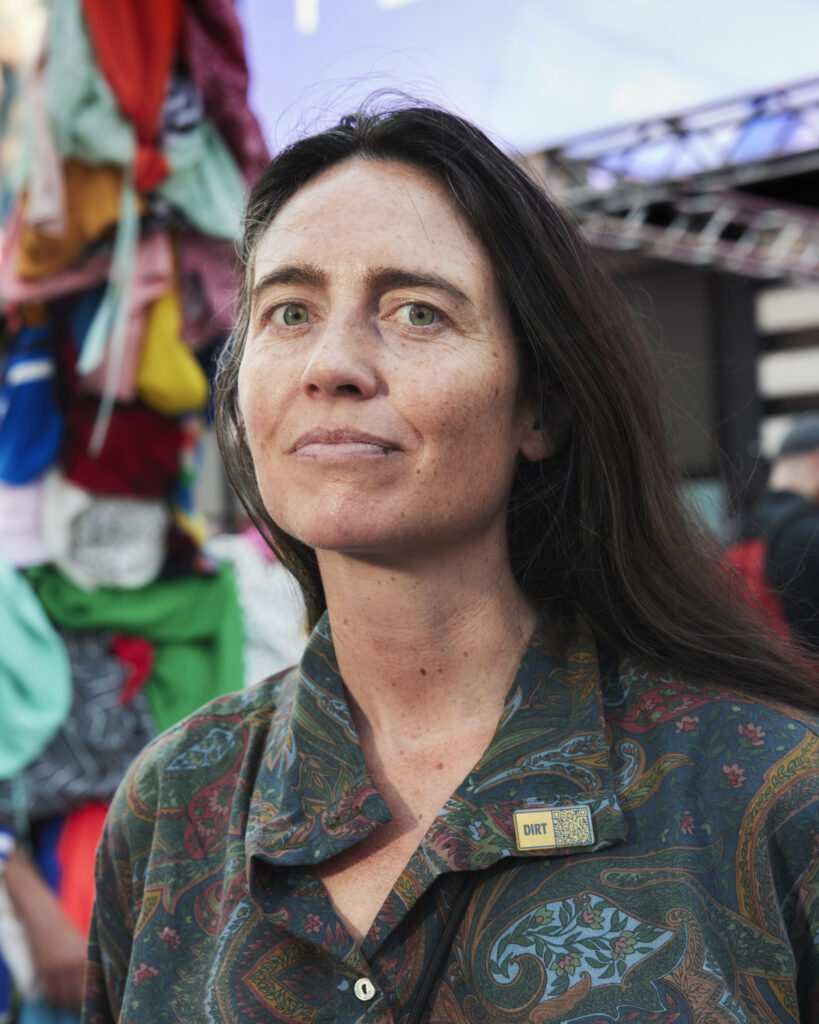
According to Stop Waste Colonialism—a campaign by The OR Foundation in Ghana, which advocates for alternatives to the dominant fashion model—there is no precise data on the size of the industry. However, available estimates suggest that between 80 billion and 150 billion new garments are produced every year.
“Unlike the carbon footprint for their products, production volume is a data point that is easy for brands to calculate. Unlike many other measurements of sustainability, production volume is a data point that is easy for the average consumer to understand,” the foundation states.
Ricketts has long-believed that overproduction is not an unintentional byproduct of fast fashion but rather a business model that has dominated the industry for years. And this model impacts everyone in the value chain.
“Shifting cultural behavior towards slow fashion–where consumer priorities lie in resale, circular living, and prioritizing quality over quantity–is essential. But this shift alone will not adequately address the power imbalance or the overproduction, fueling waste systems in communities like Kantamanto.”
“Designers and textile organizations need to align themselves with industry bodies, because transparency will become the ultimate sophistication for any brand,” Ngxokolo adds. “With the growing demands for sustainability, many distributors already require certifications before they can carry your products—things are tightening up. African designers need to be aware of this shift and join these organizations while there’s still time on their side.”
Cenga adds: “Textile recycling is still in its infancy, not just in South Africa, but globally. Even companies in capital-intensive countries with significant funding are struggling to do this. Rewoven aims to demonstrate that it’s possible to create a circular, sustainable textile system locally.”
Barber feels it needs to come down to the major retailers who mass-produce garments. “Corporations that produce the clothing should be charged a tax or extended producer responsibility on the clothing,” she says. “And some of that money should automatically go to places where the clothing waste impacts the local communities. Reparations must be a part of any recycling system.”
Comments (0)
Sign in to join the conversation.
Related Stories

Equatorial Guinea: Charting A New Era Of Sustainable Prosperity
With a renewed focus on diversification and digitalization, Equatorial Guinea is leveraging its resources to create inclusive, long-term growth. “Agro-processing is a key priority, as our goal is to ultimately achieve national self-sufficiency and independence.” President Teodoro Obiang Nguema Mbasogo Equatorial Guinea is entering a new phase in its economic story–one defined by diversification, competitiveness, and connection. […]

Foundations Strengthening A National Future
Policy reforms, national capabilities, and coordinated institutions reinforce long-term growth across Equatorial Guinea. Q. How is your ministry advancing the national development agenda across key sectors such as agriculture, energy, and tourism, and what priorities guide your efforts to drive long-term economic growth and self-sufficiency? Hon. José Juan Ndong Tom Mekina, Minister of Agriculture, Livestock, Forestry, […]

Equatorial Guinea’s Energy Reset And The Revival Of Its Hydrocarbons Sector
As Equatorial Guinea reshapes its position in the regional energy market, GEPetrol is steering the shift to secure production, attract reliable partners, and align upstream growth with long-term economic goals. “Our strategic vision is to develop projects that are sustainable in the long term, and that also revive the economy.” Bienvenido Nguema Envo, General Manager of GEPetrol In 2024, […]
Recommended




The Daily Brief