

Youth Day In South Africa: One Frame, Fifty Years Later
June 16 this year marks the 50th anniversary of the Youth Uprising in South Africa in 1976, when school students took to the streets in the township of Soweto in Johannesburg to protest the apartheid government’s decision to impose Afrikaans–the language of the White minority regime–as a medium of instruction. Brutally killed and injured when […]

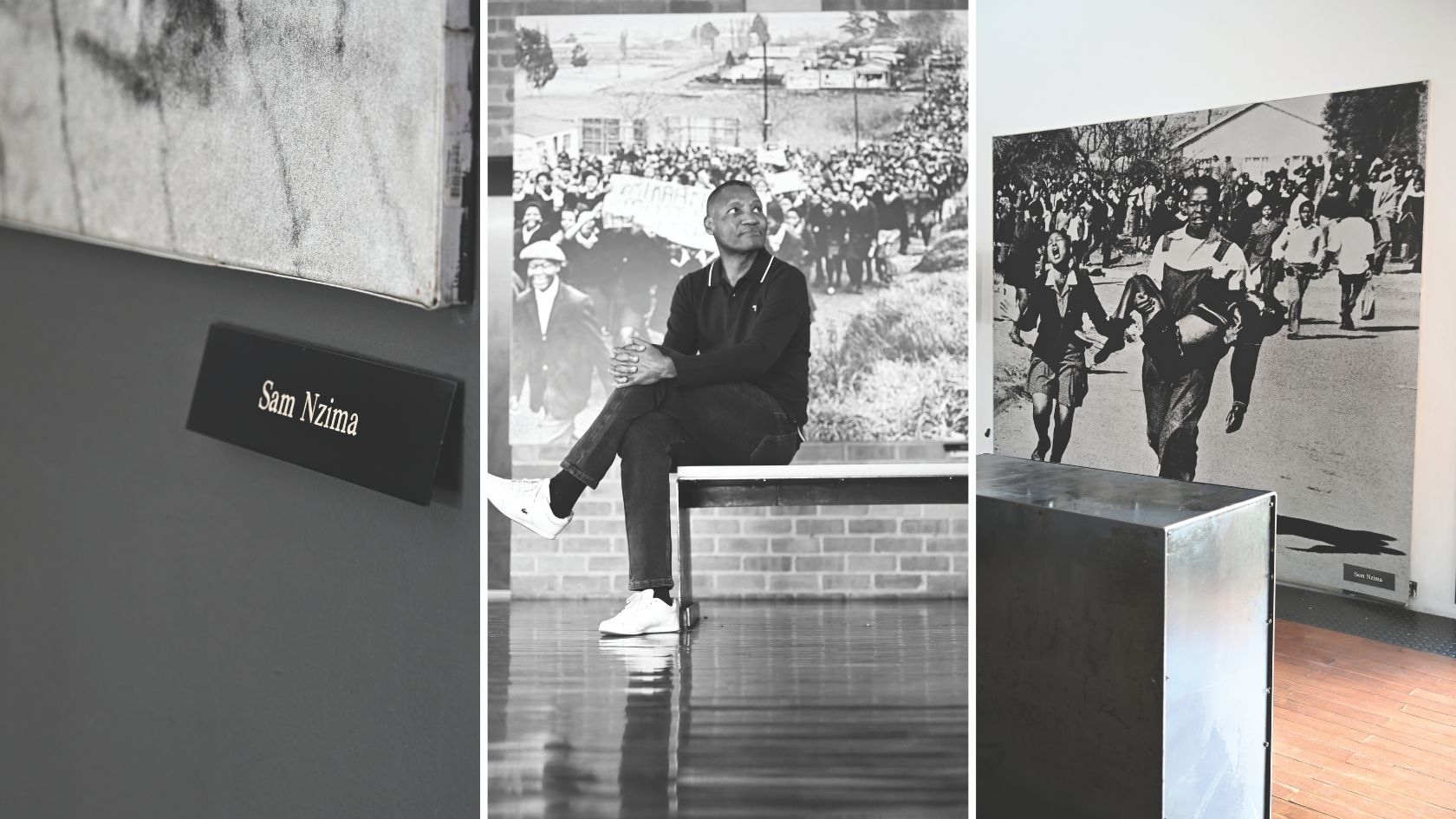
June 16 this year marks the 50th anniversary of the Youth Uprising in South Africa in 1976, when school students took to the streets in the township of Soweto in Johannesburg to protest the apartheid government’s decision to impose Afrikaans–the language of the White minority regime–as a medium of instruction. Brutally killed and injured when the police opened fire, they left behind bloody scars and a nation in turmoil. Among those who fell that cold Wednesday morning was 12-year-old Hector Pieterson. The image of his lifeless body, captured in black and white by photojournalist Sam Nzima, became one of the most influential photographs of the 20th century. It lives on in public memory as a searing testament to the tragedy that shook the nation and the world. Half a century later, in the hallowed halls of the Hector Pieterson Museum in Soweto, Nzima’s son Thulani revisits with FORBES AFRICA those poignant moments at the very site that dramatically changed his late father’s life. The uprising became a global symbol of resistance against apartheid, and continues to honor the bravery of the students who gave their all in the fight for education, equality and justice in South Africa.
THE HOUSE OF MEMORY
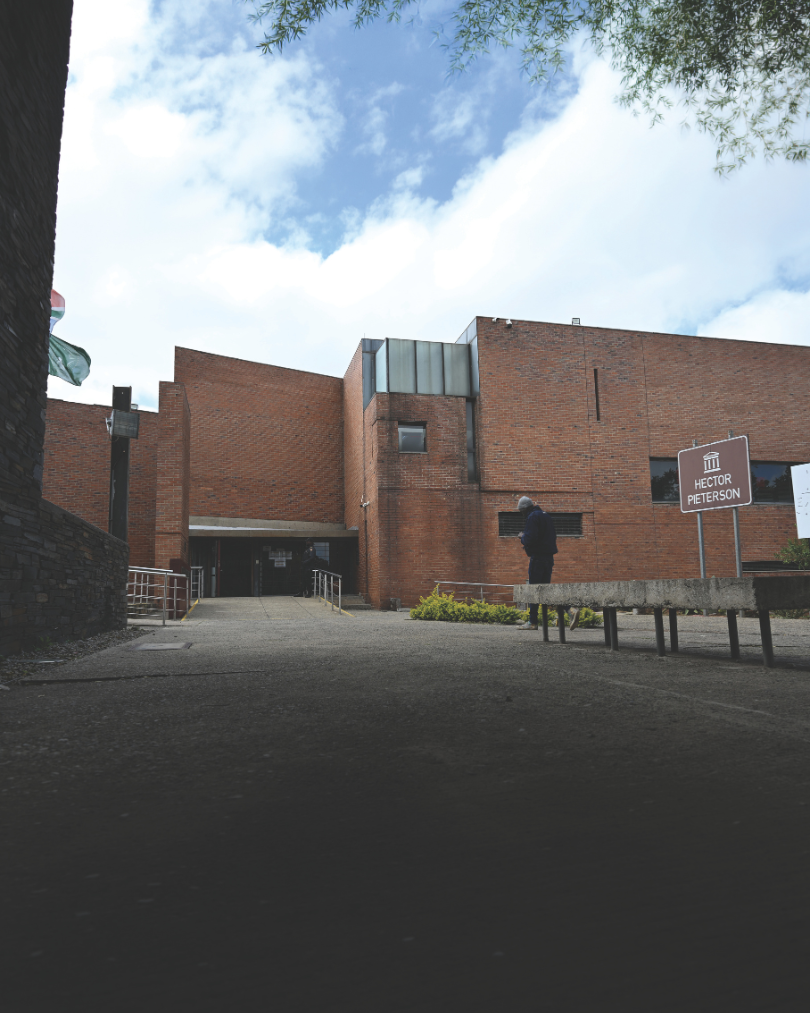
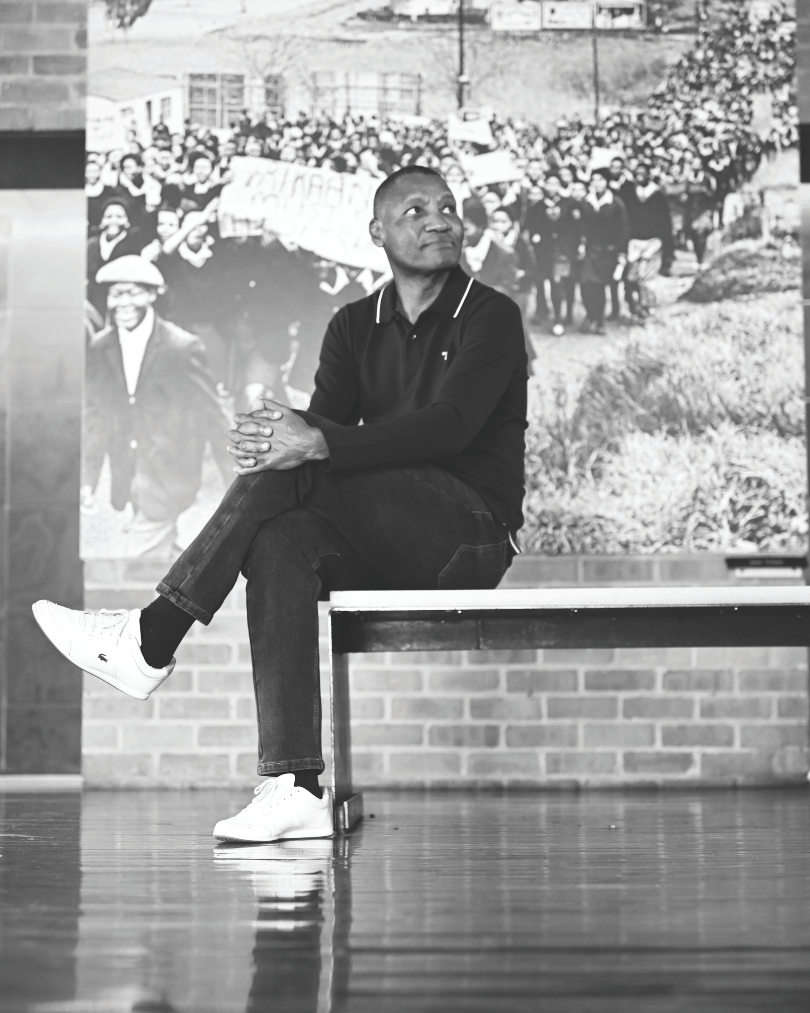
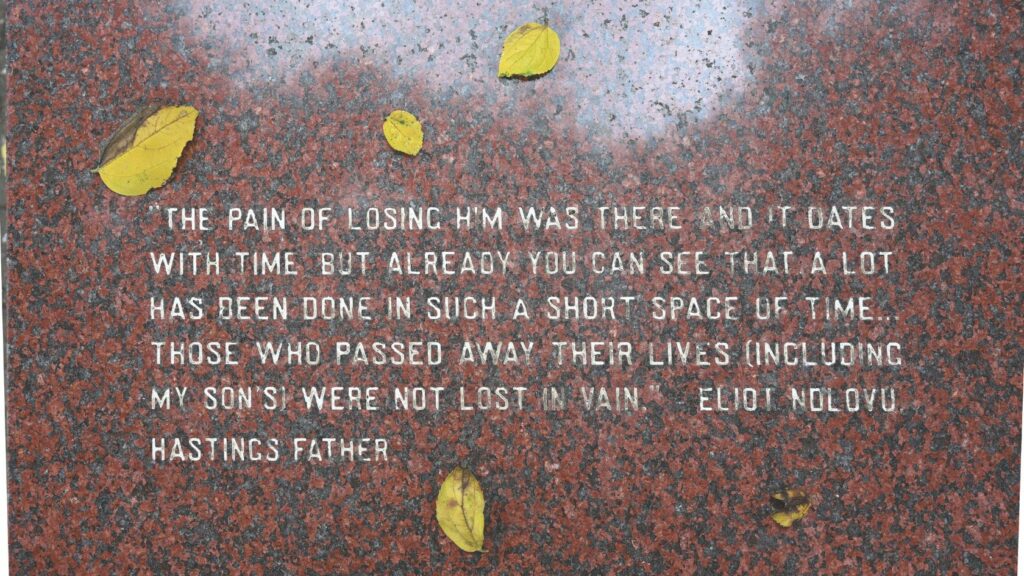
When we visit the Hector Pieterson Museum in May, school children file through the passages where horror and history once arrived together. Inside, black-and-white photographs adorn the grey walls, freezing the moments that altered how the world saw apartheid. The museum is quiet, but never still. Stone corridors flow into reflective spaces. Quotes and notes from grieving families are engraved on to polished granite benches. Enlarged archival photographs of that fatal day in 1976 stretch across entire walls, confronting visitors with scenes that remain emotionally-charged even half a century later.
The space does not simply archive 1976; it reconstructs a painful past.
THE FRAME THAT CHANGED THE WORLD
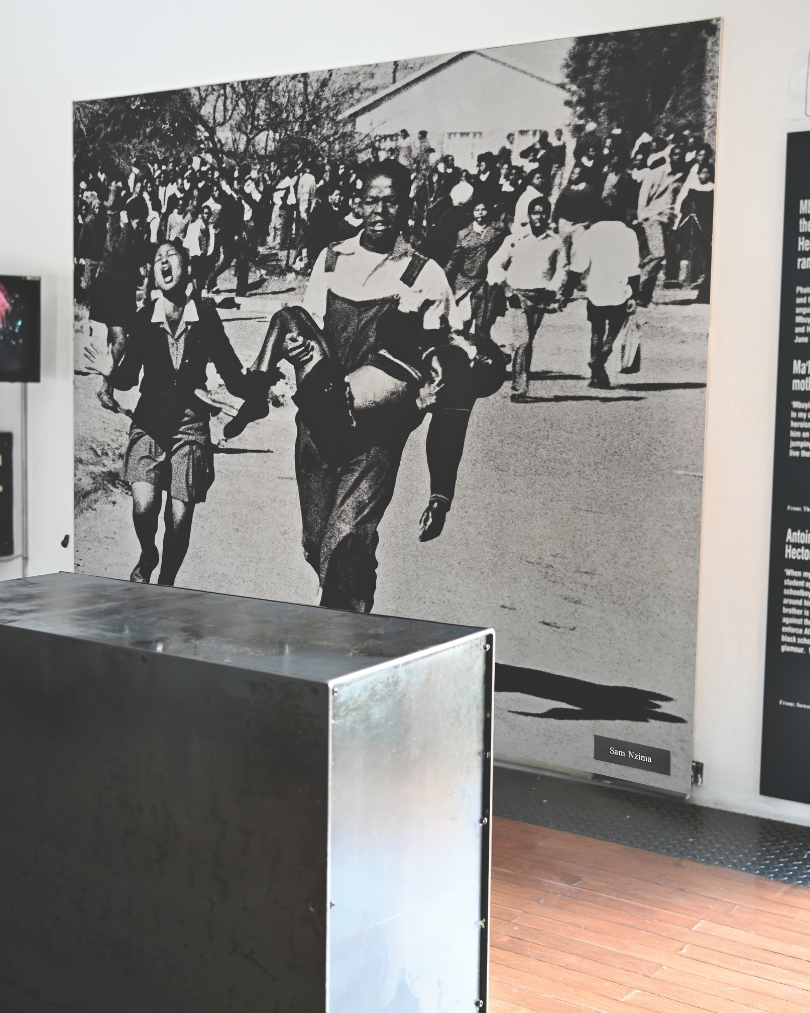
In the center of the museum hangs one of South Africa’s most iconic photographs: the limp body of Pieterson, being carried by a young man named Mbuyisa Makhubo, after he was shot, and his distressed sister, Antoinette Sithole, running alongside (picture above).
Taken by Nzima, the image traveled far beyond Soweto, exposing the brutality of an apartheid government to the world. Nzima reportedly hid the film role in his sock before returning to the newsroom at the newspaper, The World, where he worked at the time.
Inside the darkroom, history slowly emerged in trays of chemicals and under red safety lights.
Shadows became bodies. Motion became evidence. Somewhere between negatives, enlargers and drying prints, the image that would define June 16 surfaced.
THE MAN BEHIND THE CAMERA
As a child, Thulani says he followed his father, Nzima, to football matches, boxing events and to newspaper offices, often waiting late into the evening while his father’s news photographs were being processed.
“The boring part for me was how long he always took in the darkroom processing these pictures,” he recalls.
Following the publication of Pieterson’s image, it is widely known that Nzima became the target of apartheid police and faced intense harassment. The photograph also ended his career as a journalist when newspapers, including The World, were banned. “He regretted having taken this picture for a long time,” remembers Thulani.
Pullout Quote: “A picture tells a thousand words. This picture does that and more.”- Thulani Nzima
THE SON WHO CARRIES THE LEGACY
For decades, Thulani rarely spoke publicly about the photograph that changed his father’s life.
“I went through high school, university, started my working life, not talking about this picture at all,” he says.
Today, he leads the Sam Nzima Foundation, tasked with preserving and protecting his father’s legacy as South Africa marks 50 years of the Soweto Uprising.
Inside the Hector Pieterson Museum, visitors stop by his father’s work in silence. Students born long after apartheid stand before the image, already familiar with it even before entering the building.
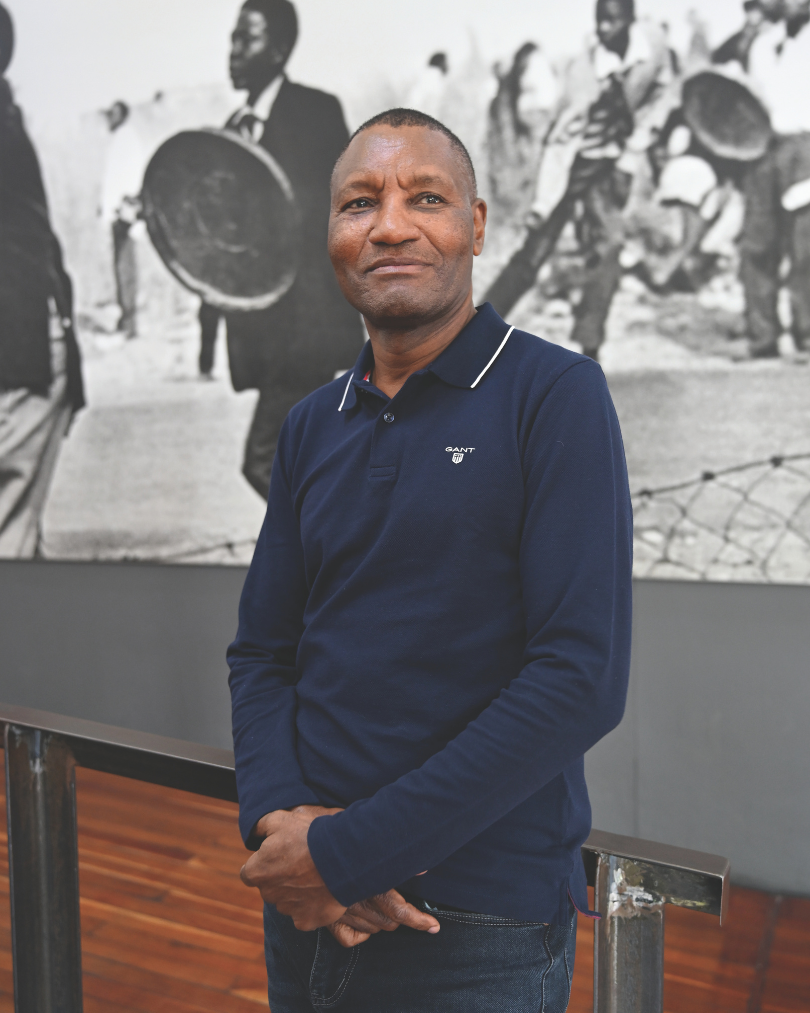
The darkroom may be long gone, replacing film with digital images and endless scrolling, but what has sustained is the power of a single photograph to stop the world in its tracks.
The chemicals dried up long ago. The memories have not.
Comments (0)
Sign in to join the conversation.
Related Stories

Equatorial Guinea: Charting A New Era Of Sustainable Prosperity
With a renewed focus on diversification and digitalization, Equatorial Guinea is leveraging its resources to create inclusive, long-term growth. “Agro-processing is a key priority, as our goal is to ultimately achieve national self-sufficiency and independence.” President Teodoro Obiang Nguema Mbasogo Equatorial Guinea is entering a new phase in its economic story–one defined by diversification, competitiveness, and connection. […]

Foundations Strengthening A National Future
Policy reforms, national capabilities, and coordinated institutions reinforce long-term growth across Equatorial Guinea. Q. How is your ministry advancing the national development agenda across key sectors such as agriculture, energy, and tourism, and what priorities guide your efforts to drive long-term economic growth and self-sufficiency? Hon. José Juan Ndong Tom Mekina, Minister of Agriculture, Livestock, Forestry, […]

Equatorial Guinea’s Energy Reset And The Revival Of Its Hydrocarbons Sector
As Equatorial Guinea reshapes its position in the regional energy market, GEPetrol is steering the shift to secure production, attract reliable partners, and align upstream growth with long-term economic goals. “Our strategic vision is to develop projects that are sustainable in the long term, and that also revive the economy.” Bienvenido Nguema Envo, General Manager of GEPetrol In 2024, […]
Recommended




The Daily Brief