

IBM Shares Crashed 25% In Worst Day Ever—Here’s Why
Topline IBM’s stock plummeted on Tuesday in its largest single-day loss in its 115-year history, after CEO Arvind Krishna warned investors the computing firm’s latest quarter was “worse than our expectations” while failing to adapt to rising chip costs. This story was first published on Forbes.com Key Facts Shares of IBM crashed 25.2% to around […]

Topline
IBM’s stock plummeted on Tuesday in its largest single-day loss in its 115-year history, after CEO Arvind Krishna warned investors the computing firm’s latest quarter was “worse than our expectations” while failing to adapt to rising chip costs.
Key Facts
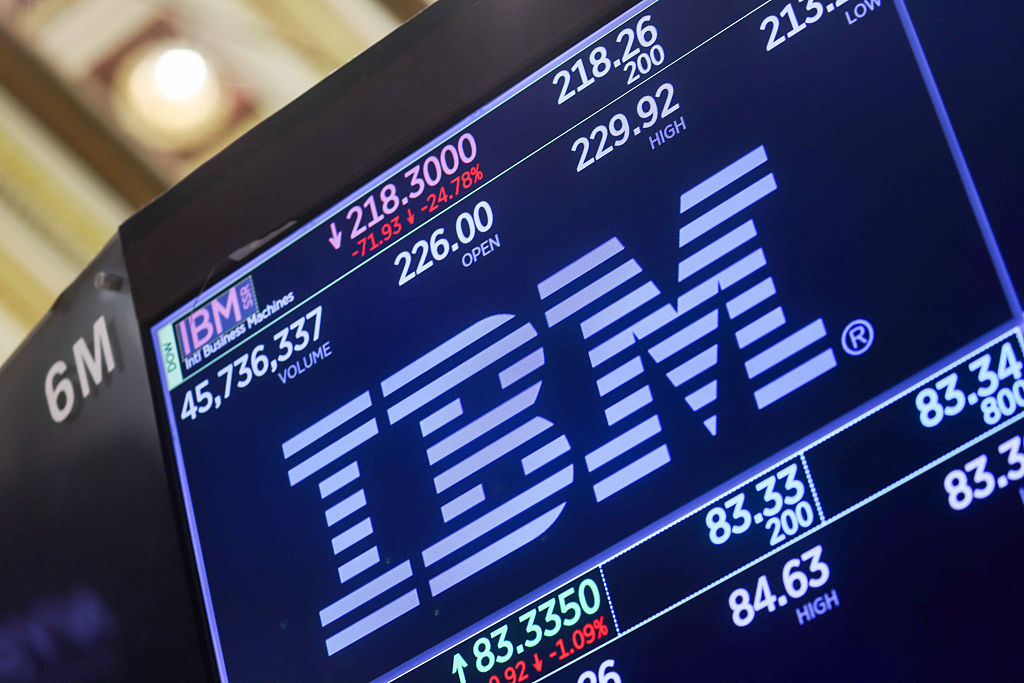
Shares of IBM crashed 25.2% to around $217 at market close on Tuesday, topping the infamous Black Monday crash of Oct. 19, 1987, when IBM plummeted 23% amid the broader, massive selloff.
That erased about $67 billion from IBM’s market capitalization, valuing the firm at just under $205 billion.
The historic decline followed a letter from Krishna to IBM investors on Tuesday, in which Krishna said about the company’s “disappointing” second-quarter performance: “What played out was worse than our expectations. We did not adapt and move quickly enough.”
Krishna said customers adjusted their technology budgets as demand from AI data centers made servers, storage and memory harder to obtain, adding that while IBM anticipated some supply chain disruptions, the company did not expect customers to shift so much of their spending away from software and toward buying AI hardware.
Krishna also cited the release of Anthropic’s Mythos, which he said stalled several large deals as customers weighed the implications of the AI model, which Anthropic claimed could enable hackers to identify cybersecurity vulnerabilities before companies detect them.
Arvind Krishna’s statement to IBM investors, in full
“When we discussed our expectations with you in April, we noted that we would be wrapping on the launch of z17 in the second quarter. Given this was the strongest start to a mainframe program in our history, we expected Infrastructure revenue to decline low-single digits for the year, beginning this quarter.
“What played out was worse than our expectations, driven by a shortfall in our Z performance and the associated software stack, primarily in Transaction Processing. In the last few weeks of June, we saw clients shift their quarterly capex spend toward servers, storage, and memory purchases to secure supply-constrained infrastructure ahead of expected price increases. This dynamic impacted client buying patterns. While we anticipated some supply chain-related impact in our expectations, we did not anticipate the magnitude of the capex reprioritization. In addition, clients were distracted with rapidly-evolving, industry-wide cybersecurity concerns in the quarter.
“These conditions require our teams to execute perfectly, and this quarter we faltered. We did not adapt and move quickly enough, and numerous large deals failed to close on the timelines we expected, driving the majority of our shortfall.
“These are not excuses, but they are realities. Our job is to help our clients through uncertainty, to find paths forward to grow their businesses no matter what is happening in the external environment.
While our second-quarter results are disappointing, our performance in many areas showed strength, reinforcing the conviction we have in our portfolio and strategy.”
What to watch for
IBM will post second-quarter earnings on July 22. Wall Street anticipates IBM to report $17.2 billion in quarterly revenue and $2.93 earnings per share, according to FactSet, marking annual increases of just 1.3% and 3.5%, respectively.
Key Background
A broader buildup of AI infrastructure has disrupted IBM’s business in recent months. In February, the company’s stock tanked in its worst performance since 2000 after Anthropic unveiled an AI tool it claimed would streamline updates for COBOL, a decades-old business software popularized by IBM, which still provides systems that run it. IBM was not alone, however, as global software companies had their shares plummet as more AI tools became available, fueling concerns the growing technology could automate tasks offered by the firms.
Forbes Daily: Join over 1 million Forbes Daily subscribers and get our best stories, exclusive reporting and essential analysis of the day’s news in your inbox every weekday.
Comments (0)
Sign in to join the conversation.
Related Stories
CEOs Say Layoffs Are AI’s Fault—But Some Experts Think Companies Are Lying
Topline Businesses implementing artificial intelligence was blamed for more layoffs than any other reason for the second month in a row in April, new data shows but some experts have said they think technology companies, which use the excuse more than any other sector, are using AI as a smokescreen to hide larger internal struggles. […]

The South African Production Company Reviving VHS Tapes As A ‘Deliberate Middle Finger To AI’
Production company, And Films recently announced the upcoming release of feature film, This Is How The World Ends, which will debut on VHS, marking it as one of the first worldwide straight-to-VHS releases in 20 years. The creative economy accounts for approximately $2.3 trillion annually, representing roughly 3.1% of global Gross Domestic Product (GDP). […]

The Smart Way To Use AI To Job Hunt, According To Experts
As artificial intelligence becomes a major part of the hiring process, many job seekers are asking themselves: How much AI is too much AI when applying for jobs? From being advised to use ChatGPT to help with your resume and cover letter, to hearing recruiters say they are tired of reading AI-generated applications, today’s professionals are being inundated […]
Recommended




The Daily Brief