

The South African Production Company Reviving VHS Tapes As A ‘Deliberate Middle Finger To AI’
Production company, And Films recently announced the upcoming release of feature film, This Is How The World Ends, which will debut on VHS, marking it as one of the first worldwide straight-to-VHS releases in 20 years. The creative economy accounts for approximately $2.3 trillion annually, representing roughly 3.1% of global Gross Domestic Product (GDP). […]

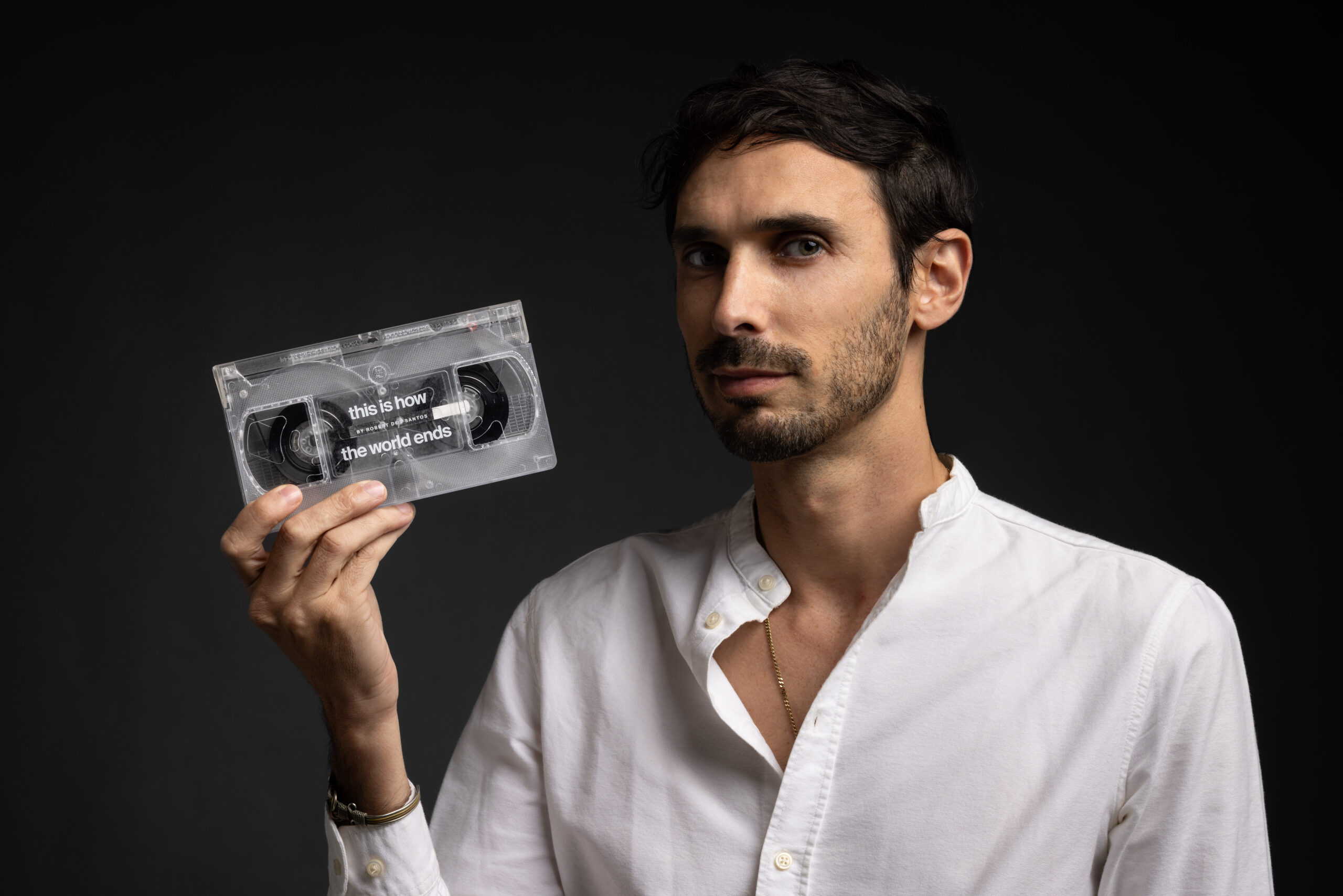
Production company, And Films recently announced the upcoming release of feature film, This Is How The World Ends, which will debut on VHS, marking it as one of the first worldwide straight-to-VHS releases in 20 years.
The creative economy accounts for approximately $2.3 trillion annually, representing roughly 3.1% of global Gross Domestic Product (GDP). In South Africa, it accounts for approximately 3.9% to 4% of the national Gross Domestic Product (GDP), translating to a total economic contribution of roughly R271.2 billion ($16 billion) to R300 billion ($18.5 billion), according to reports.
South Africa-born writer and director, Robert dos Santos believes that the biggest threat to the creative economy is the one thing the world, currently, cannot get enough of: artificial intelligence.
The sector accounts for approximately $2.3 trillion annually, representing roughly 3.1% of global Gross Domestic Product (GDP), per a 2024 report by the United Nations Conference on Trade and Development (UNCTAD).
In South Africa, it–along with sports and cultural industries–accounts for approximately 3.9% of the national Gross Domestic Product (GDP), translating to a total economic contribution of around R271.2 billion ($16 billion), according to the South African Cultural Observatory (SACO).
“The people who will be affected most are those who don’t yet have the resources or a foothold in the industry,” dos Santos says in an interview with FORBES AFRICA.
“Companies can now use AI to generate content that’s cheap and ‘good enough’. It’s what many people refer to as AI slop. I don’t think it’s great content, and I don’t believe AI will ever consistently produce truly great work because there are simply too many human elements involved in creating something meaningful.”
Dos Santos and his team at And Films produced a feature film,This Is How The World Ends,which will be released on VHS tapes. The decision to release the film via this medium, exclusively, was a deliberate rebellion against the increasingly digital nature of modern entertainment.
While studios race toward streaming-first models and AI experimentation, the creators of this film are turning toward an audience-first model and physical media.
“There were a few reasons behind the decision,” dos Santos explains as the director and writer of the movie.
“First, as a creative, when everyone is moving in one direction, I think you should at least consider going in the opposite direction. That’s often where the most interesting ideas come from.”
The second, he says, is rooted in the storyline of the film itself, which explores humanity’s relationship with AI and the potential consequences of becoming overly dependent on it. According to dos Santos, the world is currently in an age where almost everything is digital, from the way films are made and distributed, to the way we interact with one another.
“It felt important that the release reflected our skepticism toward digital dependence and unchecked AI use,” he says.
While they tried to utilize AI tools like Suno for budget reasons, dos Santos ultimately found that these technologies could not fulfill the creative requirements of the film.
“VHS isn’t perfect, and that’s exactly the point. If perfection were the goal, we’d release it on Blu-ray, IMAX, or 4K streaming. VHS has scratches, imperfections, and limitations, but that’s what makes it beautiful. Life isn’t perfect either–it has bumps, setbacks, and moments of joy. Those imperfections are what make us human,” says dos Santos.
“The VHS release is also our statement on AI and creativity. But I think it’s important to be clear about what that statement is because people often oversimplify our position.”
According to the production company, Beverly Boy Productions, AI is fundamentally transforming how the filmmaking and video production industry operates. On their website, they noted that pre-production benefits from AI-driven script analysis, which offers data-backed insights on narrative structure and anticipated audience sentiment.
“One of the most significant benefits AI brings to video production is streamlining time-consuming, repetitive tasks, which drastically reduces project bottlenecks. Previously, processes like color correction, audio balancing, and basic VFX could take hours or days; now, with advanced algorithms, you can deliver higher-quality work within shorter deadlines,” read the report.
However, dos Santos disputes production industry claims, arguing that dependence on AI often raises costs rather than lowering them, while failing to match the specificity, efficiency, and quality achieved by humans.
“In my experience, AI isn’t as good as people think it is. It’s not necessarily cheaper either; it’s actually quite expensive because you have to keep iterating to get close to what you want,” he explains.
“It’s also incredibly time-consuming and lacks specificity. If you ask it to make one small change, it often changes the entire output instead of refining it.”
And although creating a film for the sole purpose of VHS did come with its challenges, like having to find VHS tapes–as this is a product that has not been used commercially in well over 20 years–for dos Santos, this was “one of the best experiences of my career”.
Dos Santos, who was once a lawyer, has over 40 international awards and nominations. He has worked with countless high-profile international brands, ranging from Warner Group to Multichoice and Canal+.
“The process is everything,” he says. “That’s what making art is about. It’s about the people you meet, the problems you solve, waking up each day with purpose and working towards something meaningful.”
“If you simply click ‘generate’ and wait for an output, you miss all of that. The process is where the value lies.”
Rather than mourn the current shift in the sector, the filmmakers say they want to use this as a creative starting point.
“We’re not anti-technology; far from it. We’re pro-technology, and we believe in innovation. If we didn’t, we’d be having this conversation in person instead of over Zoom. Every generation has embraced technological progress, and VHS itself was once considered cutting-edge,” dos Santos explains.
“Our concern isn’t technology–it’s what happens when technology replaces human creativity instead of enhancing it.”
Comments (0)
Sign in to join the conversation.
Related Stories
CEOs Say Layoffs Are AI’s Fault—But Some Experts Think Companies Are Lying
Topline Businesses implementing artificial intelligence was blamed for more layoffs than any other reason for the second month in a row in April, new data shows but some experts have said they think technology companies, which use the excuse more than any other sector, are using AI as a smokescreen to hide larger internal struggles. […]

IBM Shares Crashed 25% In Worst Day Ever—Here’s Why
Topline IBM’s stock plummeted on Tuesday in its largest single-day loss in its 115-year history, after CEO Arvind Krishna warned investors the computing firm’s latest quarter was “worse than our expectations” while failing to adapt to rising chip costs. This story was first published on Forbes.com Key Facts Shares of IBM crashed 25.2% to around […]

The Smart Way To Use AI To Job Hunt, According To Experts
As artificial intelligence becomes a major part of the hiring process, many job seekers are asking themselves: How much AI is too much AI when applying for jobs? From being advised to use ChatGPT to help with your resume and cover letter, to hearing recruiters say they are tired of reading AI-generated applications, today’s professionals are being inundated […]
Recommended




The Daily Brief