

Spud To Spirit: The Rwandan Entrepreneur Turning The Humble Potato Into A Premium Drink
Entrepreneur Karen Sherman is transforming potatoes into premium vodka already earning global acclaim. Almost three hours away from the nation’s capital lies Musanze, Rwanda’s most mountainous district and home to much of the Volcanoes National Park. Known as a hassle-free yet vibrant town, Musanze offers a wide selection of restaurants, reliable access to ATMs, lively nightlife, bustling markets and artisanal […]


Entrepreneur Karen Sherman is transforming potatoes into premium vodka already earning global acclaim.
Almost three hours away from the nation’s capital lies Musanze, Rwanda’s most mountainous district and home to much of the Volcanoes National Park. Known as a hassle-free yet vibrant town, Musanze offers a wide selection of restaurants, reliable access to ATMs, lively nightlife, bustling markets and artisanal trades.
It is here that Karen Sherman founded Kari Vodka, a premium craft potato vodka made of “unloved potatoes” sourced from local farmer cooperatives.
In 2013, after working for Women for Women International, she moved back to the United States, the land of her birth. Women for Women is an organization that enables women survivors of war to restart their lives. Soon after, she returned to Rwanda to join the country’s first and only women’s college, the Akilah Institute. She was inspired by the institution’s hospitality graduates working across Rwanda’s hotels, lodges, and restaurants, all striving to build better lives for themselves and their families.
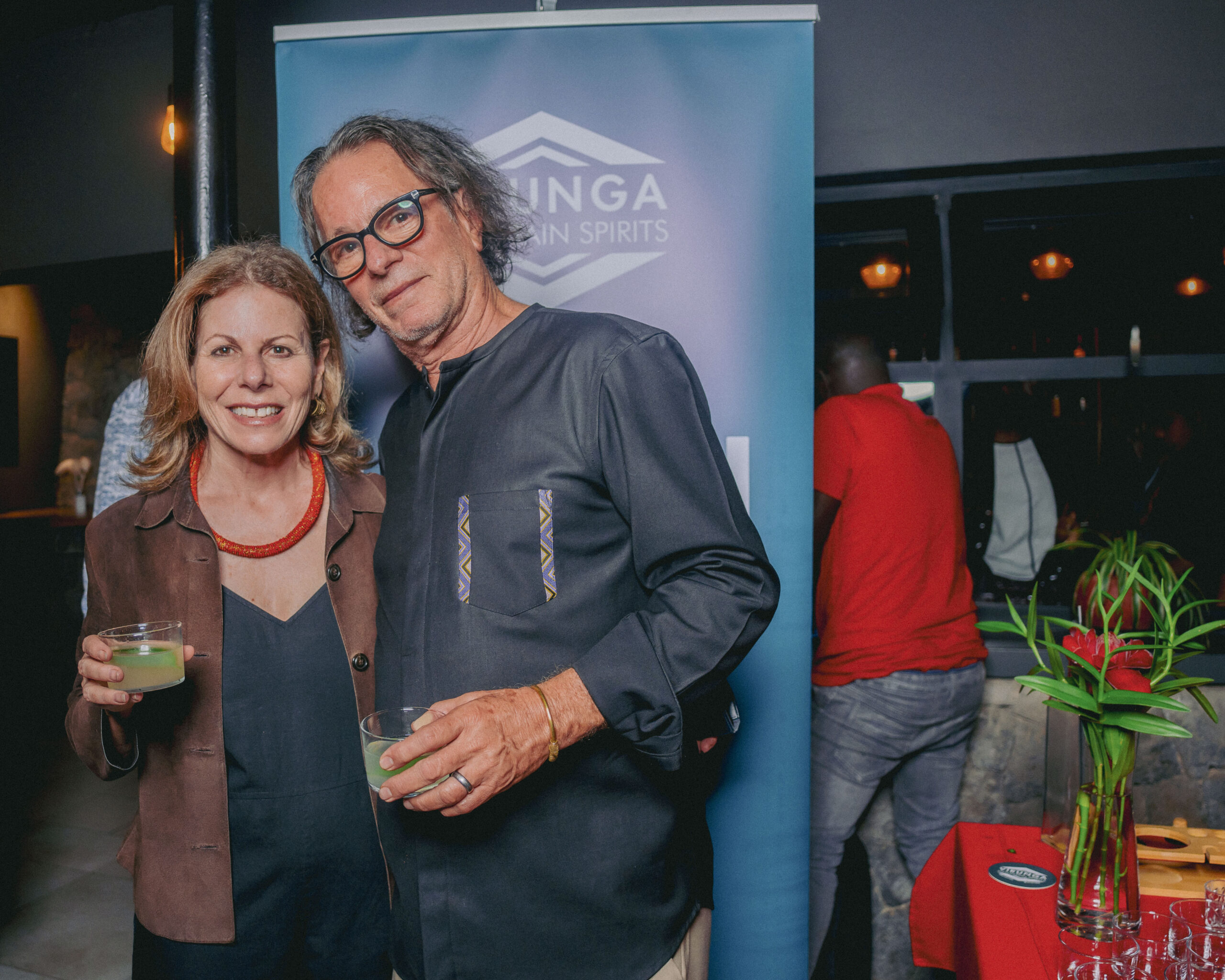
“I always thought of them as the proverbial daughters of the Women for Women cohort—the women who sacrificed everything so their daughters could have an education and a better life. That was incredibly compelling to me,” Sherman says. “And it’s so fascinating to see the businesses they have.”
Motivated by this experience, Sherman knew she wanted to move from development to business.
“I had spent years teaching women about economic development and entrepreneurship, and I felt it was finally my time to practice what I’d been preaching and build something of my own. To be honest, I was tired of working for other people, I wanted to create my own business.”
During her visits to Musanze, Sherman noticed that many of the area’s beautiful lodges served exclusive imported alcohol, highlighting a gap in locally-produced, high-quality beverages. She also recognized the need for product diversification beyond Rwanda’s famed gorilla tourism, noting that many visitors looked for more to do after their gorilla-trekking adventures.
“This idea addressed several key pillars of Rwanda’s development strategy: promoting ‘Made in Rwanda’ products, creating high-quality goods for both local and export markets, strengthening the potato value chain, encouraging import substitution, and advancing agrotourism. Since we operate farm-to-table and field-to-bottle, we’re taking these unloved potatoes and transforming them into a beautiful, premium product. Everything we source comes directly from Musanze.”
Vodka is traditionally made from fermented cereal grains such as wheat, rye, or corn. However, the idea of using discarded potatoes for a product that could be considered distinctly homegrown, appealed to Sherman.
The vodka market in Rwanda is reportedly small, with projected revenue of about $213,000 in 2025 and a total production volume of approximately 24,510 liters. Statista notes that most of this revenue comes from at-home sales ($209,450), while out-of-home consumption (bars and restaurants), is significantly smaller ($3,620). The at-home market is expected to grow by 6.65% annually.
“I wanted to create a sipping vodka, the way they do it in the vodka belt countries: Russia, Ukraine, the Caucasus, Central Asia, Poland. That was my vision: something that could hold its own alongside those countries,” Sherman explains. “I did an original market assessment in 2014 and 2015 for this business, but the trends weren’t there yet. The assessment showed I’d have to start exporting immediately to make it profitable, which wasn’t my vision. I wanted to create something for the local market first.”
Sherman chose to shelve the idea for a few years. “When I revisited the market in 2021, all the trends were up. There was a growing middle class in Rwanda, and the country had become a hub for tourism, not just gorilla tourism, but also conferences, exhibitions, and sport events. It felt like the right time.”
Named after Rwanda’s tallest peak, Kari Vodka was awarded Gold at the World Vodka Awards 2025, an achievement Sherman hadn’t expected, as a newcomer to the market.
“I wanted feedback on the vodka from people beyond those who had been tasting and buying it, not just from people who love you, but from those who don’t know you at all. I wanted a true blind taste test, where someone could try it and then turn around and say what they really thought,” Sherman says.
“I love when people say, ‘I’ve never had potato vodka before’. Only about 3% of vodkas worldwide are made from potatoes, so it’s something most people haven’t experienced. I love the idea of introducing a completely new product, a new blend, a new flavor profile, and seeing people fall in love with it. What’s even better is that half the people who visit our distillery are Rwandans.”
Comments (0)
Sign in to join the conversation.
Related Stories

The Man Powering The Future Of ‘Africa’s Generator Capital’
“Recent policy reforms have begun to level the playing field for cleaner alternatives.” When Abraham Mohammed talks about Nigeria’s power situation, he starts with the numbers. “Over 40% of the population, primarily in rural areas, remains unconnected to the national grid,” Mohammed notes to FORBES AFRICA. “Even where the grid exists, Nigeria’s centralized generation capacity […]

The AI Startup Focused On The Power Of Africa’s Voice
Dr Olubayo Adekanmbi, the CEO and Co-Founder of EqualyzAI, believes AI will only fully fulfill its potential if no one is left behind in the digital revolution. “The first thing is to speak to what problem we are solving. If AI is going to become the most disruptive technology, then everyone, everywhere, must have access,” he tells FORBES […]

From One Lagos Gym To 30 Locations In Nigeria: How Verod-Backed Fitness Firm Is Now Eyeing Accra And Abidjan
More than a decade since its establishment, Nigerian fitness chain i-Fitness is building a nationwide network of gyms while positioning itself as part of the West African nation’s emerging health and wellness infrastructure. “Since Verod acquired a 65% stake in i-Fitness in 2024, the company has expanded its branch network, strengthened its management structure and […]
Recommended




The Daily Brief