

You’re Not Imagining It: AI Is Already Taking Tech Jobs
Since the rise of generative AI, many have feared the toll it would take on the livelihood of human workers. Now CEOs are admitting AI’s impact and layoffs are starting to ramp up. Between meetings in April, Micha Kaufman, CEO of the freelance marketplace Fiverr, fired off a memo to his 1,200 employees that didn’t mince […]

Since the rise of generative AI, many have feared the toll it would take on the livelihood of human workers. Now CEOs are admitting AI’s impact and layoffs are starting to ramp up.
Between meetings in April, Micha Kaufman, CEO of the freelance marketplace Fiverr, fired off a memo to his 1,200 employees that didn’t mince words: “AI is coming for your jobs. Heck, it’s coming for my job too,” he wrote. “This is a wake-up call.”
The memo detailed Kaufman’s thesis for AI — that it would elevate everyone’s abilities: Easy tasks would become no-brainers. Hard tasks would become easy. Impossible tasks would become merely hard, he posited. And because AI tools are free to use, no one has an advantage. In the shuffle, people who didn’t adapt would be “doomed.”
“I hear the conversation around the office. I hear developers ask each other, ‘Guys, are we going to have a job in two years?’” Kaufman tells Forbes now. “I felt like this needed validation from me — that they aren’t imagining stuff.”
Already, younger and more inexperienced programmers are seeing a drop in employment rate; the total number of employed entry-level developers from ages 18 to 25 has dropped “slightly” since 2022, after the launch of ChatGPT, said Ruyu Chen, a postdoctoral fellow at the Digital Economy Lab of Stanford’s Institute for Human-Centered AI. It isn’t just lack of experience that could make getting a job extremely difficult going forward; Chen notes too that the market may be tougher for those who are just average at their jobs. In the age of AI, only exceptional employees have an edge.
“We’re going from mass hiring to precision hiring,” said Chen, adding that companies are starting to focus more on employing experts in their fields. “The superstar workers are in a better position.”
Chen and her colleagues studied large-scale payroll data in the U.S., shared by the HR company ADP, to examine generative AI’s impact on the workforce. The employment rate decline for entry-level developers is small, but a significant development in the field of engineering in the tech industry, an occupation that has seemed synonymous with wealth and exorbitant salaries for more than a quarter century.
Now suddenly, after years of rhetoric about how AI will augment workers, rather than replace them, many tech CEOs have become more direct about the toll of AI. Anthropic CEO Dario Amodei has said AI could wipe out half of all entry-level white-collar jobs and spike unemployment up to 20% within the next five years. Amazon CEO Andy Jassy said last month that AI will “reduce our total corporate workforce” over the next few years as the company begins to “need fewer people doing some of the jobs that are being done today, and more people doing other types of jobs.” Earlier this year, Shopify CEO Tobi Lutke also posted a memo that he sent his team, saying that budget for new hires would only be granted for jobs that can’t be automated by AI.
Tech companies have also started cutting jobs or freezing hiring explicitly due to AI and automation. At stalwart IBM, hundreds of human resources employees were replaced by AI in May, part of broader job cuts that terminated 8,000 employees. Also in May, Luis von Ahn, CEO of the language learning app Duolingo, said the company would stop using contractors for work that could be done by AI. Sebastian Siemiatkowski, CEO of buy-now-pay-later firm Klarna, said in May that the company had slashed its workforce 40%, in part due to investments in AI.
“We’re going from mass hiring to precision hiring. The superstar workers are in a better position.”Ruyu Chen, Stanford researcher
Microsoft made its own waves earlier this month when it laid off 9,000 employees, or about 4% of its workforce. The company didn’t explicitly cite AI as a reason for the downsizing, but it has broadly increased its spending in AI and touted the savings it had racked up from using the tech. Automating customer service at call centers alone, for example, saved more than half a billion dollars, according to Bloomberg. Meanwhile, CEO Satya Nadella said in April that as much as 30% of code at the company is being written by AI. “This is what happens when a company is rearranging priorities,” one laid off Microsoft employee told Forbes.
Microsoft didn’t respond to questions about the reasons behind its layoffs, but said in a statement: “We continue to implement organizational changes necessary to best position the company for success in a dynamic marketplace.”
It’s difficult to pinpoint the exact motivation behind job cuts at any given company. The overall economic environment could also be a factor, marked by uncertainties heightened by President Donald Trump’s erratic tariff plans. Many companies also became bloated during the pandemic, and recent layoffs could still be trying to correct for overhiring.
According to one report released earlier this month by the executive coaching firm Challenger, Gray and Christmas, AI may be more of a scapegoat than a true culprit for layoffs: Of more than 286,000 planned layoffs this year, only 20,000 were related to automation, and of those, only 75 were explicitly attributed to artificial intelligence, the firm found. Plus, it’s challenging to measure productivity gains caused by AI, said Stanford’s Chen, because while not every employee may have AI tools officially at their disposal at work, they do have unauthorized consumer versions that they may be using for their jobs.
While the technology is beginning to take a toll on developers in the tech industry, it’s actually “modestly” created more demand for engineers outside of tech, said Chen. That’s because other sectors, like manufacturing, finance, and healthcare, are adopting AI tools for the first time, so they are adding engineers to their ranks in larger numbers than before, according to her research.
Automating jobs has its limits, too. Last year, Klarna said that the company’s AI tools were doing the work equivalent to 700 customer service agents. But a year later, the company seemed to reverse course, announcing a recruitment drive to hire more human agents.
CEO Siemiatkowski has denied the new hiring push meant the company was pulling back on AI. Instead, he said the new human agents would handle more of the higher-end conversations the company had previously outsourced. Siemiatkowski was not available for an interview, but Klarna spokesperson Clare Nordstrom defended the strategy. “We rely on AI just as much,” she said in a statement. “However, we have noticed that in a world where everything is automated,” she continued, “people put a premium on the human experience.”
Klarna’s experiments show that deciphering which tasks are more suitable for humans, and which can be entrusted to machines, is an open question. Siemiatkowski has been one of the most vocal proponents of automation: to prove the point, when Klarna announced first-quarter earnings in May, he didn’t even show up. Instead, he arranged for an AI deepfake of himself to give the financial update and trumpet a profitable three months.
The upside to the upheaval, Fiverr’s Kaufman said, is that people seem willing to learn. (The company hasn’t done any AI-related layoffs or hiring freezes, he told Forbes.) In his memo to employees, he said he would hold office hours to discuss the changing AI landscape with anyone who wanted to chat. He booked a conference room for 50 people. To his surprise, he showed up to find 250 employees waiting for him.
“So it was just, ‘All right, let’s do this,’” Kaufman said. He told employees they needed to be proactive to learn new AI techniques, and not just wait to be taught. “I’m going to help anyone who is motivated to help themselves.”
Comments (0)
Sign in to join the conversation.
Related Stories
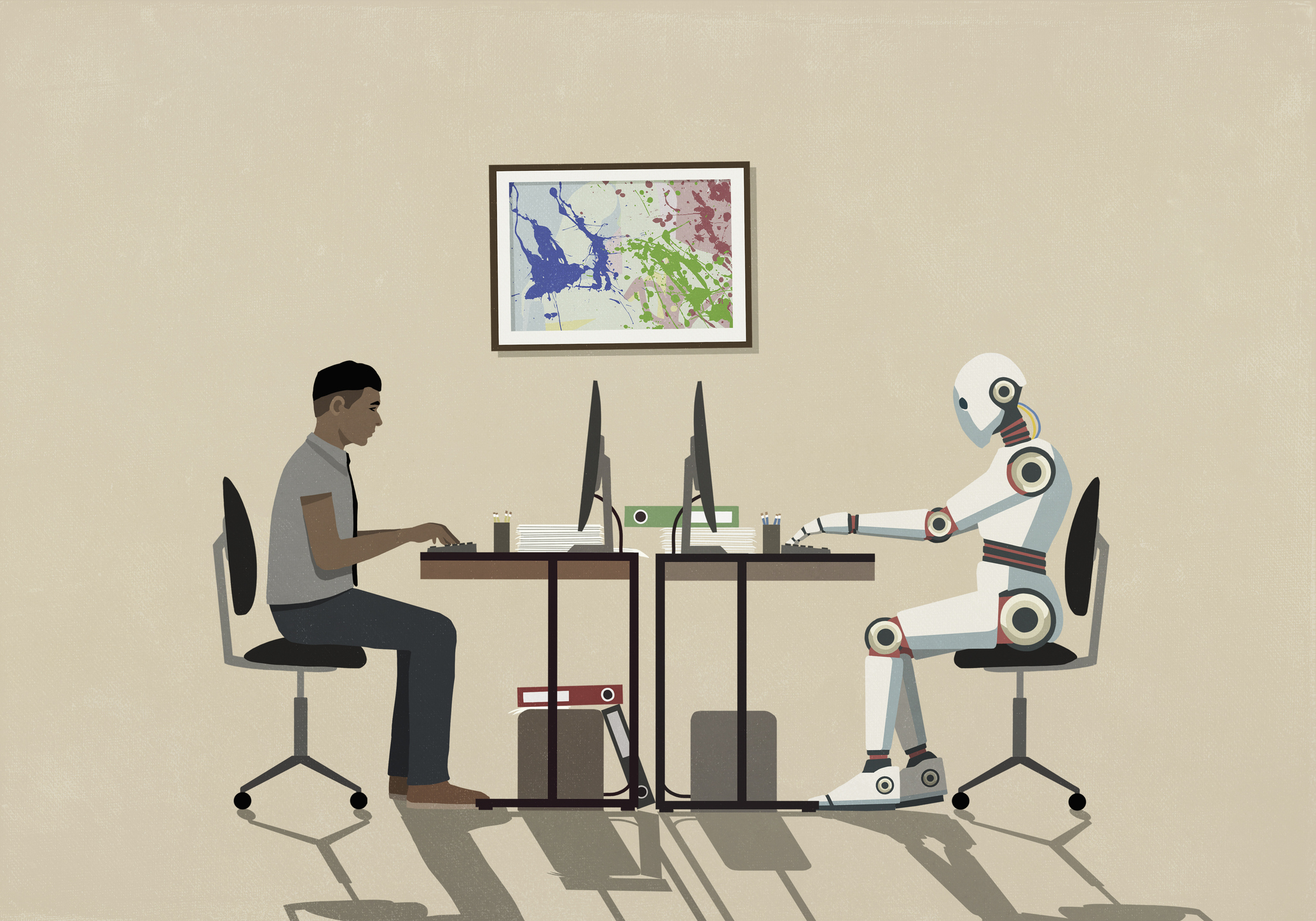
CEOs Say Layoffs Are AI’s Fault—But Some Experts Think Companies Are Lying
Topline Businesses implementing artificial intelligence was blamed for more layoffs than any other reason for the second month in a row in April, new data shows but some experts have said they think technology companies, which use the excuse more than any other sector, are using AI as a smokescreen to hide larger internal struggles. […]
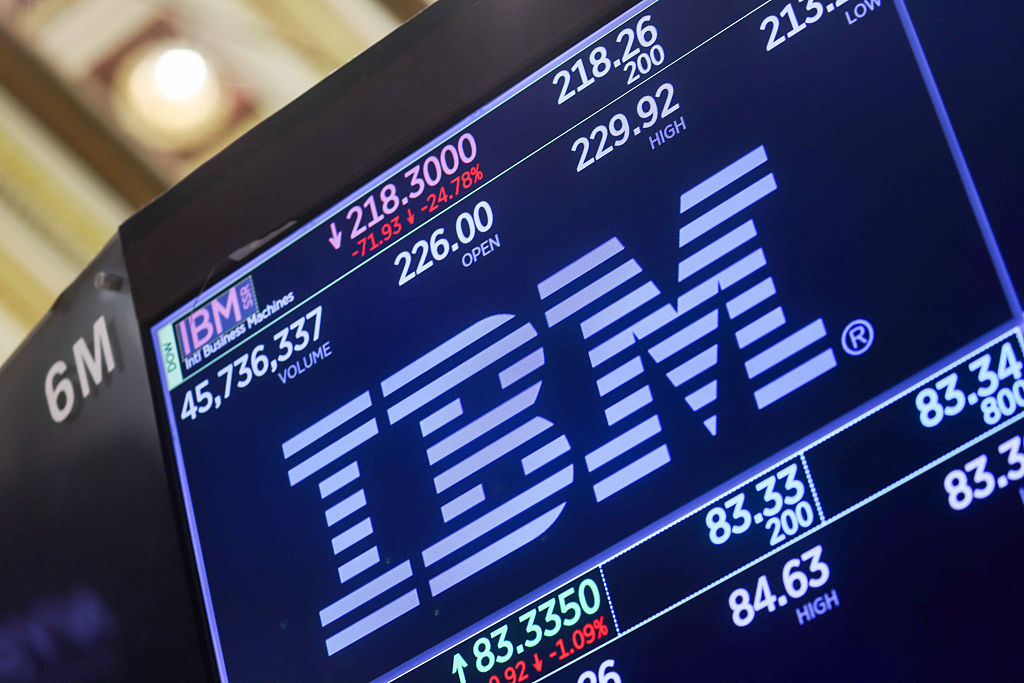
IBM Shares Crashed 25% In Worst Day Ever—Here’s Why
Topline IBM’s stock plummeted on Tuesday in its largest single-day loss in its 115-year history, after CEO Arvind Krishna warned investors the computing firm’s latest quarter was “worse than our expectations” while failing to adapt to rising chip costs. This story was first published on Forbes.com Key Facts Shares of IBM crashed 25.2% to around […]

The South African Production Company Reviving VHS Tapes As A ‘Deliberate Middle Finger To AI’
Production company, And Films recently announced the upcoming release of feature film, This Is How The World Ends, which will debut on VHS, marking it as one of the first worldwide straight-to-VHS releases in 20 years. The creative economy accounts for approximately $2.3 trillion annually, representing roughly 3.1% of global Gross Domestic Product (GDP). […]
Recommended




The Daily Brief