

Zolana João: The Engineer Putting Angola on the Map of the Space Economy
Zolana João has transformed his leadership of Angola’s National Space Programme into a platform for expanding the country’s role in the global space economy, with the launch of ANGOSAT-2 standing as one of the defining milestones of his career. As head of Angola’s National Space Programme Management Office (GGPEN) since 2014, the engineer has worked …

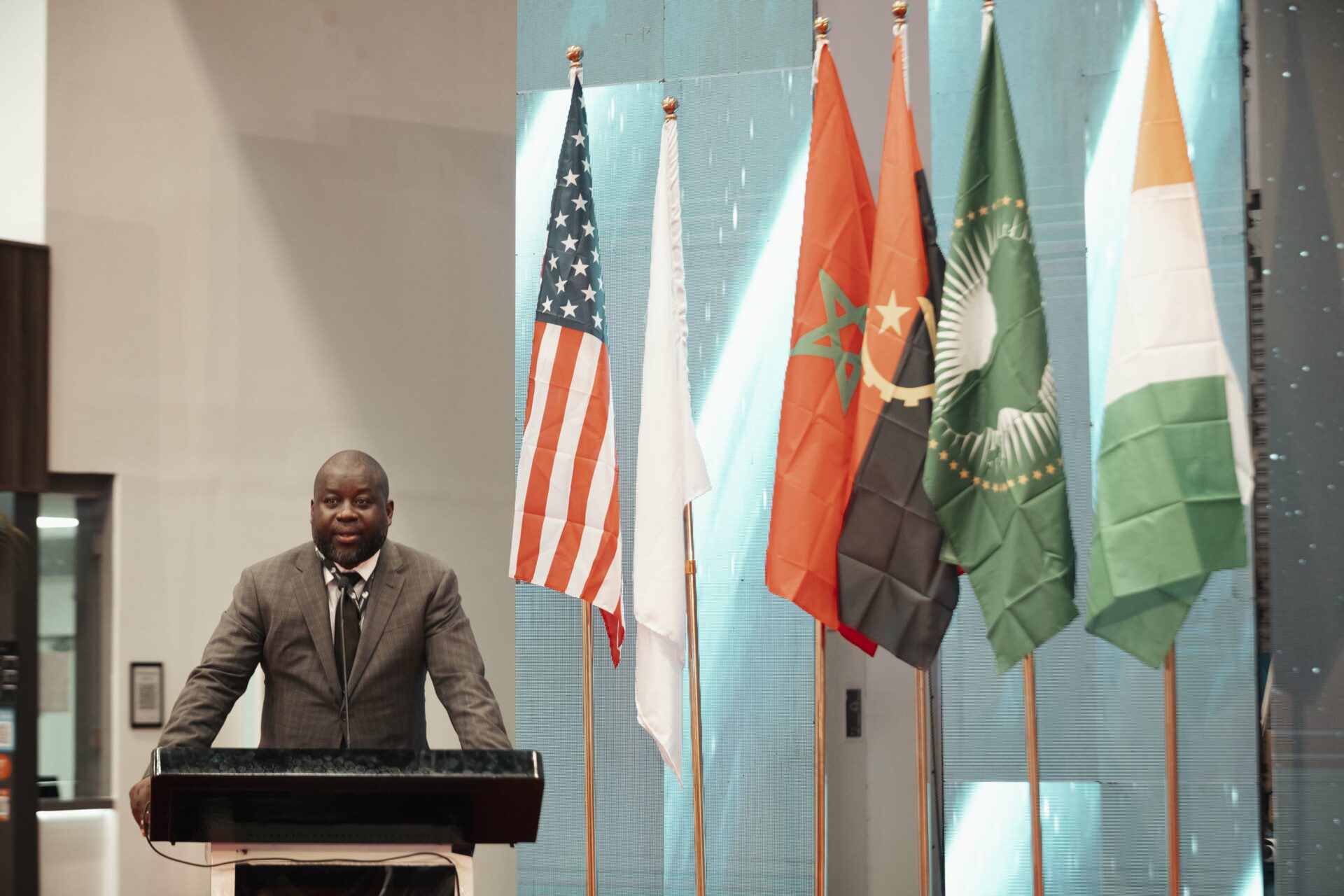
Zolana João has transformed his leadership of Angola’s National Space Programme into a platform for expanding the country’s role in the global space economy, with the launch of ANGOSAT-2 standing as one of the defining milestones of his career.
As head of Angola’s National Space Programme Management Office (GGPEN) since 2014, the engineer has worked to turn satellite infrastructure into practical tools for connectivity, Earth observation, geospatial artificial intelligence and economic development.
His influence extends well beyond Angola’s borders. He currently chairs the Steering Committee of the Southern African Development Community (SADC) Shared Satellite initiative, which brings together 16 countries in a project to develop a jointly owned satellite. He has also served as Vice-Chair of AP-41 for Region D of the International Telecommunications Satellite Organization (ITSO), contributing to regulatory coordination and discussions on the role of satellite communications in public services and digital connectivity.
Under his leadership, Angola has sought to unlock greater economic value from space technologies. Among the initiatives is ANGEO-1, the country’s first planned high-performance Earth observation satellite, designed to provide imagery and geospatial data to support environmental monitoring, disaster response and national development planning. Angola’s Geospatial Data Centre (GEDAE) is another cornerstone of this strategy, helping to transform satellite data into actionable intelligence for decision-makers.
The ambition is to ensure these resources move beyond technical applications and deliver tangible benefits. Projects linked to ANGOSAT-2 and Connecta Angola aim to expand connectivity, particularly in rural communities, while Earth observation technologies have the potential to improve agricultural and infrastructure planning, risk management and responses to climate change.
The challenge lies in embedding these capabilities into government decision-making processes while creating opportunities for the private sector to put them to productive use.
International collaboration is another central pillar of João’s work. As an affiliated researcher at the Massachusetts Institute of Technology (MIT), he participates in initiatives exploring the responsible use of space technologies and artificial intelligence, including a NASA-funded drought response system in Angola.
He is also actively engaged in discussions surrounding space exploration, the emerging lunar economy and Africa’s role in shaping the rules that will govern this increasingly important sector.
For Zolana João, Angola’s place in the space economy is about more than launching satellites. It depends on turning technology, expertise and international cooperation into practical solutions that improve lives and drive development across the continent.
On the multilateral stage, João has represented Africa at the United Nations Committee on the Peaceful Uses of Outer Space (COPUOS), contributing to discussions on space governance and the establishment of the African Space Agency.
He is also involved in international negotiations concerning the allocation of radiofrequency spectrum, a strategic resource for satellite communications, as part of preparations for the 2027 World Radiocommunication Conference.
His journey is equally a story of social mobility and opportunity. Having risen from a childhood marked by poverty to lead Angola’s national space programme, João advocates scientific and technological education as a powerful driver of transformation.
Under his leadership, Angola has trained a new generation of space engineers, some of whom have been recognised among Africa’s top 10 space professionals under the age of 30.
He is also a speaker at leading academic institutions, including MIT and the International Space University, and has authored research on space strategy and satellite applications.
João holds a PhD in Engineering from George Washington University in the United States, as well as master’s degrees in Telecommunications Engineering from Tshwane University of Technology in South Africa and Electronics and Telecommunications Engineering from ESIEE Paris in France.
His achievements have earned international recognition. In 2022, following the launch of ANGOSAT-2, he received the Space Without Borders Medal from Russia’s space agency, ROSCOSMOS.
One of his artificial intelligence projects was also selected by the UNESCO International Research Centre on Artificial Intelligence as one of 20 global initiatives aligned with the United Nations Sustainable Development Goals.
That same year, João participated as an invited speaker at the US-Africa Leaders Summit hosted by the White House.
His overarching challenge is to translate Angola’s growing space capabilities into economic and social value: strengthening connectivity, improving natural resource management, supporting climate resilience and creating opportunities for African innovation in an increasingly strategic industry.
For João, Angola’s future in the space economy will not be measured by the number of satellites it launches, but by its ability to turn technology, knowledge and international partnerships into solutions that serve its people and advance development across Africa.
The Daily Brief
Get the daily FORBES.NG briefing.
Comments (0)
Sign in to join the conversation.
Related Stories

The Robotics Race Needs Better Data. Why It Matters for African Tech
A new funding round reported by Forbes spotlights a bottleneck for humanoid robotics: collecting and evaluating real-world training data. African technology ecosystems could find opportunities in data operations, robotics research and industrial applications.

Which Business Tasks Will AI Automate First? A Practical Guide for Nigerian Companies
As AI tools take on routine administrative and customer-facing work, Nigerian businesses can use a task-by-task approach to improve speed without losing accountability or customer trust.

AI Is Changing Cybersecurity. Nigerian Businesses Must Prepare Before the Next Attack
Recent reporting from Forbes highlights how AI tools are helping security researchers identify serious software weaknesses. For Nigerian organisations, the lesson is to pair AI adoption with faster patching, monitoring and incident readiness.
More from FORBES.NG

‘Real Sense Of Excitement’: Zimbabwe Cricket Venue Steps Up For Global Showcase
Zimbabwe is nearing completion of the Mosi-oa-Tunya International Cricket Stadium in Victoria Falls with the arena likely to be a showpiece venue for next year’s Cricket World Cup. The main building works have been substantially completed and finishing is now underway with the lush green outfield and facilities taking shape, according to officials. The media …
Africa’s 23 Billionaires in 2026: Full List, Fortunes and Businesses
Forbes’ 2026 annual ranking identifies 23 billionaires whose wealth is tied to Africa, led by Nigeria’s Aliko Dangote. Here is the complete list, estimated fortunes, countries and industries, with context on how the ranking is compiled.

Nigerian Stocks Edge Lower as Investors Track Market Volatility
The NGX All-Share Index was down about 0.07% in the latest available Friday update, while investors monitored global market volatility and oil prices. Friday’s final closing figures were not yet available at the time of reporting.
Recommended
‘Real Sense Of Excitement’: Zimbabwe Cricket Venue Steps Up For Global Showcase

Nigeria’s Top Four Billionaires: Their Businesses, Success Stories and Pictures

Valencia CF’s $1.4 Billion Deal Puts Kiat Lim’s Leadership Under the Spotlight

Miniso’s Global Ambitions Offer Lessons for African Retail Expansion
The Daily Brief